AI Styling Studio — Infinite avatar looks from just 1 photo.Try it now.

BestAITools

Submit your Tool

8000+ AI tools already listed
8K+Tools
100K+/moViews
25K+/moVisitors

AI NewsNew court filing reveals Pentagon told Anthropic the two sides were nearly aligned — a week after Trump declared the relationship kaput

New court filing reveals Pentagon told Anthropic the two sides were nearly aligned — a week after Trump declared the relationship kaput

9:16 AM IST · March 21, 2026
New court filing reveals Pentagon told Anthropic the two sides were nearly aligned — a week after Trump declared the relationship kaput

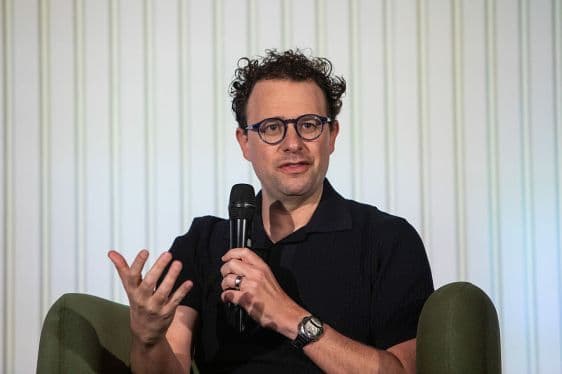
Anthropic submitted two sworn declarations to a California federal court late Friday afternoon, pushing back on the Pentagon’s assertion that the AI company poses an “unacceptable risk to national security” and arguing that the government’s case relies on technical misunderstandings and claims that were never actually raised during the months of negotiations that preceded the dispute. The declarations were filed alongside Anthropic’s reply brief in its lawsuit against the Department of Defense and come ahead of a hearing this coming Tuesday, March 24, before Judge Rita Lin in San Francisco. The dispute traces back to late February, when President Trump and Defense Secretary Pete Hegseth publicly declared they were cutting ties with Anthropic after the company refused to allow unrestricted military use of its AI technology. The two people who submitted the declarations are Sarah Heck, Anthropic’s Head of Policy, and Thiyagu Ramasamy, the company’s Head of Public Sector. Heck is a former National Security Council official who worked at the White House under the Obama administration before moving to Stripe and then Anthropic, where she runs the company’s government relationships and policy work. She was personally present at the February 24 meeting where CEO Dario Amodei sat down with Defense Secretary Hegseth and the Pentagon’s Under Secretary Emil Michael. In herdeclaration, Heck calls out what she describes as a central falsehood in the government’s filings: that Anthropic demanded some kind of approval role over military operations. That claim, she says, simply isn’t true. “At no time during Anthropic’s negotiations with the Department did I or any other Anthropic employee state that the company wanted that kind of role,” she wrote. She also claims that the Pentagon’s concern about Anthropic potentially disabling or altering its technology mid-operation was never raised during negotiations. Instead, she says, it appeared for the first time in the government’s court filings, which gave Anthropic no opportunity to respond. Another detail in Heck’s declaration sure to draw attention is that on March 4 — the day after the Pentagon formally finalized its supply-chain risk designation against Anthropic — Under Secretary Michael emailed Amodei to say the two sides were “very close” on the two issues the government now cites as evidence that Anthropic is a national security threat: its positions on autonomous weapons and mass surveillance of Americans. The email, which Heck attaches as an exhibit to her declaration, is worth reading alongside what Michael said publicly in the days afterward. On March 5, Amodei published a statement saying the company had been having “productive conversations” with the Pentagon. The day after that, Michaelposted on Xthat “there is no active Department of War negotiation with Anthropic.” A week after that, he told CNBC there was “no chance” of renewed talks. Heck’s point appears to be: If Anthropic’s stance on those two issues is what makes it a national security threat, why was the Pentagon’s own official saying the two sides were nearly aligned on exactly those issues right after the designation was finalized? (She stops short of saying the government used the designation as a bargaining chip, but the timeline she lays out leaves the question hanging.) Ramasamy brings a different kind of expertise to the case. Before joining Anthropic in 2025, he spent six years at Amazon Web Services managing AI deployments for government customers, including classified environments. At Anthropic, he’s credited with building the team that brought its Claude models into national security and defense settings, including the$200 million contractwith the Pentagon announced last summer. Hisdeclarationtakes on the government’s claim that Anthropic could theoretically interfere with military operations by disabling the technology or otherwise altering how it behaves, which Ramasamy says isn’t technically possible. Per his telling, once Claude is deployed inside a government-secured, “air-gapped” system operated by a third-party contractor, Anthropic has no access to it; there is no remote kill switch, no backdoor, and no mechanism to push unauthorized updates. Any kind of “operational veto” is a fiction, he suggests, explaining that a change to the model would require the Pentagon’s explicit approval and action to install. Anthropic, he says, can’t even see what government users are typing into the system, let alone extract that data. Ramasamy also disputes the government’s claim that Anthropic’s hiring of foreign nationals makes the company a security risk. He notes that Anthropic employees have undergone U.S. government security clearance vetting — the same background check process required for access to classified information — adding in his declaration that “to my knowledge,” Anthropic is the only AI company where cleared personnel actually built the AI models designed to run in classified environments. Anthropic’s lawsuit argues that the supply-chain risk designation — the first ever applied to an American company — amounts to government retaliation for the company’s publicly stated views on AI safety, in violation of the First Amendment. The government, in a 40-page filing earlier this week,rejected that framing entirely, saying that Anthropic’s refusal to allow all lawful military uses of its technology was a business decision, not protected speech, and that the designation was a straightforward national security call and not punishment for the company’s views.

read more

Latest AI News

View All News →
Crypto exchange OKX wants AI agents to hire and pay each other

Crypto exchange OKX wants AI agents to hire and pay each other

When AI agents begin working for people — and increasingly for one another — they will need a way to find jobs, pay for services, and build trust. Crypto exchangeOKXis betting that future is closer than many expect, launching a marketplace where AI agents can hire one another, settle payments autonomously, and build portable on-chain reputations. Called OKX AI, the marketplace opens to developers on Tuesday following a closed beta involving 50 early AI service providers. The marketplace builds on technology OKX previously developed to let AI agents hold digital wallets, make payments using stablecoins, and establish persistent identities. The launch marks OKX’s latest push beyond crypto trading as it seeks to become a broader fintech company. With more than 150 million users globally, OKX is betting the next generation of customers will not just be people or institutions, but AI agents capable of transacting autonomously, giving rise to an emerging “agent economy.” “The coming decade will be defined by one-person companies that generate over a million dollars in annual revenue – because every individual effectively gains an unlimited workforce,” Star Xu, founder and CEO of OKX, told TechCrunch. “Traditional financial infrastructure was built for humans. The agentic economy needs infrastructure designed for autonomous software. That is why we built OKX.AI.” Haider Rafique, OKX’s chief marketing officer and global managing partner, said the company believes “agentic commerce” could become a trillion-dollar market over the next five years, driven by micropayments and autonomous software. The marketplace is aimed at crypto developers building AI applications and solo entrepreneurs looking to automate parts of their businesses with AI agents, Rafique told TechCrunch. The company expects those developers to build applications for the marketplace, allowing other users to access AI-powered tools without having to build them from scratch. Among the early builders are CertiK, whose service lets AI agents assess the security of a crypto wallet or token before executing a transaction, and CoinAnk, which provides live market data on a pay-per-query basis. GenLayer, another launch partner, is bringing dispute-resolution infrastructure to the marketplace to help AI agents resolve contractual disagreements. By using blockchain-based payments and stablecoins, the company says AI agents can settle transactions around the clock, including low-value micropayments that would be impractical using conventional payment rails. Rafique said OKX is applying the same fraud detection, compliance systems, and internally developed infrastructure that underpin its cryptocurrency exchange to the marketplace, which will be rolled out in phases before becoming more widely available. OKX’s launch comes as technology companies and startups race to build the infrastructure that will underpin AI agents, from developer platforms and marketplaces to payment and identity systems. Albert Castellana, co-founder and CEO of GenLayer Labs, said the biggest challenge is not simply enabling AI agents to transact, but helping them discover one another and resolve disputes when things go wrong. “What we’re building is essentially a digital court system,” Castellana told TechCrunch. “The challenge for us is distribution. OKX already has that.” Rafique argues that OKX’s biggest advantage is not simply its technology but its reach. The company believes its existing network of crypto developers and users will help seed the marketplace, while its broader strategy extends well beyond digital assets. In March, Intercontinental Exchange (ICE), the parent company of the New York Stock Exchange, invested about $200 million in OKX at a$25 billion valuation. Rafique said the partnership is part of the company’s ambition to “modernize markets” through tokenization, while OKX AI represents its parallel effort to “modernize money” for an era of autonomous software. Developers access the marketplace through Onchain OS, OKX’s toolkit for connecting AI agents to blockchain-based services. The company said no OKX account is required to get started, and the platform is compatible with AI coding tools including Claude Code, Codex, Hermes, and OpenClaw. Because the marketplace is aimed first at developers rather than retail users, India features prominently in OKX’s plans. The country has emerged as one of the world’s largest hubs for AI and blockchain developers, a community the company hopes to reach even before a broader return of its crypto trading business. In 2024, OKXsuspended its services in Indiaas it navigated the country’s regulatory requirements for crypto exchanges. Rafique told TechCrunch that India remains one of the company’s highest-priority markets, adding that developer products such as OKX AI face fewer regulatory hurdles than spot crypto trading and could help the company reconnect with the country’s builder ecosystem sooner.

1 hour ago

View

Why Your Database Cannot Handle Agentic Workflows

Why Your Database Cannot Handle Agentic Workflows

The data stack was never built for agents, and the cost of that mismatch is now coming due.

1 hour ago

View

Merck Opens AI-Focused Global Capability Centre in Bengaluru: Report

Merck Opens AI-Focused Global Capability Centre in Bengaluru: Report

The new Bengaluru facility will become a strategic hub for Merck’s AI, digital and enterprise technology operations, supporting global innovation efforts.

1 hour ago

View

Can Yogi Adityanath Turn Uttar Pradesh into a GCC Powerhouse?

Can Yogi Adityanath Turn Uttar Pradesh into a GCC Powerhouse?

The state is offering 43 million square feet of ready-to-move office space, dedicated AI and data centre parks, electronics manufacturing clusters, and IT and digital services infrastructure.

1 hour ago

View