AI Styling Studio — Infinite avatar looks from just 1 photo.Try it now.

BestAITools

Submit your Tool

8000+ AI tools already listed
8K+Tools
100K+/moViews
25K+/moVisitors

AI NewsNanoClaw creator turns down $20M buyout offer, raises $12M seed instead

NanoClaw creator turns down $20M buyout offer, raises $12M seed instead

10:53 PM IST · May 20, 2026

NanoClaw creator turns down $20M buyout offer, raises $12M seed instead

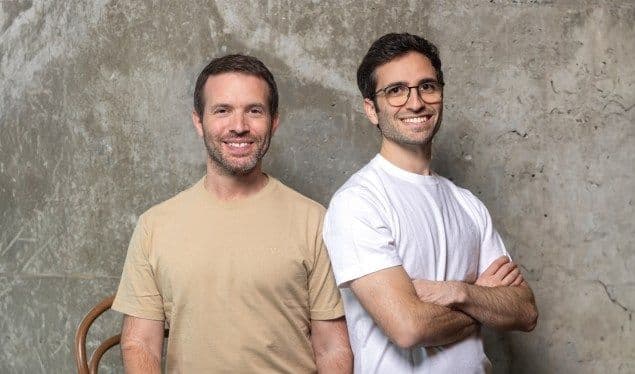
NanoCo, the company behind security-focused OpenClaw alternative NanoClaw, has raised an oversubscribed $12 million seed round following a viral launch, its founders tell TechCrunch. The funding was led by Valley Capital Partners, and saw participation from Docker, Vercel, Monday.com, Slow Ventures and angels like Clem Delangue, CEO of Hugging Face. In a matter of weeks, NanoClaw creator Gavriel Cohen (pictured above, left) said he went from coding the project on his couch to receiving viral endorsements from Andrej Karpathy and Singapore’s foreign minister, fielding inbound interest from dozens of investors, and even a roughly $20 million acquisition offer that he and his brother and co-founder, Lazer Cohen (pictured above, right), declined. “It was under six weeks from committing the first lines of code to a term sheet,” Gavriel told TechCrunch. “There was a lot of inbound and interest,” he added. “People reaching out in DMs on X and sending emails.” He estimated that about 50 or more founders and tech executives sent DMs asking to invest. One of them was Delangue, who dropped a note: “I like what you’re doing with NanoClaw.” Gavriel then responded in kind, telling the Hugging Face CEO that he liked the company’stiny robot, Reachy Mini, and hoped to run NanoClaw on it one day. The two programmers then started talking shop, and Cohen eventually asked Delangue if he was interested in angel investing and secured a yes. As it turns out, an active member of NanoClaw’s open source community is already working on running it on Reachy Mini, Gavriel says. Aswe previously reported, interest in NanoClaw skyrocketed after AI researcher Andrej Karpathy tweeted his praise for it. But the project really began to snowball after the Foreign Minister of Singapore called NanoClaw his “second brain” in aFacebook postthat went viral. NanoClaw was created as a secure alternative to OpenClaw to assist the Cohen brothers with their previous startup, an AI marketing firm that used agents to do much of the work. But instead of running directly on a computer, with access to all services and credentials, NanoClaw runs sandboxed in a container — a practice that isbecoming a common solution to running more secure, OpenClaw-like setups. But a couple of months ago, the idea was novel and took on a life of its own. Seeing the interest, the Cohen brothers began talking to investors and other founders asking for advice. Should they turn this free project into a company? How? One VC offered to buy the project right then for one of his portfolio companies, offering a “six-digit” dollar amount, Cohen said. While contemplating that, they met a founder friend who gave them a key insight: Open-source projects grow exponentially more valuable as their community grows. Not only do these users help contribute code to mature the project quickly, but they discover and demonstrate various uses as well. He told the Cohen brothers that if they believed NanoClaw could be that kind of project, they would have to quit their other venture and commit to it. “He was right,” Gavriel said. Shortly after they shuttered the other business and focused, the viral posts came, and their new outfit secured partnerships with Docker and Vercel. About two weeks after that first offer, they got another, this one for around $20 million, including jobs to stay and run their company. The brothers declined that one, too. “Since then, it’s only escalated. We have many thousands of people using NanoClaw,” he said. NanoCo has now started booking enterprise customers, an idea that came from its community. The product’s early adopters have been people with technical skills, many of whom are executives at big tech companies. After these users set up their own NanoClaw instances, they kept getting hit up by coworkers asking for help to do the same. These folks don’t want to become NanoClaw IT people, Cohen explained, but NanoCo does. So it is offering implementation services, these days known as “forward-deployed engineers,” to help businesses roll out NanoClaw AI agents to employees and provide ongoing support. While NanoCo declined to specify who their early enterprise customers are, the brothers say that executives at companies like Amazon, Gap, Google, Meta, SentinelOne and Accenture are using NanoClaw itself.

read more


Latest AI News

View All News →
Rocket engine startup Impulse raises $500 million to hire people, not AI

Rocket engine startup Impulse raises $500 million to hire people, not AI

Impulse Space, a startup founded by SpaceX engine guru Tom Mueller to build highly-maneuverable spacecraft, announced a $500 million Series D this week that it will use to hire as many as 200 new employees. The round, led by 137 Ventures and BANNER VC, with participation from Founders Fund, Lux Capital, and Linse Capital, reflects investor interest in space and defense tech as the U.S. government hurls cash at national security problems and SpaceX gears up for its IPO. Impulse is focused on in-space mobility. The company has developed a highly maneuverable platform called Mira that is targeted at U.S. Space Force buyers. It’s also building Helios, a vehicle designed to carry satellites rapidly to high orbits after they are dropped off in space closer to Earth. President and COO Eric Romo told TechCrunch that the new capital will help the company build and test more space vehicles and emphasized the company’s hiring plans at a time when aerospace talent is in high demand. While the company’s software teams are adopting AI coding tools, Romo said that when it comes to solving engineering problems in the real world, deep learning models aren’t quite ready for prime time. As the 13th employee at SpaceX back in 2003, Romo’s job was creating computer simulations of the company’s engine design to assess its performance. “I considered it success if I got within 20% of the right answer, because the simulations were just not that good,” Romo said. “They’ve improved, but they’ve not improved that much, and so there’s not really any substitute for designing the thing, analyzing the thing, building it, and then getting it on the test stand.” Romo suspects AI tools for hardware design may be slower to arrive because the right training data is hard to find, compared to the amount of text and code available on the internet to train LLMs. “If you want to go, say, find the best designs for a turbo pump seal package in the world, you’re not going to find those online,” he points out. Impulse started with a focus on propulsion and evolved to build spacecraft, requiring the company to add more expertise in the form of engineers who build vehicle structures and flight computers. One reason the company recently opened an office in Colorado is that aerospace talent has more options today — instead of just going to Los Angeles, engineers can find work in Seattle, Denver, or Texas. Next up for the company is another launch of its Mira spacecraft, which made its third flight late last year. That flight wasn’t without incident — a problem with its navigation system led it to expend much of its propellant early on. Romo said the company is prepping a new Mira mission that is expected to launch before the end of the year.

1 hour ago

View

ZeroDrift raises $10M to protect AI models from themselves

ZeroDrift raises $10M to protect AI models from themselves

As enterprises troubleshoot their AI systems, governance has emerged as a key challenge. Some are taking a dual approach: One model to handle incoming queries, and another to keep the first one from getting into trouble. That’s the premise ofZeroDrift, a new AI compliance service that on Tuesday said it had raised $10 million in a seed funding round that saw investments from a16z Speedrun, Reign Ventures, PitchDrive Ventures, and U&I Ventures, among others. The company deals entirely with the second part of the system, sitting between AI models and end users to flag and replace any messages that might present a compliance problem. It might seem strange to build an AI tool to correct other AI systems’ mistakes, but ZeroDrift says its system has a few architectural advantages over the models it will be correcting. The system is triggered by conventional programs that deterministically apply known compliance standards like SOC 2 or GDPR, and the LLM only comes into play once a message has been flagged, rewriting a compliant version of the same message. “We’re able to identify, deterministically, what are all the regulated areas, what’s the violation that’s being broken, and then we have LLMs that can do the rewrites,” CEO Kumesh Aroomoogan says. Critically, the company says its entire system can be run with lower latency and more reliability than a conventional LLM. This is what ZeroDrift touts as its primary advantage over big labs like OpenAI and Anthropic, which are often already present in the underlying system. The most obvious use case is for AI chatbots, which are already deployed in front of consumers where there can be serious consequences for rogue answers. But Aroomoogan sees a much larger total addressable market, potentially spanning AI-generated messages that are generated only within automated systems that humans will never see. So far, it’s a relatively small market, but it’s one that will grow as AI proliferates. If the fundraise is any indication, there’s a lot of pent-up demand for such products. “It was probably the fastest fundraising I’ve done in my life,” Aroomoogan says, crediting Andressen Horowitz for helping structure the seed round. “We closed within three weeks, and we will be oversubscribed by 3x on the amount.”

1 hour ago

View

Cricketer KL Rahul Partners With str8bat to Launch AI-Powered Batting Platform

Cricketer KL Rahul Partners With str8bat to Launch AI-Powered Batting Platform

The partnership brings KL Rahul’s batting philosophy to str8bat’s AI platform allowing players to learn from professional-level insights tailored to their game.

1 hour ago

View

Coforge Launches Nexa Agentic Platform for Insurers

Coforge Launches Nexa Agentic Platform for Insurers

Nexa aims to automate and streamline underwriting, claims processing, product development and modernisation of legacy systems.

1 hour ago

View