AI Styling Studio — Infinite avatar looks from just 1 photo.Try it now.

BestAITools

Submit your Tool

8000+ AI tools already listed
8K+Tools
100K+/moViews
25K+/moVisitors

AI NewsNandan Nilekani leaves GP role at Fundamentum as it launches $200M third fund

Nandan Nilekani leaves GP role at Fundamentum as it launches $200M third fund

8:31 PM IST · July 9, 2026

Nandan Nilekani leaves GP role at Fundamentum as it launches $200M third fund

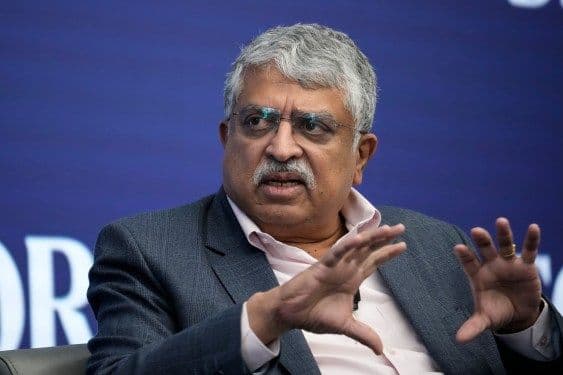
Nandan Nilekani, co-founder of Indian IT services giant Infosys, will no longer serve as a general partner atFundamentum Partnership, the venture capital firm he co-founded nearly a decade ago. Nilekani (pictured above) will be stepping down from his role as Fundamentum launches its third fund, targeting to raise about $200 million. He will be the fund’s anchor investor, and continue advising the firm and mentoring portfolio companies, his co-founder Sanjeev Aggarwal told TechCrunch. Aggarwal described the shift as “just a title thing,” saying Nilekani would continue to advise the firm, mentor portfolio company founders, and provide strategic guidance. “He is an integral part of our firm. The one thing that he enjoys the most is mentoring the teams that we back, and he will continue to do so in Fund III.” Nilekani, 71, is one of India’s best-known technology leaders. Besides co-founding Infosys, he led the creation ofAadhaar, India’s biometric identity system, and has been a leading advocate of the country’s digital public infrastructure, including theUnified Payments Interface (UPI), a real-time payments network used by hundreds of millions of Indians. He has championed theOpen Network for Digital Commerce (ONDC), an initiative aimed at making e-commerce more open and interoperable in the country. NilekanistartedFundamentum in 2017 with Aggarwal, who previously helped build Helion Venture Partners. Fundamentum backs Indian startups at the Series B stage and later, and its portfolio includes used-car marketplaceSpinny, online pharmacyPharmEasy, audio storytelling platformKuku FM, andAppsForBharat, the developer of theSri Mandir devotional app. Nilekani did not respond to an emailed request for comment. The leadership change also broadens Fundamentum’s senior investment team. Alongside Aggarwal, Fund III will be led by Prateek Jain, who joined Fundamentum at its inception in 2017; fintech investor Mayank Kachhwaha, who joined ahead of Fund II; and finance chief Sanjay Chaturvedi, who has been with the firm for nearly a decade. Fundamentum’s third fund aims to back eight to 10 early-stage startups building consumer technology, fintech, and AI products, and issue initial checks of about ₹100 crore (around $10.5 million) each. The firm has yet to announce a first close, but has already begun deploying capital, Aggarwal said, adding that he expects the fundraising to conclude over the next 12 to 18 months. Fund III will see Nilekani making his largest-ever commitment to a venture capital fund, Aggarwal said, though he declined to disclose the investment amount. The fund, Aggarwal said, expects to raise roughly half of its target from international investors, and the remainder from Indian institutions, family offices, founders, and the firm’s partners. That balance reflects how India’s venture capital ecosystem has evolved over the past decade: Indian investors today play a much larger role in domestic funds than they did when Aggarwal helped launch Helion Venture Partners in the mid-2000s. “When we launched Helion, there was no domestic capital in the country, and all the capital was raised from the U.S.,” Aggarwal said. “Over the last five years, we are experiencing very strong interest in Indian investors to back venture capital firms […] Now you can build a venture firm with domestic capital.” Aggarwal told TechCrunch that Fundamentum sees India’s biggest AI opportunity in applications that are built on existing global models, particularly across financial services, content, and vernacular consumer applications. The stance underscores how much of India’s AI ecosystem centers on application-layer startupsrather than those developing frontier AI models, unlike the U.S. and China, where companies have attracted billions of dollars to build AI models. The leadership reshuffle follows the departure of general partner Ashish Kumar, who recentlylaunchedAI-focused venture fund Fundamentum Frontier Advisors (F2A), which also has Nilekani as an anchor investor. F2A, Aggarwal said, is a separate firm with no operational connection to Fundamentum, and Kumar is not involved in Fund III. Fundamentum has made 17 investments across its first two funds. Aggarwal told TechCrunch the firm has returned about half of the capital from its first fund to investors, and thesecond fundis now focused on follow-on investments.

read more


Latest AI News

View All News →
AI-driven memory crunch jolts India’s smartphone market

AI-driven memory crunch jolts India’s smartphone market

Months after analystswarnedthat AI-driven demand for memory chips would ripple through consumer electronics, India is providing the strongest evidence yet that the disruption has arrived, with rising handset prices reshaping the smartphone market. The memory chips in question — RAM and storage components — are the same ones tech giants need by the truckload to build AI data centers. Manufacturers like Samsung, SK Hynix, and Micron have been shifting production capacity toward high-bandwidth memory, the specialized chips used in AI accelerators, because they’re much more profitable per wafer than the standard memory used in phones and laptops — leaving less capacity, and driving up costs, for everyday consumer electronics. India, the world’s second-largest smartphone market by shipments after China, saw smartphone shipments fall10% year-over-yearin the April-June quarter, according to market research firm Counterpoint Research, marking the steepest June-quarter decline in six years as higher memory costs pushed up handset prices. The impact has been more pronounced in India than in China, where smartphone shipments fell just 2% in Q2, according to Counterpoint. India has been hit harder because about 60% of its smartphone market is concentrated in the sub-₹20,000 (under $210) segment, where higher memory costs have had the biggest impact on prices, Tarun Pathak, the firm’s vice president of research, told TechCrunch. India has been a prominent market for global smartphone brands for several years. The South Asian nation, home to more than 1.4 billion people and over 700 million smartphone users, has become a bellwether for consumer demand in price-sensitive markets, making shifts in buying patterns closely watched by device makers, chip suppliers, and investors tracking the broader health of the AI supply chain. Pathak told TechCrunch that consumers are unlikely to abandon smartphones altogether. However, many of them are expected to delay upgrades, stretching replacement cycles to around four years from about 3.5 years previously, while premium brands such as Apple and Samsung remain better insulated from the slowdown. The uneven impact is already reshaping competition among smartphone makers. Samsung was the only major smartphone brand to post shipment growth in India in Q2, with volumes rising 2% year-over-year, according to Counterpoint. Apple, by contrast, saw shipments fall 3% — though that dip largely reflected supply constraints and inventory shortages limiting how many iPhones Apple could deliver. Consumers buying higher-end smartphones have proved less sensitive to price increases, with financing making expensive devices more affordable, Prachir Singh, a senior analyst at Counterpoint Research, told TechCrunch. The pain has been most acute at the lower end of the market. Shipments in the sub-₹15,000 (under $150) segment fell 45% from a year earlier, Counterpoint said. Because Chinese brands are heavily exposed to entry- and mid-tier smartphones, their combined market share fell to its lowest level for a second calendar quarter since 2020. The tougher economics are also prompting strategic shifts. This week, Chinese smartphone brand OnePlus said itwould stop launching new productsin Europe and North America, while maintaining its India business, following what it described as a careful assessment. Counterpoint data shared with TechCrunch showed China accounted for 74% of OnePlus’ global smartphone shipments to distributors and retailers in Q1, up from 59% a year earlier, while India’s share fell to 19% from 30%. In other words, OnePlus is retreating to markets where it can still turn a profit and ceding ground elsewhere — a pattern likely to repeat across other budget-focused brands as margins tighten. Indeed, Pathak told TechCrunch that running several sub-brands only makes sense if each one sells enough volume to cover shared costs, and that math stops working once margins get this thin. “Sub-brands normally have overlaps and shared resources, and you need a minimum base to justify the cut-throat margins. Profitability is the key to deciding market operations,” he said. That pressure on brands is trickling straight down to the people buying their phones. Kiranjeet Kaur, associate research director for mobile phones research at IDC, said the Indian smartphone market is shifting from volume-led growth to value growth — meaning fewer phones are being sold overall, but each one generates more revenue — as higher component costs make lower-priced smartphones increasingly uneconomical. The higher component costs are already filtering through to consumers. Smartphone prices in India have risen by between 4% and 68%, depending on the model, Pathak said, and as prices rise, consumers are either moving to higher-priced devices, delaying upgrades, or turning to the secondhand market. Financing has meanwhile become “central to affordability,” Kaur told TechCrunch. She added that brands and retailers were also building inventory ahead of the festive season to lock in lower costs before further increases in component prices. IDC also expects India’s smartphone shipments to decline by double digits in Q2, a steeper fall than the 4.1% decline in the first quarter and the 5.3% drop in the previous quarter, Kaur said. However, she noted the firm’s estimates were not yet finalized. Kaur told TechCrunch that memory shortages and elevated smartphone prices were likely to persist until at least the end of 2027, although the pace of price increases should moderate as consumers gradually adjust to higher prices becoming the new normal. “For Indian consumers, it is a double whammy as the weaker currency makes imports costlier, which has added to margin pressures for the market players, and they are passing on the cost to the consumer,” Kaur said.

1 hour ago

View

Agility Robotics plants its flag in Tesla’s backyard

Agility Robotics plants its flag in Tesla’s backyard

Agility Robotics is opening a 60,000-square-foot facility to train its humanoid robots in Fremont, California, just up the highway from the factory where Tesla is expected to start manufacturing its Optimus robots this year. Tesla has increasingly bet on Optimus. Elon Musk recently said he expects it to be “the biggest product ever” once it’s “useful outside of Tesla sometime next year.” While Agility doesn’t have Tesla’s capital, it does have a robot, Digit, that is already useful in the real world. The robot is already generating revenue, carrying totes and bins in manufacturing and warehouse settings for customers like Amazon, GXO, Schaeffler, andToyota Motor Manufacturing Canada. The company says it has secured $300 million in contract orders for its robots. “It’s great to have [Tesla] in the same area as us, because really, for a long time Agility was out there alone, and it’s good to have others in the humanoid space,” CEO Peggy Johnson told TechCrunch. “We have commercialized. We now know what it takes to walk into these facilities and meet their safety bars, their regulatory bars, compliance, plug into their IT infrastructure, plug into their warehouse management system.” Agility hasn’t disclosed how many Digits that it has built or deployed, but outside observers estimate that dozens have worked in pilot or revenue-generating deployments. The company has said, for example, that Digits havemoved 100,000totes at a GXO logistics facility. Johnson is currently leading Agilitythrough a reverse-mergerthat is expected to make it the first pure-play humanoid robot company on the public markets later this year. Founded in 2015 by a group of researchers who developed new techniques that allow robots to safely walk on two legs, Agility is trying to capitalize on its lead over a newer generation of AI-inspired robotic startups like Figure, 1X, the Bot Company, or Sunday Robotics. While the arrival of transformer-based neural networks that helped give rise to LLMs also promises major advancements in robotic behavior, Agility is taking a practical approach to autonomy. “When you think about self-driving cars, you know, as a non-humanoid example, you really don’t want the anti-lock brake controller under AI control,” Agility co-founder and chairman Damion Shelton told TechCrunch. “The analog with humanoids is all the safety stuff needs to go through a path that’s not generative AI, right? You don’t want to get creative with your safety stack.” What AI does do, however, is deliver on the promise of scale. “One of the first times [Bruce Leak, the Quicktime inventor who serves on Agility’s board] asked us how we were going to go about coding applications for the robot, we didn’t really have a good answer,” Shelton said. “The number of things you can imagine a robot doing is far larger than the number of engineers who can program robots. And generative AI answers that question definitively.” The new facility is designed to accelerate the company’s robotic deployments. Johnson says more than 30 customers are in talks with the company about deploying Digit, and the new facility will be where the six-foot-tall robot learns new skills in environments similar to those it will experience in the field. Unlike many of the newer entrants to the humanoid space, Agility isn’t planning to offer in-home humanoid robots anytime soon. It’s a view that jibes with that of most independent robotics experts, who believe today’s most powerful robots aren’t safe enough for consumer use. Digit operates in a human-free space right now, but the version 5, expected to be unveiled this fall, will have the ability to sense humans and won’t need to be kept in a robot-only zone. Co-founder and chief robot officer Jonathan Hurst said there is plenty of work to keep Agility busy in manufacturing and logistics alone. “Let’s start with the bins and the totes, and then let’s do the picking and the kitting,” Hurst told TechCrunch. “And then let’s like start working on cardboard, which is really hard, and loading and unloading tractor trailers and things like that. Okay, now we’re at 100 million robots, you know? A trillion-dollar company.”

1 hour ago

View

The Zoom hack that says, ‘Don’t record me’

The Zoom hack that says, ‘Don’t record me’

VC Jeremy Levine has a wry solution to something that routinely annoys him, according to a newWall Street Journal articleon the rise of AI transcription apps. On Zoom, he is no longer “Jeremy Levine” but instead “Jeremy Levine I do not consent to transcribing or recording.” It may sound petty or brilliant, depending on your point of view, but what’s clear is that always-on recording is becoming ubiquitous, thanks to a growing crop of AI note-taking apps and devices,manyofwhichwe’vecoveredhere at TechCrunch (we’ve evenrankedsome). VC Eric Bahn tells the outlet he now automatically assumes his meetings with founders will be recorded, even before he sees a phone slide across a conference table. One founder tells the WSJ she records most of her first dates with the Granola app, then feeds the transcript to Claude afterward to see if she could be more “engaging or empathetic,” while also assessing who did most of the talking. (Dating in San Francisco isrough.) Levine calls the whole trend “socially unacceptable behavior” that can completely kill spontaneous conversations. Others in the piece note it’s a legal minefield. But there’s another wrinkle: if every meeting, watercooler conversation, and romantic outing gets transcribed and summarized, who’s actually reading any of it? At what point does this audio landfill of every conversation stop being useful and just become another recording no one has time to play back?

1 hour ago

View

Databricks hits $188B valuation, extending its run as AI’s favorite second act

Databricks hits $188B valuation, extending its run as AI’s favorite second act

Databricks on Thursday announced a new round of funding that values the company at$188 billion. The round was led by Coatue. Databricks didn’t disclose exactly how much it raised; it said the money isn’t in its hands yet and that the round will close later in this summer. (Other outlets have since reported the raise is roughly$3 billion.) While it’s unusual for a company to announce before it gets the money, a VC tells TechCrunch that the deal is solid, with so many firms wanting in that the company had no reason to keep its shiny new valuation a secret. In fact, Databricks has been on a year-and-a-half fundraising tear as it successfully transitioned its image into an AI provider and not just a yesteryear SaaS sensation. Yesteryear being back in the BC times (Before ChatGPT). Only five months ago, in February, Databricks closed a $5 billion Series L raiseat a $134 billion valuation. Five months before that, in September 2025,it raised $1B at $100 billion valuation. And roughly nine months before that, in December 2024, it raised what was arecord-breaking round at the time of $10 billionat a $62 billion valuation. Databricks has raised so many rounds over the years that this latest one became the subject ofmemes about running out of lettersof the alphabet. “Turning on alerts for when we get a Series AA,” one person posted. But its image reconstruction has been legit. Founded in 2013, it initially grew to success back in the big data era, with software that enabled enterprises to store enormous amounts of data in the cloud, yet produce speedy analytics. Because it already sat on troves of enterprise data, Databricks was then well-positioned to respond as companies started wanting AI with the same security and governance they expect from traditional enterprise software. The company began rolling out one AI product after another, likeLakebase, its database built for AI agents, and Unity, its AI gateway, along with a “meta-harness” called Omnigent that manages multiple agents. Databricks also increasinglybecame knownas one of the big examples of enterprises adopting more affordable Chinese-based open-weight models (models whose underlying code is published for anyone to use and modify) for cost control,one of the big trends of 2026. It is a particular champion of Z.ai’s GLM 5.2 as a model for coding. Last week Databricks CEO Ali Ghodsishared the resultsof some internal benchmarking done to manage his own AI costs for his 3,000 software engineers. The company compared AI models on the actual tasks its programmers do. Not surprisingly,in the blog post revealing the results, Databricks shared that “open models, and GLM 5.2 in particular, are now able to handle even the highest level of task difficulty” in coding, and at a total lower cost than proprietary models from Anthropic and OpenAI. But it did surprise people by finding that the choice of harness — the agentic coding tool, like Codex or Claude Code, that wraps around a model and manages its context and instructions — equally impacted costs. It found that open-source harness Pi to be one of the best at managing context surrounding each prompt, and therefore one of the lowest costs choices without sacrificing quality. “The lesson here isn’t that one harness is always cheaper or that native harnesses are worse,” thepost declared. “Instead, model choice is only one piece of the puzzle.” All of this has added to Databricks image as an AI company, even if it wasn’t founded as an AI lab. This, in turn, has granted it the AI-halo for raising money and leaping its valuation. As we previously reported, the AI effect is so strong these days, that evensandwich shop Jersey Mike’s mentionedAI 22 times in its S-1 documents.

1 hour ago

View