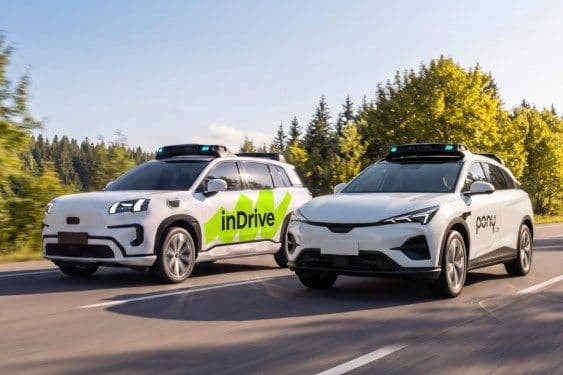
Uber rival inDrive eyes 2027 robotaxi tests in Central Asia with Pony.ai and Nvidia
Ride-hailing companyinDrive, known for letting passengers and drivers negotiate fares, is working with Chinese autonomous driving firm Pony.ai and Nvidia to begin testing robotaxis in Kazakhstan in 2027. The companies said Friday that they had signed a memorandum of understanding to explore bringing Pony.ai’s robotaxis to inDrive’s platform — a reflection of the growing interest in self-driving technology beyond the U.S. and China. Testing will begin in Kazakhstan’s capital, Astana, in the first half of 2027, inDrive CTO Yuri Misnik told TechCrunch. The tests will initially involve a safety operator, with fully driverless rides as the eventual goal. Under the proposed plan, Pony.ai would provide its Gen-7 robotaxis, which inDrive would offer through its ride-hailing app and operate in Kazakhstan. Nvidia, on the other hand, would supply the AI technology, including its Hyperion platform and Halos safety system. The move comes as ride-hailing companies expand their push into robotaxis. Earlier this month, Uber announced plans totest Pony.ai’s robotaxis in London, where it has also started offering supervised autonomous rides with British startup Wayve, aninvestor-backed partner. Uber is also working with multiple robotaxi companies in other markets, including the Middle East. inDrive, which has built its business around affordable rides, is looking to bring a similar focus to autonomous ride-hailing as it explores a market where Uber and other rivals are already making moves. “Our approach is capital-light by design,” said Misnik. “We work with a range of partners in different markets, combining their expertise with ours to deliver a better customer experience.” Nvidia says its Hyperion platform could lower the cost of developing robotaxis by giving companies a ready-made foundation of sensors and computing technology, rather than requiring them to build and integrate everything themselves. The company also offers its Alpamayo model and tools to generate synthetic data and test autonomous driving systems across different driving scenarios. “Those savings are particularly relevant in emerging markets, where ride-hailing is already relatively affordable and autonomous services need to compete on cost,” Ali Kani, Nvidia’s vice president of automotive, told TechCrunch. The announcement coincides with Nvidia CEO Jensen Huang’s first visit to Kazakhstan on Friday. The Kazakhstan proposal would also add to Pony.ai’s ongoing push beyond China. The company aims to havemore than 3,500 robotaxisoperating in over 20 cities worldwide by the end of 2026, up from a fleet of 1,975 vehicles at the end of June. Last month, Kazakhstanannouncedplans to launch autonomous taxi services in 2027, with initial trials planned in Astana and two other cities. It has also introduced rules for autonomous vehicles to be tested on certain public roads. Astana’s harsh winters could make it a useful testing ground for robotaxis. The city, with a population of around 1.7 million, faces months of snow and ice, posing challenges for autonomous driving systems. “Launching here will provide an important opportunity to evaluate autonomous driving technology in challenging winter conditions,” inDrive founder and CEO Arsen Tomsky said. “Success in Astana could offer valuable insights for expanding autonomous mobility to other locations facing similar challenges.” Kazakhstan is not the only market where inDrive is exploring robotaxis. In December, the company signed a separate agreementwith Saudi Arabia’s AI Driverto explore deploying autonomous vehicles powered by Chinese self-driving firm WeRide, starting with Riyadh. The companies had targeted a pilot in the first half of 2026, though it remains unclear whether testing has begun. “We are also looking at a number of other markets for future deployments,” said Misnik. “One of the main requisites for successful launch in our view is a favorable and collaborative regulatory environment to facilitate safe and sustainable testing on the roads.” inDrive operates in more than 1,200 cities across 47 countries. The company has alsoexpanded beyond ride-hailinginto delivery, intercity transportation, and financial services.