AI Styling Studio — Infinite avatar looks from just 1 photo.Try it now.

BestAITools

Submit your Tool

8000+ AI tools already listed
8K+Tools
100K+/moViews
25K+/moVisitors

AI NewsMax Hodak’s Science Corp. is preparing to place its first sensor in a human brain

Max Hodak’s Science Corp. is preparing to place its first sensor in a human brain

1:54 AM IST · April 15, 2026
Max Hodak’s Science Corp. is preparing to place its first sensor in a human brain

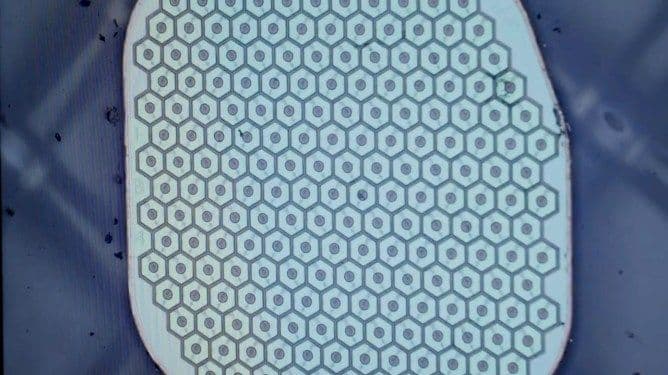
Science Corporation, the startup from former Neuralink president and co-founder Max Hodak, has enlisted a top neurobiologist to lead the first U.S. human trials for its biohybrid brain-computer interface. Dr. Murat Günel, chair of Yale Medical School’s Department of Neurosurgery, has signed on as a scientific adviser after two years of discussions. His goal is to surgically place the first sensor for a future interface — one that will eventually combine lab-grown neurons with electronics — into a patient’s brain. Science, founded in 2021, completed a $230 million Series C fundraising roundlast monththat valued the company at $1.5 billion. Its most advanced product is PRIMA, a device for restoring vision in people with blindness caused by macular degeneration and similar conditions. Science acquired the technology in 2024 and has advanced it through clinical trials, with plans to make it more widely available in Europe once regulatory approval is obtained, perhaps as soon as this year. Hodak, however, co-founded the company witha bigger visionin mind: creating reliable communication links between computers and the human brain — both to treat disease and to establish a path toward human enhancement, such as adding entirely new senses to the body. He has dedicated his career to that proposition, from talking his way into a graduate neuroscience lab as a college student, to founding his first biotech computing startup, to building Neuralink alongside Elon Musk. Neuralink and other organizations have succeeded in using electronic sensors to detect brain activity in patients suffering from ALS, spinal injuries, and other conditions that sever the brain’s communication with the body. Users with implanted devices can control computers or generate words on a screen simply by thinking about them. However, thepath to a real marketfor these devices remains murky, given regulatory challenges and the relatively small number of patients with applicable diagnoses. For his part, Hodak concluded that the conventional method of influencing the brain with electricity by using metal probes or electrodes is the wrong path forward. While the technology can achieve remarkable results, Günel says these probes cause brain damage that is likely to undermine device performance over time. That limitation led the Science founding team toward a more organic approach. “The idea of using natural connections through neurons and creating a biological interface between the electronics and the human brain is genius,” Günel told TechCrunch. Alan Mardinly, a co-founder and the company’s chief science officer, has led development of Science’s biohybrid sensor with a team of 30 researchers. The final device will be embedded with lab-grown neurons. Those neurons can be stimulated with pulses of light and are designed to naturally integrate with the neurons in a patient’s brain, forming a bridge between biology and electronics. In 2024, the company releaseda working paperthat showed the device could be safely implanted in mice and used to stimulate brain activity. Inside the company, the focus now is developing prototypes of the device and working out how to grow neuron cells for different therapeutic applications that meet the standards for medical use. Günel will advise the team as it is preparing for human clinical trials and is already in discussion with the medical ethics boards that oversee experiments involving human subjects. The first step will be testing the company’s advanced sensor, without the embedded neurons, inside a living human brain. Unlike a Neuralink device, which is inserted directly into brain tissue, Science’s sensor will be implanted inside the skull but rest on top of the brain. Possibly because of that distinction, the company says it doesn’t plan to seek FDA approval for these trials, arguing the tiny device — which contains 520 recording electrodes packed into an area the size of a pea — poses no significant risk to patients. The team’s plan is to find patient candidates who already require significant brain surgery, like stroke victims who need a piece of their cranium removed to reduce the impact of brain swelling. In such a case, Günel expects to place the sensor on top of their cortex and evaluate its safety and efficacy in measuring brain activity. Günel believes the device could help address multiple neurological conditions if it proves successful. One early use could be delivering gentle electrical stimulation to damaged brain or spinal cord cells to encourage healing. A more complex application might involve monitoring neurological activity in patients with brain tumors, and providing early warnings to caregivers about oncoming seizures. If the full potential of these devices is realized, though, Günel wonders if they might provide more effective treatments for conditions like Parkinson’s disease, a progressive disorder that gradually robs patients of control over their bodies. Current treatment options includeexperimentalbrain cell transplants and deep brain stimulation with electricity, but neither has been proven to reliably stop the disease from advancing. “I imagine this biohybrid system as combining those two — you have the electronics, and you have the biological system,” he told TechCrunch. “In Parkinson’s, for example, we cannot stop the progression of the disease; in neurosurgery, all we are doing is putting an electrode to stop the tremors. Whereas if you can really put the [transplanted] cells back in the brain, protect those circuits, there’s a chance, and I believe it’s a good chance, that we can stop progression of the disease.” There is much work to be done before then, however. Günel says it would be “optimistic” to expect trials to begin in 2027.

read more

Latest AI News

View All News →
Fika Jobs raises $4M to build a video-first hiring platform where AI agents interview candidates

Fika Jobs raises $4M to build a video-first hiring platform where AI agents interview candidates

The hiring process has long been criticized for its inefficiency and opacity. Candidates spend hours writing applications and submitting cover letters, only to disappear into what often feels like a black box. Generative AI has only made things messier, with employers increasingly relying on AI-powered screening systems to sift through an overwhelming number of submissions. Stockholm-based startupFika Jobsthinks there’s a better way. The company is building a video-first hiring platform that combines AI interview agents with short-form video profiles, creating something that feels like a cross between LinkedIn and TikTok. Instead of relying solely on resumes, candidates complete AI-powered interviews designed to showcase their personality and communication skills. Fika Jobs announced on Tuesday a $4 million pre-seed round, which will be used to continue developing the platform, grow the team, and prepare for a wider launch later this year. For job seekers, the process starts by connecting a LinkedIn profile. Fika’s AI reviews the candidate’s background and generates personalized interview questions. Candidates then complete a roughly 10-minute video interview with the AI agent, currently powered by Google’s Gemini models. After the interview, Fika automatically turns responses into short video clips and organizes them into a profile. Instead of applying to every new role, candidates maintain a live profile that employers can discover and revisit as new opportunities arise. The idea came from co-founders and brothers Jakob Dubois (CEO) and Alexander Dubois (CTO) while they were building their previous startup. “When we were building [social app] Gaff, we spent a lot of time recruiting and almost passed on a candidate because his resume did not really stand out,” Jakob Dubois told TechCrunch. “We ended up speaking with him anyway, and within minutes, his grit, drive, and ambition became obvious. Exactly the kind of person we wanted to hire.” That experience convinced the founders that some traits that employers care about most are difficult to capture on paper. Unlike most competitors (Alex,Maki, andMercor, among others) that focus on helping employers source, screen, and match candidates more efficiently with AI, Fika is building a platform where candidates maintain video-first profiles and employers browse a pool of people who have already been interviewed and evaluated by AI. If successful, Fika Jobs could help employers assess communication skills and cultural fit early in the hiring process, complementing traditional resume and application reviews. This approach may be especially valuable for early-career professionals and candidates from non-traditional backgrounds, whose potential is not always apparent from a resume alone. Of course, video profiles introduce real bias risks that are also worth acknowledging. When employers can see a candidate’s race, age, gender, physical appearance, and accent before evaluating their qualifications, it opens the door to discrimination that a resume, for all its flaws, at least partially obscures. There’s a reason some companies have moved toward blind resume screening. The platform plans to open early access to candidates this week, with a broader public launch expected this fall. The company will initially focus on Sweden before expanding internationally. Fika currently has a small team but expects to reach around 10 employees by the end of the year. More than 100 companies are on the waitlist, say the founders, though they declined to disclose which ones. Separately, they said more than 50 companies have tested the platform, including Plenty Labs, SICS.ai, Kognity, and Rebtel. The platform is free for job seekers. Employers pay nothing up front, but Fika takes 10% of a candidate’s first-year salary upon a successful hire. (The company notes that this is lower than the 20% to 30% placement fees often charged by traditional recruiters and headhunters.) The round was led by Luminar Ventures, with participation from Alliance VC and King co-founders Sebastian Knutsson and Riccardo Zacconi, the duo best known for creating the hit mobile game Candy Crush.

1 hour ago

View

4 days left to save up to $190 on TechCrunch Founder Summit 2026

4 days left to save up to $190 on TechCrunch Founder Summit 2026

Founders don’t grow alone. The best founders learn from peers facing similar challenges, gain insights from operators who have already scaled, and build relationships with investors who can help fuel the next stage of growth. You have just four days left to save up to $190 on your pass toTechCrunch Founder Summit 2026before Early Bird rates end on June 26 at 11:59 p.m. PT. On November 4 in Boston, more than 1,000 founders and investors will come together for a full day of practical insights, peer-to-peer learning, and meaningful networking designed to help startups grow faster. This is TechCrunch’s flagship founder conference, built specifically for founders. Whether you’re preparing to raise capital, scaling revenue, hiring your next team members, or planning your next major milestone, Founder Summit connects you with the people and strategies that can help move your company forward. Register by June 26 to save up to $190 on your pass.Groups of four or more can save up to 30%. TechCrunch Founder Summitis designed to deliver practical takeaways you can put into action immediately. You’ll connect with: The conversations are candid, focused, and designed to help founders solve real business challenges.Register here to save up to $190. Founder Summitprogramming focuses on the decisions that shape a company’s future. Through breakout sessions and roundtable discussions, you’ll gain insights you can apply right away. Past topics have included: Whether you’re raising your first round or scaling toward your next major milestone, these sessions are built to help you make smarter decisions and move faster.Register here to save up to $190. Previous speakers have shared firsthand lessons on company building, fundraising, and growth, including: Additional speakers have included leaders from Sequoia Capital, NFX, Underscore VC, Glasswing Ventures, Wing Venture Capital, Construct Capital, Greylock, and Precursor Ventures. The 2026 agenda is currently taking shape, with more founders, operators, and investors to be announced soon on theevent page. Interested in leading the conversation?Submit a topicfor a breakout or roundtable session for a chance to be voted onto the agenda by the TechCrunch audience. TechCrunch Founder Summit 2026is where founders come to gain practical insights, build valuable relationships, and accelerate growth. Join 1,000+ founders and investors in Boston on November 4 for a day of learning, networking, and conversations that can help shape your company’s future. Early Bird savings end in just four days, June 26 at 11:59 p.m. PT.Register now to save up to $190on your pass and up to 30% when registering as a group before prices increase.

1 hour ago

View

Tredence Acquires KMK Consulting to Expand Healthcare, Life Sciences Business

Tredence Acquires KMK Consulting to Expand Healthcare, Life Sciences Business

The company targets 25% revenue from the sector by 2028.

1 hour ago

View

Indian Army, Zoho Sign MoU for Indigenous Digital Upgrade

Indian Army, Zoho Sign MoU for Indigenous Digital Upgrade

Indian Army partners with Zoho to accelerate digital transformation under JAI mission, boosting indigenous capabilities

1 hour ago

View