AI Styling Studio — Infinite avatar looks from just 1 photo.Try it now.

BestAITools

Submit your Tool

8000+ AI tools already listed
8K+Tools
100K+/moViews
25K+/moVisitors

AI NewsMantis Biotech is making ‘digital twins’ of humans to help solve medicine’s data availability problem

Mantis Biotech is making ‘digital twins’ of humans to help solve medicine’s data availability problem

9:31 PM IST · March 30, 2026

Mantis Biotech is making ‘digital twins’ of humans to help solve medicine’s data availability problem

Large language models trained on vast datasets could speed genomics research, streamline clinical documentation, improve real-time diagnostics, support clinical decision-making, accelerate drug discovery, and even generate synthetic data to advance experiments. But their promise to transform biomedical research often runs into a bottleneck: beyond the structured data healthcare relies on, these models struggle in edge cases like rare diseases and unusual conditions, where reliable, representative data is scarce. New York-basedMantis Biotechclaims it’s developing the solution to fill this data availability gap. The company’s platform integrates disparate sources of data to make synthetic datasets that can be used to build so-called “digital twins” of the human body: physics-based, predictive models of anatomy, physiology, and behavior. The company is pitching these digital twins for use in data aggregation and analysis. These digital twins could be used for studying and testing new medical procedures, training surgical robots, and simulating and predicting medical issues or even patterns of behavior. For example, a sports team could predict the likelihood of a specific NFL player developing an Achilles heel injury based on their recent performance, training load, diet, and how long they’ve been active, Mantis’ founder and CEO Georgia Witchel explained to TechCrunch in a recent interview. To build these twins, Mantis’ platform first takes data from a variety of sources such as textbooks, motion capture cameras, biometric sensors, training logs and medical imaging. Then, it uses an LLM-based system to route, validate, and synthesize the various data streams, and runs all that information through a physics engine to create high-fidelity renders of that dataset, which can then be used to train predictive models. “We’re able to take all these disparate data sources and then turn them into predictive models for how people are going to perform. So anytime you want to predict how a human being is going to be performing, that is a really good use case for our technology,” Witchel said. The physics engine layer is key here, Witchel told TechCrunch, because it helps the platform enhance the available information by grounding the generated synthetic data and realistically modeling the physics of anatomy. “If I asked you to do hand-pose estimation for someone who is missing a finger, it would be really, really hard, because there are no publicly available datasets of labeled hand positions of someone who is missing a finger. We could generate that dataset really, really easily, because we just take our physics model and we say, remove finger X, regenerate model,” she said. Since Mantis’ platform fills gaps in data sources, Witchel thinks there’s potential for it to be used widely across the biomedical industry, where information on procedures or patients can be difficult to access, is unstructured or siloed into various sources. She stressed edge cases or rare diseases, where data is hard to obtain since there are often ethical and regulatory constraints around including patients’ data in public datasets, or using it for training AI models. “You know how when you see a three-year-old running around, and they have a Barbie, and they’re holding it by one leg and smashing it against a table? I want people to have that mindset with our digital twins,” she said. “I think that’s going to open up people to this idea that humans can be tested on when you’re using virtual humans. I feel currently, people operate with the exact opposite mindset, which totally makes sense, because people’s privacy should be respected. In fact, I don’t really think people’s data should be exploited at all, especially when you have these digital twins.” For now, Mantis has seen success in professional sports, presumably because there is a need to model high-performing athletes. Witchel said one of the startup’s main clients is an NBA team. “We create these digital representations of the athletes, where it basically shows here’s how this athlete has jumped, not just today, but for every single day in the past year, and here’s how their jumps are changing over time compared to the amount that they’re sleeping, or compared to how many times they lift their arms above their head,” she explained. The startup recently raised $7.4 million in seed funding led by Decibel VC, with participation from Y Combinator, a few angel investors, and Liquid 2. The funding will be used for hiring, advertising, marketing and go-to-market functions. The next step for Mantis, Witchel said, is to continue building out the tech, and eventually release the platform to the general public, targeting preventative healthcare. The company is also working to cater to pharmaceutical labs and researchers working on FDA trials, aiming to deliver insights into how patients are responding to treatments.

read more
Latest AI News

View All News →
Omen AI’s plan to optimize data centers is all wet

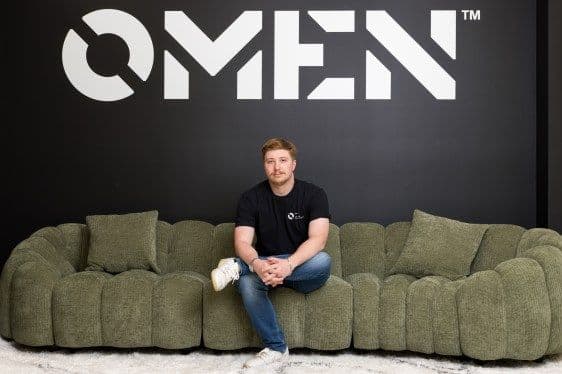
Omen AI’s plan to optimize data centers is all wet

The AI-driven demand for compute power has data centers looking to squeeze more from every rack of GPUs. One consequence? Bacterial outbreaks. The liquid for liquid-cooled chips is a mixture of water and a substance that inhibits bacteria growth. To run the chips hotter, data center managers can change the mix to include more water, which absorbs heat better, but leads to nasty contamination that clogs the flow. To solve that, they flush the system, which can mean shutting down a rack for five or six hours at a potential cost of millions of dollars. Omen AIhas a solution: A tiny spectrometer that can monitor that fluid health in real time, spotting bacterial growth before it becomes a massive problem. “You’re not risking huge amounts of downtime because you have no insight into what’s going on chemically,” explains CEO and founder Zach Laberge. Today, Omen AI said it raised a $31 million Series A round, led by Nava Ventures and including participation from CRV, Vanderbilt University, Mann+Hummel, Starhill Holdings, and Hard Launch Capital, as well as personal investments from executives at Bridgestone, GM, Johnson Controls, and TensorWave. Laberge founded his first company in 2020 when he was 14, raising $3 million to install sensors on construction equipment and ultimately dropping out of high school. (His father and mother, a former Minister of Education for Ontario, were supportive of his plan to carve his own path.) After that startup shut down, Laberge started Omen in 2024, with the idea of focusing on fluid systems as the key to enabling construction machinery to be smart enough to know when it needed to be fixed. The idea was to replace the time-consuming process of extracting samples and sending them to a lab with real-time awareness. Besides bacterial growth, the device can spot pumps and pumps wearing out if it sees copper or chromium, or seals if it sees silicon. Caterpillar dealerships were a key early customer for Omen’s heavy vehicles business, but Cat is also a major supplier of gas-powered turbines and generators to provide on-premises power for data centers. It didn’t take long for Omen to see where the wind was blowing. “That was kind of the transition,” Laberge told TechCrunch. About six months ago, “a lot of the dealerships were saying, ‘Hey, we’re starting to put sensors on our turbines, can you guys do anything on the building side of things?’” Omen discovered that those buildings are full of fluid, from their HVAC systems to their chip cooling. Spotting a new, fast-growing group of potential customers, Omen began to focus on data centers. “It’s rare to see such a young founder who has the respect of established, large corporations in a space that moves a bit more slowly,” said Cory Rellas, a partner at Nava Ventures who sits on Omen’s board. “For Omen in particular, much of our diligence came through our introductions with large customers which quickly validated their approach.” Omen, which has raised $40 million since its founding in 2024, is working with a dozen data center customers as they build out their offering, including TensorWave, a company building an AI compute cloud on AMD chips. “The fluid running through these massive systems is a critical variable that most of the industry is flying blind on,” Piotr Tomasik, TensorWave’s president, said in a statement. “Omen [sees] the future of infrastructure exactly the way we do, better monitoring to optimally support compute customers.” While many organizations rely on mailing fluid samples to labs for insight, Omen isn’t alone in developing on-premises analytics — Pyxis, an established water-monitoring firm, rolled out its data center coolantmonitoring productearlier this month. The key tech advances that unlocked this approach are recent improvements in both optical technologies and signal processing software. “Hardware is just cheap enough that it makes sense to play at scale, and then signal processing lets us make more sense out of the noise,” Laberge said.

3 hours ago

View

Robot hand company settles Tesla trade secret suit and announces $11M raise

Robot hand company settles Tesla trade secret suit and announces $11M raise

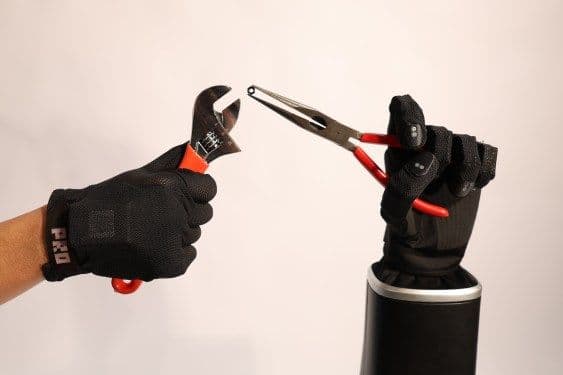
Jay Li doesn’t recommend getting sued by Tesla if you’re trying to get a startup off the ground. But he does think his company, Proception, might be better off for having endured the experience. “I think it’s kind of like a resilience test, or pressure test,” he told TechCrunch in an exclusive interview. “People say that what doesn’t kill you makes you stronger, right?” Li, who was a technical lead on Tesla’s Optimus humanoid robot program, wasaccused by his former employer last yearof absconding with trade secrets to start Proception. But after months oftradinglegal blows, he finally reached a settlement with Tesla, which dismissed the lawsuit earlier this month. (Tesla did not respond to a request for comment.) Now Li is free to tackle what he thinks is an even harder problem: making robot hands work like a human’s. To help do that, Proception announced Monday that it has raised an $11 million seed round led by First Round Capital, with contributions from Y Combinator and early stage fund BoxGroup. Proception also announced Monday that it is shipping the first batch of its “high-dexterity robotic hand” to “researchers and robotics companies,” while opening up to wider orders. The goal, Li said, is to become the top hand supplier to other companies that don’t want to spend the time or resources developing what’s known in the industry as “dextrous manipulation.” While there’s been an avalanche of money and attention rushing into the world of robotics, Li believes not enough of that has gone to making robotic hands truly mimic a human’s hands. One of the loudest voices talking about this challenge has actually been his old boss, Tesla CEO Elon Musk, who has said robot hands are one of the biggest engineering problems yet to be solved. While Musk has maintained that Optimus robots could start working in factories in a matter of years, the consensus view is that making robotic hands equivalent to a human’s is still many years away. Kevin Lynch, the director of Northwestern University’s Center for Robotics and Biosystems, told the Wall Sreet Journal last year that his team believes it will be a decade until they are “functional and useful and able to do some of the things that humans do.” Li thinks Proception can do it much faster, in large part because of how they’re collecting data. Most companies training humanoid robots right now are using teleoperators to train their systems. A human wearing a virtual reality headset is able to see what a robot sees and manipulate what’s in front of that robot, then the robot can learn from the commands given by the human. A big drawback to this approach, according to Li, is that the teleoperator is not receiving feedback from the objects the robot is touching. This approach is also limited to the number of robots a company has available at any given moment, Li said. Proception’s solution is a glove laden with sensors. With human testers wearing the gloves (and a headset), Proception and its customers can capture “human hand interaction data without requiring a robot in the loop,” according to Proception’s press release. This same glove also goes on the hand Proception is developing, acting as its sensor-packed “skin.” The hand has 22 degrees of freedom and multiple joints per finger to enable a “wide range of dexterous motions,” according to Proception. Li said this approach will also let Proception and its customers gather finer, more task-specific data that can allow its robotic hands to more accurately resemble a human’s. He also thinks it is better suited to scale up. “You need both hardware and data, and those need to come hand-in-hand to get [dextrous manipulation] to work. A lot of companies solely focus on hardware, or like hardware plus non-scalable data [collection],” he said. “We’re working on this highly dexterous hardware plus highly scalable data. We believe that’s a key combination to solve this problem.” First Round partner Bill Trenchard, who led the investment in Proception, said this was a big reason why he backed Li. “We think they will have the best hand in the market, maybe the most sophisticated hand today, and the underlying data and models to support that,” he told TechCrunch. “Dexterous manipulation is a very, very, very important part of the whole humanoid story going forward, and as many people have said, it’s sort of the last mile of getting these robots to be truly performant.” Trenchard also praised Li’s ability to keep a cool head while being sued by his former employer. “He was very upfront with us when this came out, and I think the team did an amazing job of keeping their heads down,” Trenchard said. “Jay’s a very strong leader.” Li is also confident. After facing down Tesla’s “hardcore litigation department,” he told TechCrunch that he wouldn’t be surprised if the company comes calling for help as Proception grows. “I think it will happen,” he said.

3 hours ago

View

Mphasis Joins Microsoft Security Partner Ecosystem Amid Rising Cyber Threats

Mphasis Joins Microsoft Security Partner Ecosystem Amid Rising Cyber Threats

Mphasis said the membership builds on its existing collaboration with Microsoft across managed security services, cyber fusion centres and advisory offerings, as enterprises step up investments in AI-driven cyber defence.

3 hours ago

View

Capgemini to Lead Bentley Motors' Digital Transformation With AI, Intelligent Manufacturing

Capgemini to Lead Bentley Motors' Digital Transformation With AI, Intelligent Manufacturing

The facility is being developed as a hub for hyper-personalised, digital, and sustainable luxury vehicle production.

3 hours ago

View