AI Styling Studio — Infinite avatar looks from just 1 photo.Try it now.

BestAITools

Submit your Tool

8000+ AI tools already listed
8K+Tools
100K+/moViews
25K+/moVisitors

AI NewsKana emerges from stealth with $15M to build flexible AI agents for marketers

Kana emerges from stealth with $15M to build flexible AI agents for marketers

12:16 AM IST · February 19, 2026

Kana emerges from stealth with $15M to build flexible AI agents for marketers

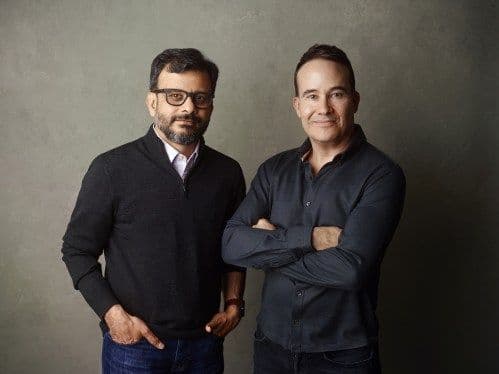
Marketing is one of the few operations no industry can afford to ignore, which is why we have a veritable host of AI-powered marketing tools being shoved into marketers’ faces today. All the social platforms, from Facebook and Instagram to TikTok, and major incumbents like Microsoft and Google, to content-generation startups like Jasper and Copy.ai, offer AI tools that claim to make marketers’ lives easier in uncountable ways. That was partly why I was confused to see yet another marketing AI startup entering the fray: San Francisco-based Kana just came out of stealth with a suite of AI agents that can do data analysis, audience targeting, campaign management, customer engagement, media planning, and optimizing for AI chatbots. The startup has raised $15 million in a seed funding round led by Mayfield. But Kana has something going for it that most marketing startups today don’t: Its co-founders, Tom Chavez (CEO; pictured above on the right) and Vivek Vaidya (CTO; pictured above on the left), have been building marketing tech for more than 25 years. Kana’s actually their fourth venture afterRapt(acquired by Microsoft in 2008),Krux(bought by Salesforce in 2016), and startup studiosuper{set}, which they incubated Kana in for nine months. Calling this a “wondrous” time to be building, Chavez said there was a clear opportunity to bring their experience and today’s AI tech to bear on this class of problems. “We see a market that’s crying out for solutions that meet this moment […] We understand the space deeply, having wallowed in it arguably a little too long; having really stood in our customers’ pain,” he told TechCrunch. The solution, as Kana pitches it, involves “loosely coupled” AI agents that can be tailored “on the fly,” integrated into legacy marketing software, and can simultaneously work on different operations. So a marketer could, for example, upload a media brief that Kana’s agents would analyze to figure out the campaign goals, search for the audience to target, and pull in data from inventory and market research to further tweak the plan. The platform bakes in autonomous campaign tracking, optimization, and reporting. Alongside agents, Kana offers synthetic data generation to augment third-party data sources for activities like market research and audience targeting. This, Chavez argued, could help companies reduce the costs of using third-party data, fill in gaps in the data, and help marketers run tests on various platforms faster and narrow down strategies. Kana says this is all done while keeping humans in the loop so that marketers can approve the AI agents’ actions, give feedback, and customize what the agents do as their needs change. Chavez and Vaidya emphasized the importance of the platform’s flexibility, arguing that the ability to deploy, tailor, and build new agents in real time would let marketers see results on their campaigns faster than they would with legacy systems. Going forward, the startup sees that very flexibility to customize its platform for customers, doubling as its moat against incumbents and other startups building similar products. “We have the opportunity not to create bespoke solutions, but to highly tailor and configure these solutions to meet customers where they are. Larger companies just are never going to get there,” Chavez said. “We live in a world which allows us to explore a third option [with customers]: not build, not buy, but build with — build with in a way which is supported,” Vaidya added. “We can move with insane speed that these big companies just cannot. And that’s our advantage.” Kana will use the fresh cash to expand hiring across engineering, product, and go-to-market. Mayfield managing partner Navin Chaddha is joining the company’s board.

read more

Latest AI News

View All News →
What is Mistral AI? Everything to know about the OpenAI competitor

What is Mistral AI? Everything to know about the OpenAI competitor

Following the Trump directive that led Anthropic topull its latest AI models offlineand growing calls forsovereign tech that reduces reliance on the U.S.,Mistral AIhas been caught in a whirlwind of attention. But the French AI darling is often misunderstood, and the fact that it develops large language models (LLMs) has muddied the picture. Anyone who judges Mistral by how close it is to becoming ‘the OpenAI from Europe’ is in for disappointment. Its chat and agent Vibe, formerlyLe Chat, only has an ounce of ChatGPT’s brand recognition, and Claude is more popular than Mistral’s modelseven among founders based at Station F, Paris’ startup campus. On the other hand, casual observers tend to miss that the French decacorn is following the Palantir playbook, with forward-deployed engineers that help governments and large corporations adopt AI and tailor it for their use cases. This approach is also better suited for Mistral’s means. While the company is rumored to be raisingsome $3.5 billion at a $23.15 billion valuation, nearly doubling its current valuation, that’s still far less than U.S. frontier labs. But its revenues have also ramped up; in February, it disclosed that its annual recurring revenue was nowabove $400 million, up from $20 million just one year earlier, and claimed it was on track to surpass $1 billion in ARR this year. This has helped Mistral gain a seat at the table in places like Davos, and even in rooms where tech CEOs have a hard time getting their message across, such asthe French Parliament. Mistral CEO Arthur Mensch has becomea public ambassador for a certain vision of AI, but he still has some evangelizing to do when it comes to explaining his own company. In a lengthyLinkedIn post, Mensch broke down what the Paris-based company has been doing “for a living” — deploying its models and agent platform on the infrastructure of its Enterprise customers, and helping them build custom models withForge, a platform that lets them use their own data for training. However, misunderstandings and bigger hopes around Mistral don’t stem out of thin air. Named after a wind, the company pursues a grand vision. “We exist to make sure that everyone gets access to the best AI systems, outside of centralized control exercised by states or corporations that feel the need to control in-fine deployment of AI,” Mensch wrote. This vision means that Mistral is looking beyond the enterprise. It also aims to keep on making big investments into research to keep up with foundational AI rivals — and Mensch’s post also covered where he thinks the company stands in that regard. “Today, we do not yet own the best language models, but we’ve constantly reduced that gap. We have a very exciting model to come this summer – it will be open-weight, and we’re opening early access to it in July. In domains that are less compute bound, e.g. voice, vision and document processing, we have state-of-the-art solutions,” Mensch claimed. Mistral’s upcoming model has already generatedsome buzz on X, where Mensch and Mistral backer Marc Andreessen haveengaged with jokesand amplified memes on what we now know won’t be called “Le Chaton Fat.” That’s another sign that the world — especially “the rest of the world” — is keeping an eye out for whatever Mistral has in its bag. The most interesting part may be happening behind the scenes. Earlier this year, Mistralacquired infrastructure startup Koyebto further boost its plans to build “a true AI cloud. The company also announced a€4 billion investment strategy(around $4.56 billion) to build data centers in France and Sweden — and the sovereignty undertones are never very far. “We’re building under the premise that AI technology is a commodity technology that every organization needs a secured and affordable supply of,” Mensch wrote. If you are curious to learn more, keep on reading. Mistral’s three founders share a background in AI research at major U.S. tech companies that have operations in Paris. Before becoming Mistral’s CEO, Mensch used to work at Google’s DeepMind; CTO Timothée Lacroix and chief scientist officer Guillaume Lample are former Meta staffers. Mistral also granted the title of co-founding advisers to the cofounders of health insurance startupAlan, Charles Gorintin andJean-Charles Samuelian-Werve(also a board member). In addition, it recently appointed three new executives to support its growth: Johan Bergqvist as Chief Financial Officer, Brian Hall as Chief Marketing Officer and Kamal Brar as SVP, Partners & Alliances. Mistral has developed abroad suite of modelsranging from LLMs to multimodal, reasoning, audio andOCRmodels. Not all of its models emphasize size; there’s the tellingly named Mistral Small 4 and “Les Ministraux,” a family of modelsoptimized for edge devicessuch as phones. Some are open weights, and it alsomade code agent Leanstral open source. In 2024, Mistralsigned a deal with Microsoftthat included a €15 million investment and a strategic partnership for distributing the French company’s AI models through Microsoft’s Azure platform. In May 2025, Mistral said it would participate in the creation ofan AI Campus in the Paris region, as part of a joint venture with UAE investment firm MGX, NVIDIA, and France’s state-owned investment bankBpifrance. In June 2025, Mistral said it would launch a European platform dedicated to AI and powered by Nvidia processors,Mistral Compute, in 2026. The initiative washailed as “historic”by France’s president, Emmanuel Macron, who shared the stage with Mensch and Nvidia CEO Jensen Huang at the VivaTech conference shortly after the announcement. In July 2025, Mistral launchedAI for Citizens, an initiative that the company claimed could “help States and public institutions strategically harness AI for their people by transforming public services.” In September 2025, Mistral and chip company ASMLstruck a partnership“to explore the use of AI models across ASML’s product portfolio as well as research, development and operations.” Mistral also secured strategic partnerships with the likes ofAccenture,press agency Agence France-Presse, France’sarmyandjob agency,Luxembourg,shipping giant CMA, German defense tech startupHelsing,IBM,Orange, andStellantis. Most of Mistral AI’s funding to date wasdebt financing, but the company has also raised several venture funding rounds, with a grand total around $4 billion, according toCrunchbase. In June 2023, just one month after being founded, Mistral AI raised arecord $113 million seed roundled by Lightspeed Venture Partners. Sources at the time said the seed round,Europe’s largest ever, valued the startup at $260 million. Other investors in that round included Bpifrance, Eric Schmidt, Exor Ventures, First Minute Capital, Headline, JCDecaux Holding, La Famiglia, LocalGlobe, Motier Ventures, Rodolphe Saadé, Sofina, and Xavier Niel. Six months later, Mistral closed a€385 million Series A($415 million at the time), at a reported valuation of $2 billion. The round was led by Andreessen Horowitz (a16z) and saw participation from Lightspeed, as well as BNP Paribas, CMA-CGM, Conviction, Elad Gil, General Catalyst, and Salesforce. Microsoft’s$16.3 million convertible investmentin Mistral as part of a partnership announced in February 2024 was presented as a Series A extension, implying an unchanged valuation. In June 2024, Mistral raised€600 million (about $640 million) in a mix of equity and debt. Thelong-rumored roundwas led by General Catalyst at a $6 billion valuation, with notable investors including Cisco, IBM, Nvidia, and Samsung Venture Investment Corporation participating. In September 2025, Mistral closed a €1.7 billion Series C round (about $2 billion) led by ASML at a €11.7 billion valuation (approximately $13.8 billion), with participation from existing backers DST Global, a16z, Bpifrance, General Catalyst, Index Ventures, Lightspeed, and Nvidia. In addition toinfrastructure startup Koyeb, Mistral has also boughtEmmi, an Austrian startup focusing on physics AI, with the ambition to better support industrial enterprises in their AI transformation. While Mistral has yet to design its own chips, Menschisn’t ruling it out. “Owning the chips may come, I think it should come at some point, but for now we are relying on Nvidia, which is a great partner to us, and we’re testing a few things here and there,” he told CNBC. Mistral is “not for sale,”Mensch said in January 2025 at the World Economic Forum in Davos. “Of course, [an IPO is] the plan.” This makes sense, given how much the startup has raised so far: Even a sale to arumored prospective buyer like Applemay not provide high enough multiples for its investors, not to mention sovereignty concerns depending on the acquirer. This story was originally published on February 28, 2025, and will be regularly updated.

56 minutes ago

View

Alibaba reportedly bans employees from using Claude Code

Alibaba reportedly bans employees from using Claude Code

China’s Alibaba will ban employees from using Anthropic’s programming tool Claude Code, starting on July 10, according tomultiplereports. Anthropic already prohibits Chinese companies, as well as foreign entities owned by those companies, from using its models. The company has reportedly beenworking to close loopholesthat allow Chinese users to access Claude. According toa recent Reddit post, some of that loophole-closing involved a version of Claude Code that could secretly identify Chinese users. Anthropic’s Thariq Shihiparsaid in a post on Xthat this was “an experiment we launched in March that was meant to prevent account abuse from unauthorized resellers and protect against distillation.” (Distillationis a practice where AI models are trained on the outputs of other models.) “The team has landed stronger mitigations since then and we’ve actually been meaning to take this down for a while,” Shihipar said. Nonetheless, Alibaba has reportedly classified Claude Code as high-risk software and is instructing employees to use the company’s own Qoder tool instead.

56 minutes ago

View

Midjourney wants Hollywood studios to reveal the details of their AI usage

Midjourney wants Hollywood studios to reveal the details of their AI usage

As part of an ongoing legal dispute with three Hollywood studios, AI startup Midjourney is seeking to compel those studios to reveal how they use AI themselves. Disney and Universal sued Midjourney for alleged copyright infringementlast year, noting that the startup’s image-generation models could create images of characters, such as Bart Simpson and Darth Vader, who are owned by the studios. A few months later,Warner Bros. sued Midjourneyas well. The startup argues that training its AI models on images of copyrighted characters is permitted under fair use. The current dispute revolves around the documentation the studios will need to produce during the discovery process. A judge previously ruled that the studios would indeed have to provide information about their generative AI usage – but only when it led to “consumer-facing” videos and images. Inits latest filing, Midjourney seeks to overturn that limitation, arguing that it “unfairly” allows the studios “to cherry-pick only those documents they believe support their market harm claims while depriving Midjourney of documents that would support its defenses.” Midjourney goes on to claim that the “documents [the studios] are withholding are precisely those that would reveal whether, behind closed doors, they are doing exactly what they are suing Midjourney for doing.” For example, the startup says that if the studios are developing image-generating AI models  “for internal use in storyboarding or ideating content for film or TV, that evidence would equally demonstrate that it is an industry custom, even among the studios themselves, to download and train AI on unlicensed copyrighted content.” In the filing, the startup also argues that the studios should reveal all the prompts they used in Midjourney, as well as the resulting outputs, not just the prompts that produced the allegedly infringing images. The studios’ lead attorneyDavid Singer previously claimed Midjourney was seeking this documentationas part of a “fishing expedition.” He also said the studios “do not seek to stop AI technology or even shut down Midjourney’s business,” but rather “simply want Midjourney to stop copying their movies and TV shows and to stop distributing, publicly displaying, publicly performing, and creating derivative works that include copies of [their] famous characters without authorization.”

56 minutes ago

View

In Swiggy's Developer Community, Some are Planning Parties, Other are Prepping Meals

In Swiggy's Developer Community, Some are Planning Parties, Other are Prepping Meals

Swiggy is enabling developers to build health assistants, accessibility tools, and conversational shopping agents.

12 hours ago

View