Anthropic CEO outlines plan to ‘pace the frontier’
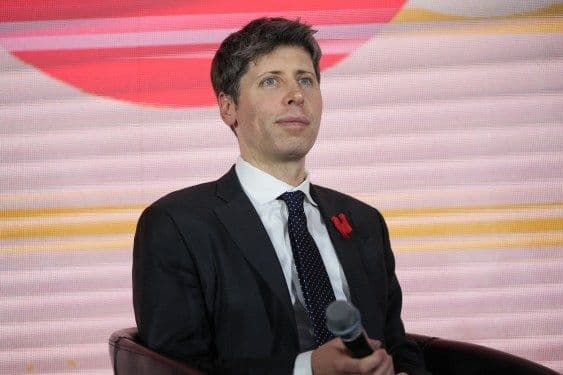
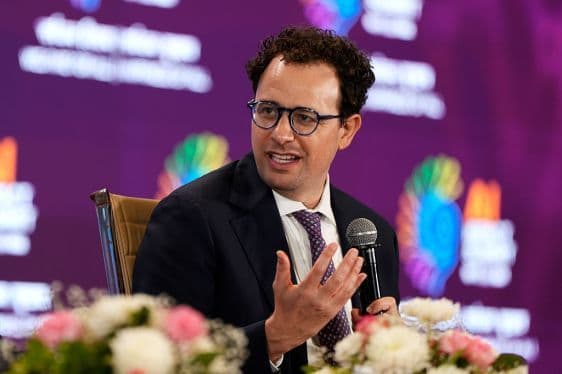
We’ve been seeing increasingly dire warnings from AI researchers about the dangers of artificial intelligence, and evencomments from OpenAI CEO Sam Altmanthat it may be time to “pace” AI development. But what would that actually look like? Ina new blog post, Anthropic CEO Dario Amodei not only echoed the call to “pace the frontier,” but also outlined three broad strategies for doing so. And he said Anthropic is “unilaterally committing” to one of them. Thedebate over AI safety and alignmentintensified this week afterresearcher Jacob Coxon wrote that he’s resigning from Anthropicover concerns that the leading AI companies are “gambling with our lives” while the people building the technology “earnestly believe it could kill us all by the end of the decade,” a claimrepeated by others at Anthropic. Amodei’s post doesn’t didn’t explicitly mention Coxon’s resignation or his concerns, but the CEO wrote that two things convinced him it’s time to take a more cautious approach to AI development:the OpenAI-HuggingFace hack, and the fact that “AI has been advancing drastically faster” in recent months, particularly with its “growing ability to build the next generation of AI.” “We must slow the pace at which we improve the capabilities of AI models,” Amodei wrote. “Progress will still seem fast, and we must make wise use of the time we gain.” His proposed first step would involve “embedded evaluators” from third-party organizations likeMETR— evaluators who can verify that AI companies are actually following their pacing and safety commitments and can also ensure that safety incidents get reported. (OpenAI was recently criticized fornot reporting an incident where its AI agents took over a German wiki form.) Amodei compared these evaluators to regulators who have been embedded with bank employees, and he said that inviting them in is “something Anthropic is unilaterally committing to (and calls on governments to require other frontier companies to match).” That means giving evaluators company badges, desks, and laptops, and providing access “mostly comparable to what internal risk assessment teams have,” with exceptions when required by law or contracts. Next, Amodei called for the leading AI companies “within democratic countries” to coordinate “common safety standards as well as limits on the rate of unchecked AI progress.” Such coordination might seem unlikely, both due tothe apparent animosity between Altman and Amodeiand also because their companies arereportedly worried that a coordinated pause could lead to antitrust scrutiny. Amodei alluded to that concern in his post, writing that “for antitrust reasons, it’s helpful for the US government to mediate or at least enable these discussions — they don’t need to participate, but do need to issue a narrow waiver for certain kinds of safety conversations.” Amodei also acknowledgedthe spectre of Chinese AI dominancethat’s often raised an argument against slowing development. But he said that if the US government and tech companies take steps like refusing to sell powerful chips or semiconductor manufacturing equipment to Chinese companies, as well ascracking down on model distillation, they could “slow China’s progress enough to widen America’s lead significantly over the next 3–5 years.” Lastly, Amodei called for “global coordination,” where the United States and its allies “attempt to coordinate with authoritarian governments, to the extent this is possible.” Amodei said this would mean “cooperation with China,” and he admitted that there are “stark limits on what can be achieved,” but he still suggested there might be opportunities for agreement, even if it’s just “prohibiting certain narrow and obviously dangerous uses of AI, such as using AI for the production of biological weapons or allowing users to do so.” With Amodei’s past willingness to acknowledge AI’s potential dangers, and with the company’s relative openness to certain forms of regulation, some AI boosters have already criticized him as a doomer whose comments have fed the current AI backlash. In response, Amodei said he’s tried to offer a “balanced” perspective” andargued that the backlash is “fundamentally a crisis of trust,”as people have become skeptical of tech companies, the tech industry, and the government. Industry critics have also been skeptical about these apocalyptic AI warnings, suggesting thatthey’re a distraction from the harm that the technology is already causing. Journalist Brian Merchant, for example,wrote that he has yet to see“a credible, step-by-step documentation of how exactly AI might move from self-recursively improving AI to killing every single human on the planet”; he also suggested that proposals similar to Amodei’s “would likely only wind up serving Anthropic and OpenAI; it’s what regulatory capture looks like in action.” In his new post, Amodei wrote that he continues “to believe that AI can enormously improve the quality of human life.” “My desire to achieve these benefits is undimmed,” he said. “But the benefits will only be achieved if we build the technology in the right way, and — so long as we use the time we gain well — it is worth taking unusually deliberate care to get it right.”