AI Styling Studio — Infinite avatar looks from just 1 photo.Try it now.

BestAITools

Submit your Tool

8000+ AI tools already listed
8K+Tools
100K+/moViews
25K+/moVisitors

AI NewsHow Elon Musk left OpenAI, according to Greg Brockman

How Elon Musk left OpenAI, according to Greg Brockman

2:30 AM IST · May 7, 2026
How Elon Musk left OpenAI, according to Greg Brockman

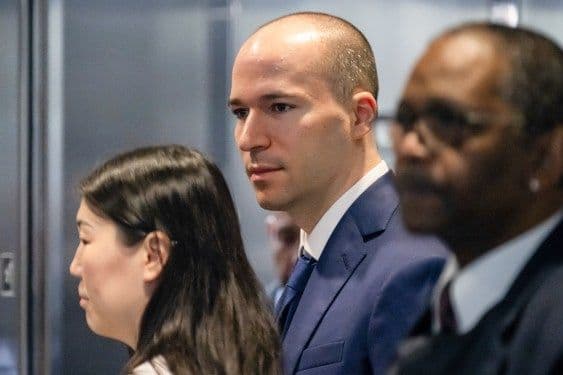
In late August 2017, key figures at OpenAI (then a small nonprofit research lab) gathered to discuss how they would create a for-profit to commercialize its technology and raise the funds needed to realize AGI. Elon Musk was demanding full control of the company and had just given each of his co-founders a Tesla Model 3. CTO Greg Brockman said he saw that as way of buttering them up at a time when Musk and Sam Altman were vying to win support for their respective visions of the company’s future. OpenAI’s head of research, Ilya Sutskever, had commissioned a painting of a Tesla to give Musk during the meeting as a friendly gesture. The conversation didn’t follow that mood: When Musk was told the others would not accede to his demand for control of the company, Brockman said he got angry and upset. He sat for several minutes thinking quietly. Then, in Brockman’s telling, Musk said, “I decline.” The SpaceX and Tesla founder “stood up and stormed around the table…I thought he was going to hit me. He grabbed the painting and started to storm out of the room. And then he turned around and said, ‘When will you be departing OpenAI?’” Brockman and Sutskever didn’t leave or commit to Musk’s vision. Musk stopped his regular donations to the company’s operating budget, and within six months, he would leave the board, though he paid for office space the company shared with Neuralink until 2020. As today’s legal battle over the future of OpenAI proceeds, scrutiny has settled on a key period in 2017 when the organization’s original co-founders disagreed about who would control its future, eventually bringing us Musk’s lawsuit against his co-founders. We have yet to hear from Sam Altman, but OpenAI president Greg Brockman testified for two days, often referencing a personal journal that offers a rare insight into what it’s like to be a 30-year-old tech executive in a pitched battle with Elon Musk. “It’s very painful,” Brockman said of the publicity around the journal, which he called “deeply personal writings that were never meant for the world to see. [But] there’s nothing in there I’m ashamed of.” Cutthroat negotiations between startup founders are rarely shared so publicly, especially when a company becomes as world-changing as OpenAI. We saw a recent taste of this rancor when OpenAI’s lawyers shared a text message Musk sent to Brockman two days before the trial began: “By the end of this week, you and Sam will be the most hated men in America. If you insist, so it will be.” The jury won’t see that note, but Musk’s lawyers have done their best to realize its spirit. They are trying to show the court that Altman and Brockman “stole a charity,” while OpenAI’s legal team tries to show that Musk had the exact same plan in mind. The inciting incident for all of this was when an OpenAI model defeated the top human player in the video game DOTA II. Brockman said that convinced everyone in the organization that compute was the key resource to create powerful AI tools, but that fundraising purely as a nonprofit would be insufficient. That led to talks about a for-profit subsidiary, of which Musk wanted “unequivocal” control, at least at the start. The other founders proposed equal shares, and perhaps more equity commensurate with a cash investment. Another idea on the table was somehow connecting OpenAI to Tesla’s AI work. Shivon Zilis, an OpenAI advisor who acted as a go-between for Musk and the team there, said there were more than 20 variations on the plan. But when the other founders wouldn’t give Musk control, their partnership unraveled. “It should not be the case that there exists one person with full and absolute control over OpenAI,” Brockman testified. Brockman and Sutskever discussed a plan to kick Elon off OpenAI’s board in order to move forward, resulting in November 2017 journal entries that Musk’s lawyers have focused on. ‘[C]an’t see us turning this into a for-profit without a very nasty fight,” Brockman wrote. “[I’m] just thinking about the office and we’re in the office. and his story will correctly be that we weren’t honest with him in the end about still wanting to do the for profit just without him….btw another realization from this is that it’d be wrong to steal the non-profit from him. to convert to a b-corp without him. that’d be pretty morally bankrupt. and he’s really not an idiot.” That “steal the non-profit” line may seem damning, but the context, according to Brockman, was whether or not to try and toss Musk off the board. They ultimately did not do that. Musk left the board voluntarily in February 2018, concluding that “OpenAI is on a path of certain failure,” saying he planned to focus more on AI at Tesla. Brockman described his reflections as an effort to determine whether he would be satisfied with his work life. “This is the only chance we have to get out from Elon,” he wrote during the talks. “Is he the ‘glorious leader’ that I would pick? We truly have a chance to make this happen. Financially what will take me to $1B?” That last reflection was also seized on by Musk’s lawyers as a sign that Brockman was thinking more about his personal wealth than the nonprofit’s mission. Brockman said his current stake in the company is worth almost $30 billion, which became an opportunity for Steve Molo, the main trial attorney for Musk, to berate him. “Why you didn’t take the $29 billion more than the billion you said you would be good with, and donate that to the charity?” Molo demanded.“Look at what we accomplished,” Brockman replied. “The OpenAI nonprofit has over $150 billion of OpenAI equity value. That is something we have built through hard work, blood, sweat, and tears, all this time since Elon has left.” Molo also dwelt on emails from where Brockman said he will donate $100,000 to OpenAI, something he never did. Ironically, Brockman might be best known to the public for making the largest donation of the 2025 political cycle, $25 million given to MAGA Inc., a SuperPAC supporting President Donald Trump, but that didn’t come up in the trial. Molo did mock Brockman’s description of the charged meeting around his control of the company as Musk being “mean” to Brockman, and suggested that Brockman didn’t understand the governance issues the way Musk, a serial founder, did. Brockman, though, said Musk didn’t understand AI. “He did not and does not know AI,” he testified, describing Musk dismissing an early demonstration of the software that would become ChatGPT. “We did not think he was going to spend the time required to actually get good at it.” “The fact that Elon saw this very early version of the research, that really set all these things in motion, [and] didn’t recognize that spark — that was exactly the kind of thing that was critical to avoid happening in this environment,” Brockman said. In 2019, OpenAI would create a for-profit and use it to raise $1 billion from Microsoft. The company would raise a further $13 billion from the software giant over the next four years, fueling its rise as the leading AI frontier lab. It also fueled the net worth of the company’s executives and employees, as well as the assets held by OpenAI the nonprofit. And ultimately, those deals fueled Musk’s suspicions that Altman and Brockman got one over on him, leading him to file his suit in 2024. The trial is expected to continue through next week.

read more

Latest AI News

View All News →
Google Rolls Out Gemini Thinking Levels Across Platforms With 'Extended' Thinking Mode for All Users

Google Rolls Out Gemini Thinking Levels Across Platforms With 'Extended' Thinking Mode for All Users

Google has started rolling out thinking levels for multiple Gemini AI models across platforms, including the Android and iOS apps, a company executive has announced. The new modes are available to all paid and free users in select global markets, including India. The Gemini app now features up to three thinking levels, depending on the Gemini 3.5 and 3.1 series models. The list of levels also includes a new “Extended Thinking” mode, which lets Gemini take more time before providing an AI-generated answer to users. According to reports, this is expected to improve the quality of responses the Gemini app provides.

5 minutes ago

View

Coralogix raises $200M on bet that someone needs to watch the AI agents

Coralogix raises $200M on bet that someone needs to watch the AI agents

Coralogix, a Boston-headquartered software monitoring startup founded in Israel, has raised $200 million in a new funding round, betting that the rise of AI agents will drive demand for a new generation of tools to monitor, troubleshoot, and manage increasingly autonomous software systems. The Series F financing comes just 11 months after Coralogixraised $115 million in a Series E round, a pace that reflects just how quickly investor appetite for AI infrastructure companies has accelerated. The new round values the startup at $1.6 billion post-money and was led by Advent and the Canada Pension Plan Investment Board (CPPIB), with participation from Greenfield Partners and Brighton Park Capital. The company has now raised a total of $550 million to date. The investment comes as software companiesrace to adapt to the rise of AI agents, software systems that can autonomously write code, investigate problems, and complete tasks that would previously have required a human engineer. Coralogix is among a growing number of infrastructure firms betting that as AI systems move into production, demand will rise for tools that can monitor their behavior, troubleshoot failures, and provide the operational data needed to keep them running reliably. (The more autonomous software you deploy, the more you need to know when something goes wrong and why.) Founded in 2014, Coralogix helps companies monitor the health and performance of software systems by collecting and analyzing operational data such as logs, metrics, and traces — essentially a continuous record of what a software system is doing and how it’s behaving. The platform is used by more than 5,000 customers worldwide, including IBM, Tradeweb, and JFrog, to detect outages, investigate incidents, and optimize applications. The observability industry, where Coralogix competes with the likes of Datadog, New Relic, and Splunk, is being reshaped by the rise of AI. Vendors are increasingly embedding AI into monitoring and incident-response workflows as enterprises deploy more AI-powered applications and agents. The shift is already changing how customers interact with Coralogix’s platform, co-founder and CEO Ariel Assaraf (pictured above, right) said in an interview. More than half of the startup’s enterprise customers now use either its AI agent, Olly, or their own AI models through command-line and agentic interfaces to investigate incidents and query operational data, he said. “The interface layer is slowly getting eroded,” Assaraf told TechCrunch, observing that engineers are increasingly interacting with software through AI assistants and command-line tools rather than traditional dashboards. “Most of the usage is going to be around, ‘How do I connect my LLM to this? How do I operate this through my CLI?’” In plain terms, his customers are less interested in logging into a dashboard and more interested in asking an AI assistant what’s wrong. The shift has coincided with strong growth for Coralogix. The startup grew revenue by more than 60% over the past year and now counts about 30 customers spending more than $1 million annually, Assaraf said, as it expands further into the enterprise market. The company surpassed $100 million in annualized revenue more than a year ago, Assaraf added, though he declined to disclose current figures The startup employs more than 600 people globally, with about 100 based in India, home to its third-largest office after the U.S. and Israel. The India operation, Assaraf said, has evolved into a regional hub supporting customers across Asia while helping Coralogix expand into large domestic enterprises, including financial institutions. Coralogix did not raise because it needed additional runway, Assaraf said, adding that the funding would be used to accelerate investment in AI-focused products, security offerings and global expansion. “In the AI era, execution and speed matter more than any point-in-time valuation,” he said. “We wanted to accelerate, expand, and take a further step into this AI game that we believe we’re leading in our space.” Coralogix does not currently expect to raise additional capital and is working toward profitability over the next few years, Assaraf said. The company is also preparing to operate with the financial discipline of a public company, he said, though he stopped short of committing to a timeline for an initial public offering.

6 minutes ago

View

Meta’s AI agent for WhatsApp Business is now available globally

Meta’s AI agent for WhatsApp Business is now available globally

For years, WhatsApp has been a communication layer for businesses of all sizes around the world. Meta is now infusing AI into that layer in a bid to turn WhatsApp into a viable piece of workflow software for small and medium businesses. The company on Wednesday said it is making its customer support AI bot, now known as Meta Business Agent, available globally within WhatsApp. The launch comes as Meta has spent nearly two years testing AI agents in WhatsApp Business for customer support in countries like India and Mexico. Meta said the AI agent can answer customer questions, recommend products, book appointments, qualify sales leads, and reroute queries to a person if needed. The company is also making the bot available within Instagram DMs. Meta said it is testing a way for the Business Agent to provide daily briefings of chats that occurred overnight, and provide insights. The company is testing this feature with select accounts on WhatsApp Business, Instagram Pro, Messenger and Meta Business Suite. The company said it’s working to add capabilities like doing market research, highlighting product features, managing users’ calendars, and connecting with tools to extract competitive insights. Meta said it’s also working to enable the Agent to surface businesses when you search for one or share contact details in chat. And, it is building a platform to let larger enterprises create custom agents that can connect to systems like Shopify, Zendesk and Shopee. Meta is planing to charge businesses for using this AI agent by including it in some tiers of its WhatsApp Business Premium subscription. The company noted that large businesses will pay for the agent based on how many tokens they use. This is critical for WhatsApp, which has relied on businesses paying for messaging and click-to-WhatsApp ads.

6 minutes ago

View

Neo4j to Launch ‘Alternative to Palantir Gotham’ By Acquiring Graph Aware

Neo4j to Launch ‘Alternative to Palantir Gotham’ By Acquiring Graph Aware

The graph database company plans to combine GraphAware’s intelligence analysis software with its own graph platform to target government, defence and law-enforcement customers seeking sovereign AI deployments.

6 minutes ago

View

How Elon Musk left OpenAI, according to Greg Brockman