AI Styling Studio — Infinite avatar looks from just 1 photo.Try it now.

BestAITools

Submit your Tool

8000+ AI tools already listed
8K+Tools
100K+/moViews
25K+/moVisitors

AI NewsGushwork bets on AI search for customer leads — and early results are emerging

Gushwork bets on AI search for customer leads — and early results are emerging

8:30 AM IST · February 26, 2026

Gushwork bets on AI search for customer leads — and early results are emerging

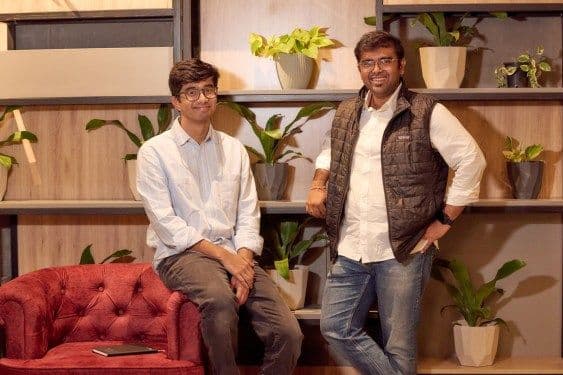
As AI-powered search tools reshape how businesses are discovered online, India-founded startupGushworkis helping companies capture customers from platforms such as ChatGPT, Gemini, and Perplexity — with early traction that is beginning to draw investor support. The two-year-old startup said Thursday it had raised $9 million in a seed round led by Susquehanna International Group (SIG) and Lightspeed, with participation from B Capital, Seaborne Capital, Beenext, Sparrow Capital, and 2.2 Capital. The round values Gushwork at $33 million post-money, up from about $7.5 million following itsLightspeed-led $2.1 million pre-seedin July 2023, a person familiar with the matter told TechCrunch. The latest financing brings Gushwork’s total funding to $11 million, the startup said. The funding comes as AI companies, includingOpenAIandPerplexity, begin to chip away at traditional web search, prompting incumbents like Google to roll outAI-generated overviewsand otherconversational featuresacross their search products. Gushwork is betting this shift will create a new opportunity to help businesses surface in AI-driven discovery channels using its automated marketing agents. Founded in 2023 by Nayrhit Bhattacharya (pictured above, right) and Adithya Venkatesh (pictured above, left), Gushwork initially focused on helping small and medium businesses outsource workflows using a mix of AI and human expertise. The startup began narrowing its focus toward search-led marketing after seeing strong customer demand for help with improving online visibility. “When we started, we were focused on helping businesses outsource faster and outsource better,” Bhattacharya told TechCrunch in an interview, adding that the pull around search from customers became increasingly hard to ignore. Gushwork’s platform uses a network of AI agents to automatically generate and update search-optimized content; build backlinks — typically 10 to 20 per customer — through a network of roughly 200 to 300 partner websites; and track inbound leads through an integrated content management system. The goal, Bhattacharya said, is to help businesses surface in both traditional search results and AI-generated answers without relying on large in-house marketing teams. The startup says it has signed up more than 300 paying customers — roughly 95% of them in the U.S. — with subscriptions starting at $800 per month. Gushwork is currently running at about $1.5 million in annualized recurring revenue after rolling out its AI search-focused product around three months ago and is targeting $3 million to $3.5 million ARR in the next three months, Bhattacharya said, adding that the startup is growing about 50% to 80% month over month. Across Gushwork’s customer base, about 20% of website traffic now comes from AI-driven search and chat platforms, but those sources account for around 40% of inbound leads, Bhattacharya said, citing the startup’s internal data. The higher-intent leads, Bhattacharya said, are already translating into business outcomes for some customers. In one case, a professional services client has closed between $200,000 and $350,000 worth of contracts after adopting the platform, he said, declining to disclose the customer’s name. He added that many users are seeing meaningful pipeline growth as AI-driven discovery gains traction. Gushwork’s customer base today is concentrated among high-ticket B2B service providers, industrial distributors, and contract manufacturers, primarily in the U.S., Bhattacharya said. The startup’s average subscription runs about $800 to $900 per month, or roughly $9,000 to $10,000 in annual contract value, he added. The shift toward AI-driven discovery is still in its early stages but is gaining momentum. Tools such as generative AI chatbots and AI web browsers are increasingly being used by buyers to research vendors and products. OpenAI said in July 2025 that ChatGPTreceived about 2.5 billion prompts a dayglobally, including roughly 330 million from U.S. users. Bhattacharya said the trend is beginning to reshape how some businesses approach online visibility. Gushwork plans to use the new funding to expand its engineering team, improve model accuracy, and scale its go-to-market efforts, Bhattacharya said. He added that the startup has more than 800 businesses on its waitlist that it plans to begin onboarding. The startup, headquartered in Delaware with an office in Bengaluru, has about 70 employees in India, along with several contractors.

read more
Latest AI News

View All News →
OpenAI proposed donating 5% of its equity to a US sovereign wealth fund

OpenAI proposed donating 5% of its equity to a US sovereign wealth fund

OpenAI CEO Sam Altman has proposed giving 5% of the company’s equity to a U.S. sovereign wealth fund,the Financial Times reported on Thursday, citing two people familiar with the matter. Under the proposal, other AI companies would donate similar stakes, although significant questions remain about the specifics. According to the FT’s reporting, the donation would be meant to “secure good relations with the administration and … address political blowback.” Similar discussions werereported by CNBC in Juneand were subsequently confirmed by President Trump, who said he had discussed “concepts where pieces could be given to the American public, where the American public essentially becomes a partner with the companies.” At the time, no specific size for the proposed equity stake was given. The talks remain preliminary and, per the FT, it’s likely that any formal action would require congressional approval, which would significantly complicate the matter. The idea of a public AI fund has also been publicly discussed by Altman, and OpenAI has grown increasingly specific in its proposals for how such a fund could be structured. Most recently, a policy paper titled “Industrial Policy for the Intelligence Age,” released by OpenAI in April, proposed a public wealth fund that could invest directly in AI labs and companies deploying their technology. “Returns from the Fund could be distributed directly to citizens, allowing more people to participate directly in the upside of AI-driven growth, regardless of their starting wealth or access to capital,” the document reads. A more aggressive version of the policy wasproposed by Sen. Bernie Sanders(I-VT) in June, calling for a one-time 50% tax on AI company stock, with the collected shares being deposited into a public wealth fund. The bill, called the American AI Sovereign Wealth Fund Act, would apply to all “systemically important” AI companies, including those dealing with data centers, infrastructure, or robotics. Under the proposal, companies like Google and SpaceX that include AI as only part of their business would be allowed to spin off non-AI portions of the company to avoid taxation. The bill has yet to advance to committee.

3 hours ago

View

Anthropic is discussing a new custom chip with Samsung

Anthropic is discussing a new custom chip with Samsung

Back in April, Reutersreported thatAnthropic was toying with the idea of producing its own AI chips as a means of responding to chip shortages. Now, it would appear that the company is getting serious about this idea. On Thursday,The Information reportedthat Anthropic was in contact with Samsung to explore a collaboration around the pending chip. However, Anthropic hasn’t yet decided what the chip will be used for, how it will fit into the server, or how powerful it will be, according to the report. When reached for comment, Anthropic told TechCrunch that a diversified hardware stack that includes chips from Google, Amazon, and Nvidia will continue to be pivotal to its compute strategy. On the topic of a potential Samsung partnership, the company said it had nothing further to add. A number of AI companies have sought to develop custom chips — both as a way to create unique hardware for specific compute tasks and to gain a certain amount of independence from Nvidia, which continues to be the undisputed leader of the chip industry. Anthropic’s announcement may also be a response to one made last week by its key competitor, OpenAI, which hasteamed up with Broadcomto announce its own custom built inference processor, dubbed “Jalapeño.” OpenAI says that the chip is more efficient, demonstrating better performance-per-watt, than other competitor chips.AmazonandGoogleboth offer custom-built TPUs as part of their cloud offering. Samsung is already embedded in the AI industry, and acts as a major partner of Nvidia,producing chipsthat the company needs to train or run its AI models. In turn, Samsung uses Nvidia’s software to manufacture its chips. The duo areworking on an AI chip factoryin South Korea. Samsung has alsodiscussed partneringwith Google on its chip-making efforts.

3 hours ago

View

Meta quietly launches vibe-coded gaming app Pocket

Meta quietly launches vibe-coded gaming app Pocket

Meta is getting into gaming with the launch of a new app calledPocket, which allows people to generate small, interactive apps and games using AI prompts. The software, a result of Meta’sacquisitionof the team at thevibe-coded gaming platform Gizmoearlier this year, describes itself as “a creative platform for making and sharing gizmos,” which is what the interactive experiences are called. It also offers a scrollable feed where you can play with gizmos others have made. Based on theapp’s screenshots in Google Play,there are many similarities to Gizmo’s original app,which is still listed. Like Pocket, Gizmo also offers a way to use written AI prompts to build small, interactive experiences, and it includes a discovery feed. Alessandro Paluzzi,a reverse engineer and regular spotter of new apps and features, first noticed the app’s launch this morning and published a Play Storescreenshotof the app on X. According to data from app intelligence providerAppfigures, however, Pocket was first launched on June 29, 2026 on the App Store and Google Play. (Because of its newness, the firm can’t tell if it’s yet to see any downloads.) #Metais working on a new app called Pocket 👀ℹ️ A new creative platform to make and share gizmos.pic.twitter.com/zFjMU5jj1U Other outlets, includingBusiness InsiderandInvesting.com, have also reported on Paluzzi’s discovery. Meta has not yet responded to a request for comment. Pocket is another example of Meta’s push to make AI creation tools more mainstream, extending its earlier efforts, which included AI-generated images created viaits Meta AI app, and AI videos created withits app called Vibes.It has also added AI features across its social platforms and into itsvideo-editing app for creators, Edits. Given that Meta has not officially announced Pocket’s debut, it’s likely that Pocket is still in its initial experimentation phase. Its counterpart Gizmo, however, had generated 635K lifetime installs across both iOS and Google Play, according to Appfigures, which noted it had a 98% positive sentiment.

3 hours ago

View

Yep, we’re using OpenClaw to date now

Yep, we’re using OpenClaw to date now

Ben Guez has “a bunch of potential international wives in [his] DMs,” thanks to an automated script he set up using OpenClaw, Claude code, and Instagram trial reels. “I think it’s crazy, like the potential is insane right now,”Guez, a content creator and startup founder, told TechCrunch. “I’m not sure if everyone’s gonna think it’s good, but I mean, it’s working.” How is Guez is wooing so many women? First, he uses the open source AI agentOpenClawto track World Cup match results. After each game, OpenClaw triggers Claude to create and post a nearly identical Instagram “trial reel” with the same template. In the video, Guez stares out a train car window looking dejected, with the caption: “I can’t believe {COUNTRY} lost… If any {COUNTRY} girls need emotional support… my DMs are open.” Guez has made the same post, save for the country name, more than a dozen times. But you can’t tell when you look at his profile, since trial reels don’t show up on a creator’s public page. Since he launched this automation, Guez has gotten over one million views and 200 DMs in a few days. That volume is even more impressive considering that Guez says in his profile that he will only answer DMs sent viaCanary, his AI language learning app, which means that these women have to download his app. You have to hand it to him: Guez is really taking “work smarter, not harder” to another level. But once these women realize he doesn’t actually care about Tunisian soccer, wouldn’t they feel played? “They’re not feeling angry, they’re more impressed, like, ‘Oh, you’re thinking outside of the box, you’re a genuis,’” Guez said. “I think as long as you’re open [about] what you’re doing, I think it’s fine.” TechCrunch was not able to independently verify the actual reactions of these women, so we’ll just have to take Guez’s word for it. But we can tell you that Guez isn’t the only guy getting creative with theviral AI assistant. While Guez’s methods are a bit more outrageous, other people see OpenClaw as a way to streamline the process of setting up dates. Jeff Weisbein, founder of a tech PR firm, uses OpenClaw to help him figure out where to take dates across different neighborhoods in South Florida. “I’m meeting women who are in various parts of South Florida, so I don’t know all of the restaurants or things to do,” Weisbein told TechCrunch. “I have my bot just kind of do all the research and make a document with links to why it’s a choice for whatever type of date it is.” When I fill him in on Guez’s OpenClaw scheme, he bursts out laughing. “I guess I’m not leveraging OpenClaw to the fullest,” he said. “But definitely in the realm of using OpenClaw to facilitate a task that I would manually have to do otherwise.” Like Guez, Weisbein doesn’t hide the fact that he’s using AI tools to help plan dates (it backfired, though, when one woman told him, “I hate AI agents”). In a way, asking OpenClaw where to go for happy hour in Fort Lauderdale isn’t that different from Googling the coolest neighborhood bars, but Weisbein says he would draw the line at using AI to mediate his actual conversations with women. “I have seen people create bots and ways to swipe using OpenClaw, and I wouldn’t do that. They say it’s a numbers game, but if that’s what it takes… that seems like a pretty terrible way to do it,” he said. “I feel like you shouldn’t delegate your communication when you’re in a relationship with someone to AI.” People seem hesitant to let AI meddle once there’s an actual connection, but a tech worker named Cailey said that once she’s decided to end a flirtation, she doesn’t mind using Claude to break things off. “I started using Claude and created an automation that crafts ‘I no longer wish to see you’ messages based on a few key terms I would enter about the date. It’d then automatically send them for me at random times so that I wouldn’t feel the anxiety of when to send,” she told TechCrunch. “It worked really well, until I mentioned it to someone I was on a date with, who I then had to send an automated message to, and he asked if he was talking to Claude or Cailey.” What’s worse: getting ghosted, or getting broken up with by an AI? Wish you could have a team of experts at your beck and call?NanoClaw is the first personal AI assistant to support agent swarms.We've got you covered – no matter the need.pic.twitter.com/X5vcf4Cmve OpenClaw rocked the tech world with its potential when it went viral this spring, but security advocates have continuouslywarned usersabout the dangers of giving an AI assistant unilateral control over all of your accounts. For Lazer Cohen, the co-founder of the security-focused OpenClaw alternativeNanoClaw, there are steep privacy implications of outsourcing personal relationships to AI, even if his company advertises date planning as a potential use case on X. “Whenever you’re giving an agent access to personal information and accounts, you need human-in-the-loop approval,” Cohen told TechCrunch. “We’ve all heard the stories of OpenClaw creating dating profiles for people without their knowledge or consent, or OpenClaw dating coaches spilling to other groups that they’re being used as a dating coach too.” NanoClaw has found its way into Cohen’s love life, though he uses it in a way that’s a bit more wholesome than mass-producing reels that ask heartbroken soccer fans to slide into his DMs. “My wife and I personally use our NanoClaw assistant, Rosie, to manage the schedules of our five children,” he said. “But ‘claws’ are widely used to help couples get to the child-rearing phase.”

7 hours ago

View