AI Styling Studio — Infinite avatar looks from just 1 photo.Try it now.

BestAITools

Submit your Tool

8000+ AI tools already listed
8K+Tools
100K+/moViews
25K+/moVisitors

AI NewsFlorida sues OpenAI, Sam Altman, in first-of-its-kind lawsuit over violent incidents

Florida sues OpenAI, Sam Altman, in first-of-its-kind lawsuit over violent incidents

3:14 AM IST · June 2, 2026

Florida sues OpenAI, Sam Altman, in first-of-its-kind lawsuit over violent incidents

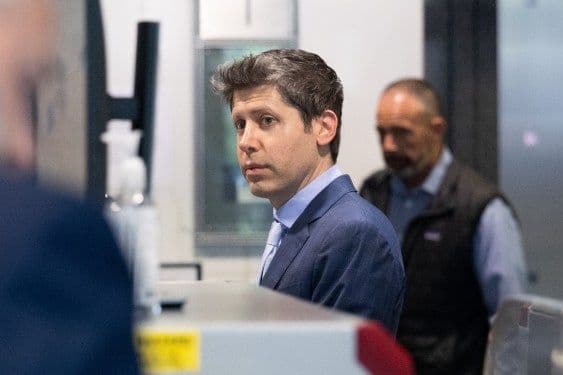
OpenAI and its CEO, Sam Altman, were sued by the Florida Attorney General on Monday, in a first-of-its-kind state litigation effort over ChatGPT’s alleged links to a number of violent incidents. The lawsuit accuses OpenAI of looking the other way on safety concerns as it has sought to prioritize winning “the AI arms race and amass large fortunes.” “Today, we announced the first-in-the-nation state-led lawsuit against OpenAI and its CEO, Sam Altman,” said Florida Attorney General James Uthmeier. “OpenAI and Altman ignored internal and external safety warnings, put children at great risk, and allowed a dangerous product to reach millions of Floridians.” “Because of Defendants’ misrepresentations about ChatGPT and their careless introduction of ChatGPT to Florida and the world, mass shooters have been aided and abetted in deadly rampages, vulnerable people have been encouraged into suicide, professionals have suffered public humiliation, users have lost critical thinking skills, and minors have become addicted to a tool that feigns human compassion to collect their data with no parental oversight,” the83-page lawsuitclaims. The Florida Attorney General’s office launcheda criminal investigationinto the company in April. That probe sought to determine what role ChatGPT may have played in a mass shooting that took place last year at Florida State University. Prior to the attack, the shooter is alleged to have consulted the chatbot. OpenAI has also beensued in a civil suitby the family of one of the victims of that shooting. OpenAI has previously denied responsibility for the Florida shooting. “Last year’s mass shooting at Florida State University was a tragedy, but ChatGPT is not responsible for this terrible crime,” an OpenAI spokespersonpreviously told NBC News. TechCrunch reached out to OpenAI for comment. OpenAI justconcluded a different legal caseinvolving former co-founder Elon Musk, who sued the company in 2024, accusing it of having betrayed its original mission to help humanity by converting the organization into a for-profit business. The case concluded after the jury swiftly decided that Musk had waited to long to file the case and that thestatute of limitations had passed. This is only the latest legal case that has attempted to link ChatGPT to violent deaths. Last year, OpenAIwas suedby the parents of Adam Raine, a California teen who took his own life after discussing suicide with the chatbot. In that case, ChatGPT allegedly offered “technical specifications” for various suicide methods, despite also referring him to mental health resources. Other lawsuits — including ones alleging the chatbot’sculpability in suicides,stalking, andmurder— are ongoing.

read more

Latest AI News

View All News →
Water access is now a risk factor in SpaceX’s IPO

Water access is now a risk factor in SpaceX’s IPO

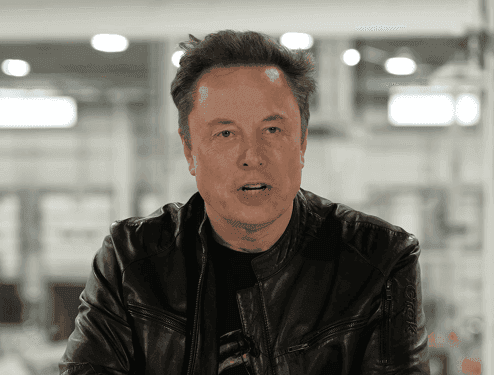
SpaceX has added new language to its IPO filing that warns prospective investors about the company’s access to a potentially scarce resource: water. The company, which now includes Elon Musk’s AI play, xAI, wrote in anamended version of the filingon Monday that access to water — required to cool its data centers — is just as important as SpaceX’s ability to secure power, processors, and other critical resources. The addition comes amid an ever-evolving debate about how much water data centers use, and whether that usage is contributing to localized droughts that are being made worse by climate change. Deep in the “risk factors” section of SpaceX’s IPO filing, the company added language about water to a section about the challenges of scaling AI infrastructure. Previously, SpaceX focused on telling investors that its data centers were primarily constrained by access to “power at economically feasible prices,” along with long construction timelines and material shortages. The amended filing adds multiple lines about water access. SpaceX now tells prospective investors in the IPO that data center buildouts are constrained by the “availability of power and water at economically feasible prices.” The company goes on to say that “significant water resources may be required for cooling large-scale data center operations.” Water availability is such a concern that SpaceX says it has become a “critical consideration in data center site selection, development and operations.” SpaceX also says that “water scarcity, drought conditions, competition for local water resources, or regulatory restrictions on water use could limit our ability to obtain sufficient water for cooling, constrain data center cooling capacity, increase our costs, delay or limit expansion of our data center infrastructure, or require us to implement alternative cooling techniques that may be more costly or less available.” It’s not clear what inspired SpaceX to add this language about water to its filing, or why it was left out of the initial version. The company is in the pre-IPO period, during which the Securities and Exchange Commission (SEC) has been sending SpaceX “comment letters”seeking clarification or additional details about the filing. It’s possible that questions from the SEC led to this particular change, though we won’t know until those comment letters are made public in the weeks following the IPO. Adding more detail about SpaceX’s access to water was not the only change the company made in this first amended filing. SpaceX also revealed that it is setting aside up to 5% of the stock being sold in the IPO foremployees and friends of executives. SpaceX also added language that warns investors that the company mayissue a “significant” numberof shares in future transactions following the IPO — a hint at a potential merger with Tesla — which could create dilution for existing shareholders.

3 hours ago

View

Florida sues OpenAI, Sam Altman, in first-of-its-kind lawsuit over violent incidents

Florida sues OpenAI, Sam Altman, in first-of-its-kind lawsuit over violent incidents

OpenAI and its CEO, Sam Altman, were sued by the Florida Attorney General on Monday, in a first-of-its-kind state litigation effort over ChatGPT’s alleged links to a number of violent incidents. The lawsuit accuses OpenAI of looking the other way on safety concerns as it has sought to prioritize winning “the AI arms race and amass large fortunes.” “Today, we announced the first-in-the-nation state-led lawsuit against OpenAI and its CEO, Sam Altman,” said Florida Attorney General James Uthmeier. “OpenAI and Altman ignored internal and external safety warnings, put children at great risk, and allowed a dangerous product to reach millions of Floridians.” “Because of Defendants’ misrepresentations about ChatGPT and their careless introduction of ChatGPT to Florida and the world, mass shooters have been aided and abetted in deadly rampages, vulnerable people have been encouraged into suicide, professionals have suffered public humiliation, users have lost critical thinking skills, and minors have become addicted to a tool that feigns human compassion to collect their data with no parental oversight,” the83-page lawsuitclaims. The Florida Attorney General’s office launcheda criminal investigationinto the company in April. That probe sought to determine what role ChatGPT may have played in a mass shooting that took place last year at Florida State University. Prior to the attack, the shooter is alleged to have consulted the chatbot. OpenAI has also beensued in a civil suitby the family of one of the victims of that shooting. OpenAI has previously denied responsibility for the Florida shooting. “Last year’s mass shooting at Florida State University was a tragedy, but ChatGPT is not responsible for this terrible crime,” an OpenAI spokespersonpreviously told NBC News. TechCrunch reached out to OpenAI for comment. OpenAI justconcluded a different legal caseinvolving former co-founder Elon Musk, who sued the company in 2024, accusing it of having betrayed its original mission to help humanity by converting the organization into a for-profit business. The case concluded after the jury swiftly decided that Musk had waited to long to file the case and that thestatute of limitations had passed. This is only the latest legal case that has attempted to link ChatGPT to violent deaths. Last year, OpenAIwas suedby the parents of Adam Raine, a California teen who took his own life after discussing suicide with the chatbot. In that case, ChatGPT allegedly offered “technical specifications” for various suicide methods, despite also referring him to mental health resources. Other lawsuits — including ones alleging the chatbot’sculpability in suicides,stalking, andmurder— are ongoing.

3 hours ago

View

Nvidia chases $200B CPU market with AI agent PCs from Microsoft, Dell, and HP

Nvidia chases $200B CPU market with AI agent PCs from Microsoft, Dell, and HP

Nvidia opened Taipei’s enormous Computex trade show on Sunday with a spark, literally. The chipmaker unveiled a new PC CPU called the RTX Spark, which it dubbed a “superchip,” and named a who’s who list of PC makers that will soon deliver AI PCs powered by it. The super-fast, 1-petaflop chip is designed to run AI agents like OpenClaw or Hermes Agent securely, according to Nvidia. Such RTX Spark Windows PCs will be available this fall from ASUS, Dell, HP, Lenovo, Microsoft Surface and MSI, with models from Acer and Gigabyte to follow. In addition to being equipped with secure sandboxes (jointly developed with Microsoft) to run agents securely, the PCs will also have enough CPU, GPU, RAM and underlying Nvidia CUDA software to run local versions of large language models. Nvidia said that its RTX technology will deliver faster performance for AI, better image quality, and support for AI features in more than 1,000 games and applications. The chipmaker is marketing this as an alternative for creators making AI content, as well as providing a significant upgrade to its traditional market of gamers. Nvidia said more than 100 Windows software makers have signed on to support the new chip, including Adobe, Blender, ComfyUI, Riot Games and Xbox. But Nvidia founder and CEO Jensen Huang’s vision for these new PCs is far larger. He wants to end the days of launching apps, pointing, clicking and typing. “With RTX Spark and Microsoft Windows, you ask — and the PC does the work,” he said in the press release. “Frontier models. Creative workflows. RTX games. All on a laptop.” Last month, after delivering another record quarter, Huang promised investors he had found a new$200 billion market for Nvidia in selling CPUsfor AI, not just GPUs. He made specific mention of the high-end server CPU released earlier this year called Vera — of which Nvidia says it has already sold $20 billion worth. He also hinted at his bigger ambitions. “We’ll have billions of agents, and those billions of agents will all use tools. And those tools are going to be like PCs, just like us humans using using PCs today,” he said on the earnings call in May. “We’re going to need a lot more CPUs.” Nvidia ARM-based Windows devices have been tried before — and failed. Back in 2013,Microsoft famously had to write off $900 millionon its Nvidia ARM-based Surface RT, with partners like Dell also bailing on the product. But at this point, after delivering record after record of quarterly revenue, it’s hard to bet against Huang as he pursues his PC dreams once again. And this chip is an entirely different beast. It’s more powerful, not less. Microsoft is positioning its own RTX Spark PC as so mighty that it named it the Surface Laptop Ultra, and iscalling it“the most powerful Surface Laptop ever built.” Still, PC manufacturers have not released a lot of specifics about each of their offerings, including pricing. These systems appear to be full-fledged Windows versions of theDGX Spark mini-computerthat Nvidia already sells to developers for about $4,800. We’ll have to wait and see if these PCs will compete on price with the affordable Mac Mini that has becomea popular choice for running OpenClaw. Or perhaps they will sit at the high end of the PC market, like Nvidia’s own agent-running mini computer. Either way, if Nvidia has cracked the code on bringing AI agents easily, safely, and usefully to the masses, it could — and should — be big.

3 hours ago

View

The groupthink boom: what 3 top VCs really think about the AI frenzy

The groupthink boom: what 3 top VCs really think about the AI frenzy

This week at TechCrunch’sStrictlyVC eventin Athens — part of thePanathēneafestival taking place in the city — I sat down with Niko Bonatsos of Verdict Capital, Andreas Stavropoulos of Threshold Ventures, and Ben Blume of Atomico to ask about the current state of venture investing, the wave of mega-IPOs that SpaceX is about to kick off, and where they still see an ocean of opportunity. Our conversation, following, has been edited for length and clarity. You can check out the full discussion at page bottom. With SpaceX reportedly eyeing a $1.75 trillion valuation at IPO, and OpenAI and Anthropic potentially not far behind, what will the impacts be on the broader market? Andreas Stavropoulos:I remember how exciting the Google IPO was and how it ushered in a reopening of a market that had been very pessimistic about tech in the early 2000s — how it was an enabling event that brought in a whole new generation of entrepreneurs. The same thing is happening now. With every subsequent wave of paradigm shifts, the scale changes by orders of magnitude, and that’s to be expected. What business today in the information age is not a technology business? Ben Blume:These are phenomenal companies, and with each one of these scale liquidity events, they generate wealth and returns that go back into the next generation of companies. Niko Bonatsos:Myco-founderat Verdict was the first-ever investor in what is now known as Cursor. So if Elon feels like he’s [having] a good moment, maybe Cursor [which Musk revealed recently that he has theoption to acquirefor $60 billion] will have some good news too. But more broadly, for the next next generation of companies, as Andreas mentioned, they could be going after much larger markets, and immigrant founders, as we know, they’re the ones who dream really big, they have nothing to lose, and they can go the distance, and Elon Musk is an immigrant founder himself. So, for those of us who come from Greece or other smaller markets, wow, you know, that’s a great example. Some have suggested SpaceX at that valuation could soak up so much public market capital that it hurts companies going out in its wake. Is that a real concern? AS:You can choose to see most things as optimistic or pessimistic and make very good arguments for both. Something like a SpaceX, macro-wise, is going to end up bringing more people into the market than the short-term impact of soaking up some liquidity. Consumer involvement in markets in the last 30 years has gone from something that wasn’t really a thing to something people trade on their phones every day. Those numbers add up. BB:SpaceX is such a one-of-one company. For a long time, space has been a government and public sector domain. To give investors real financial access to it — I think that’s going to capture a widespread imagination. It may mentally draw from longer-tail allocations that might otherwise have gone into the next 20 or 30 software businesses, but I think the interest it generates more than compensates. Is the current flood of capital into AI justified by future earnings, or is this a case of extreme FOMO? NB:If you’re an AI-native founder or a company in the American dynamism space right now, you can live life in the fast lane. If you’re not in one of those two buckets, it’s really tough. In 17 years in Silicon Valley, I’ve never seen more groupthink. Three-quarters of all venture capital raised over the last year went into five companies. Today, if you’re a 40-year-old tenured professor at Stanford not building something in AI, no one wants to meet you. That said, something real is changing. Two founders with today’s AI tools can make more progress in two months with one round of funding than they could a year ago with 10 people, two rounds, and a full year of work. This is changing how companies get started and how they’ll capitalize themselves — potentially going straight from pre-seed to Series B. AS:There will be a correction that pushes some capital back out of the market. The promise and the optimism is still significantly ahead of the short- to medium-term ability to show results. But on a long-term, macro scale, I don’t think we’re being over-optimistic. The problem is that shouldn’t be mistaken for thinking every 19-year-old with an idea is the next big thing. How do you actually price deals when things are moving this fast? BB:The best founders have no shortage of capital options. You have to think about what’s a meaningful ownership stake for your fund and walk away when you can’t get there. The interesting dynamic is that we’re a$500 millionfund looking at the same opportunities as people investing from a $10 [billion] or $15 billion fund. The incremental value of a dollar to us versus them is very different. That distorts round sizes and makes it difficult for offers to stack up like-for-like. NB:We do first-money investing — basically instead of friends and family, instead of angels. We invest in what I’d call “freaks” — individuals where, like in professional sports, a few people break all the records. One day goes by and they learn and mature and make the progress that takes the average smart founder a whole week. Most of the founders we’ve backed so far are working on markets that don’t have a name yet — which is exactly why the valuations are low. Larger asset managers can’t tell their teams to go find companies in a market that doesn’t exist yet. There’s a lot of talk about very young founders getting term sheets almost on arrival. Is age really a proxy for anything meaningful right now? AS:At times of disruption, when the world seems to be changing in some fundamental way, it especially favors lack of experience. Experience can actually steer you the wrong way. That doesn’t mean it’s changed forever — we’re going through a phase where things haven’t settled down yet, and that creates fertile ground for new ideas, and typically younger entrepreneurs. But I don’t want to over-generalize. NB:The exact same thing was happening when I arrived as a grad student at Stanford in 2009. The iPhone was two years old, the App Store was one year old, and there were days when there were more VCs on campus than students. Today is one of those singular moments again. If you’re 22 years old in San Francisco and building something in AI, there may be a seed term sheet in your inbox — but if you’re 19, oh my God, this means you’re really good [laughs]; you might already have a Series A [offer]. And look, age is all relative at this point — I was talking to a founder here in Athens this week who’s 24, and when I said he wasn’t that young, I meant it: I met the Mercor kids when they were 19, andlook where they are now. BB:If you try to generalize just from age, I think you miss what you’re actually looking for: an extremely high level of intensity, the ability to move ahead of the pace the market is moving, and the mental dexterity to adapt in a landscape that’s changing constantly. If you have those things, it’s more important than the age on the passport. What do you make of shady behavior happening around metrics — particularly how companies are reporting ARR [annualized recurring revenue]? BB:People are being relatively liberal with how they define the A and the R and the R. New pricing models — token-based billing, free tokens being counted as revenue — create a lot of ways to express these numbers. Our job as investors is to cut through that and make decisions based on the actual truths. Is it fine from a marketing perspective? Probably. Is it fine for deciding which companies get capital? No. But sophisticated investors can generally cut through it. NB:Sometimes I’ll get an email with a very high ARR number from a portfolio company I didn’t remember doing that well, so I’ll contact the founder. The answer? It was 365 times what they made the day before because a campaign hit. I told him, can you please use a quarterly basis at least? Whenever a lot of money is chasing specific themes, some people develop a grifting mentality for short-term gain. In venture you can only lose your money once on a bad investment, but the right one can return 100x — so you write off the bad actors and move on. For the aspiring founders in the audience, where do you actually see white space right now? NB:Every VC firm used to have at least half its partners doing consumer internet investing. Today, maybe they have half a person — they’ve left the field altogether. But one of the best AI companies of the last few years, OpenAI, became massive because of ChatGPT. Consumer is coming back, which is almost a crazy statement. Those founders today have maybe five investors they can pitch for their first or second round. I think there’s also a new movement emerging that’s going to help restore the American dream through new consumer fintech ideas. BB:The opportunity of AI interacting with the physical world is orders of magnitude larger than what we’ve seen so far in workflow automation and digital process. The physical world still shapes a large part of the economy. The bet on robotics in all its forms — not just the humanoid doing a backflip — is still one of the biggest wide-open spaces over the next 10 years. If you’re interested in learning more about what the three think — including about whether Stanford University has grown too cozy with the venture capital industry — you can check out the full conversation below:

7 hours ago

View