AI Styling Studio — Infinite avatar looks from just 1 photo.Try it now.

BestAITools

Submit your Tool

8000+ AI tools already listed
8K+Tools
100K+/moViews
25K+/moVisitors

AI NewsElon Musk said Sam Altman “stole” a non-profit — but the trial showed he had similar aims

Elon Musk said Sam Altman “stole” a non-profit — but the trial showed he had similar aims

2:51 AM IST · May 20, 2026

Elon Musk said Sam Altman “stole” a non-profit — but the trial showed he had similar aims

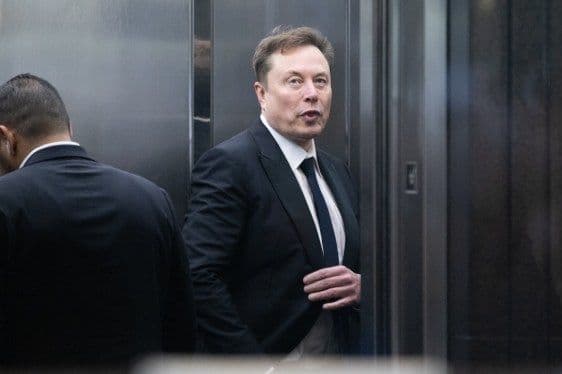
The jury’s speedydecision to rejectElon Musk’s lawsuit against the other founders of OpenAI and Microsoft confirmed what we saw in the courtroom: Musk’s case was a weak one, in part because he waited so long to file it. Watching the closing arguments last week, OpenAI’s attorneys detailed point-by-point how the law was on their client’s side, while the plaintiffs team focused on Sam Altman’s apparentlack of credibilityand expressed disbelief that anyone would disagree with Musk’s accusations. The final effect was that, after the verdict, some found it hard to believe Musk had lost — including the man himself. In a post he later deleted, Musk called Judge Yvonne Gonzalez Rogers a “terrible activist Oakland judge,” then announced his plans to appeal, declaring “there is no question to anyone following the case in detail that Altman & Brockman did in fact enrich themselves by stealing a charity.” But Altman and Brockman weren’t the only figures who benefitted from OpenAI’s non-profit investments. As much as Musk and his legal team tried to make the trial about Altman, the proceedings revealed just as much about Musk himself. One incident that came out in court showed Musk benefiting from OpenAI in an uncomfortably familiar way. Greg Brockman testified that in 2017, Musk asked him to bring a team of OpenAI researchers down to Tesla’s headquarters to help with the autopilot team for a few weeks. “It was pretty clear that was not something we could say no to,” Brockman said. Brockman described taking a team of leading scientists, including Andrej Karpathy, Ilya Sutskever, and Scott Grey, to consult with the “demoralized” Tesla workers. They helped come up with ideas to improve the vehicle’s self-driving technology, with Sutskever telling the team that if they could find 10,000 images of a tricky corner case, they would be able to fix their software. Musk even asked Brockman to recommend employees to fire, which he declined to do. Another person familiar with the episode confirmed Brockman’s account, and said Tesla did not reimburse OpenAI for the time and effort of its employees. Musk’s family office, Excession, didn’t reply to a request for comment. The heart ofMusk’s caseis that Altman, Brockman and OpenAI committed a “breach of charitable trust” — that Musk donated funds for a specific charitable purpose, and his cofounders instead used them for something else. He also accuses them of “unjust enrichment” due stock and other benefits from OpenAI’s for-profit. In the case of the OpenAI scientists parachuting into Tesla, Musk’s charitable donations were intended to hire scientists focused on securing the benefits of AGI. Instead, he had them work for free at his for-profit company. Dorothy Lund, a Columbia Law School professor and the co-host of theBeyond Unprecedented podcast, told TechCrunch that this arrangement wouldn’t be legal, calling it “a bit rich for Musk to be suing for breach of a charitable trust, when he appears to have been redirecting assets in a way that was inconsistent with that mission.” It’s true that the self-driving work involved artificial intelligence, but witnesses for Musk emphasized that Tesla’s self-driving project was very different from OpenAI’s research agenda. That’s in part because Karpathy left OpenAI for Tesla shortly after this incident. OpenAI’s attorneys portrayed the departure as Musk violating his duty to the lab, where he was co-chair of the board, by recruiting one of its key researchers to his own company. The other fact that no doubt influenced the jury was the amount of time Muskspent tryingto gain sole control of a potential OpenAI for-profit affiliate in 2017. Musk deployed good cop, bad cop tactics in an attempt to convince his cofounders to let him have total control of OpenAI’s for-profit affiliate — giving them free Teslas, and threatening to withhold his donations. His efforts put his attorneys in a tricky spot, facing a need to convince the jury there was a significant difference between what Musk envisioned, and the for-profit that was ultimately created. They suggested a “small adjunct” for-profit would be permissible, though OpenAI’s witnesses showed non-profits with large commercial arms are common. Indeed, there’s a very plausible counter-factual where Musk took one of the offers his cofounders made to split their equity more evenly, and finds himself today as one of OpenAI’s largest shareholders — just not the controlling one. But several times during the trial, Musk’s associates testified that he refuses to invest in any business he could have sole control over. The failure of Musk’s claims because he filed them too late has been cited as a technicality, but the statute of limitations has substance behind it: People and businesses make important decisions and spend resources based on their understanding that what they are doing is permissible. If someone like Musk waits too long to sue, then the cost of unravelling all those decisions can outweigh a just reimbursement. No members of the jury have spoken about how they arrived at their verdict. However, they were asked to consider if, before Aug. 5, 2021, Muskshouldhave known that OpenAI was spending resources outside its mission or launching for-profit affiliate. The answer to that is clear: Musk himself was doing those things.

read more

Latest AI News

View All News →
Anthropic scales Claude Mythos  to critical infrastructure in 15+ countries

Anthropic scales Claude Mythos to critical infrastructure in 15+ countries

Anthropic is expandingProject Glasswing, its joint industry initiative to find and fix critical software vulnerabilities using AI, to about 150 new organizations across more than 15 countries, the companysaidTuesday. The news comes a day after Anthropic said it hadfiled confidentiallyfor an initial public offering, following a$65 billion fundinground at a nearly $1 trillion valuation. Anthropic’s Claude Mythos is at the heart of Project Glasswing. The AI firm dubbed the model its most powerful yet, able to identify thousands of zero-day vulnerabilities over several weeks. In early April,Anthropic gave 50 initial partners, including the U.S. government, access to Claude Mythos Preview to scan their codebases for vulnerabilities and security flaws. The expanded list of organizations with access to Mythos as of today covers power, water, healthcare, communications, and hardware — industries that weren’t “well-represented” in Anthropic’s initial cohort, the company said. Many who will now have access are companies or nonprofits that maintain codebases which other organizations and governments rely upon, Anthropic noted in the blog post. “What each partner has in common is that a successful attack on their codebase could be catastrophic,” the company said. “For most partners, we estimate that a major attack could affect more than 100 million people, with important ramifications for both global and national security.” The expanded group includes organizations in countries friendly to the U.S., including Australia, Canada, France, Germany, Italy, Switzerland, the Netherlands, Spain, Belgium, Sweden, India, Japan, New Zealand, and South Korea, according toFinancial Times, citing a person familiar with the matter. The FT also reported several organizations that have been given access to Mythos, including: U.S.-based identity and security management tool Okta; South Korean companies Samsung, SK Hynix, and SK Telecom; NATO, the U.S.-led military alliance headquartered in Brussels; and the EU’s cybersecurity agency ENISA. TechCrunch has reached out to Anthropic to confirm. Anthropic has said it expects other AI companies to soon develop models as capable as Mythos Preview, which is why the firm is racing to establish safeguards within Project Glasswing. Since releasing Mythos, rival OpenAI released its own cybersecurity-focused model GPT-5.5-Cyber, which it has rolled out to a large group of partners for testing.

21 minutes ago

View

OpenAI launches new Codex tools for white-collar work

OpenAI launches new Codex tools for white-collar work

OpenAI is getting serious about courting enterprise users. On Tuesday, the AI labreleased a new set of capabilities for Codex, meant to expand the agentic tool’s uses in the workplace. Together with the new tools, the company releasedan internal reporton how Codex is being used for knowledge work, finding its uses go far beyond software engineering. “Codex now has more than 5 million weekly active users, up more than 6x since the launch of the desktop app in February,” readsa blog post introducing the report. “While developers remain the largest user group, knowledge workers now represent about 20 percent of users and are growing more than three times as fast.” To further court those users, OpenAI released a set of six plug-ins aimed at specific jobs: data analytics, creative production, sales, product design, equity investing, and investment banking. Available fromwithin the Codex app, each of the new tools bundles integrations, instructions, and context to allow Codex to approximate a specific job. Like any AI tool, the plug-ins will grow more effective with user customization, but they’re meant to be effective tools out of the box. The new tools come after a similar push for agentic plugins from Anthropic, whichlaunched its Enterprise Agents programin February. (A more specific set of finance-oriented agentslaunched in May.) With its traditional consumer focus, OpenAI has been slower to court enterprise customers, only introducing plugin support for Codexin March. Together with the plug-ins, OpenAI introduced a new Sites feature, which allows Codex to output its work product as a hosted interactive website, instead of just a local file. As part of that system, OpenAI is partnering with Wix, Base44, Replit, Lovable, Figma, and Emergent — although the company plans to develop a larger partner ecosystem to support the service. A new Annotations feature will also allow users to designate a specific part of a document or file within Codex, allowing for more specific commands and context operations. The new enterprise features come just three weeks after OpenAI launched a new joint venture for enterprise clients, dubbedthe OpenAI Deployment Company. The venture includes more than $4 billion in funding from global investment firms, with the aim of integrating OpenAI tools more deeply into businesses around the world. “AI is becoming capable of doing increasingly meaningful work inside organizations,” OpenAI Chief Revenue Officer Denise Dresser said in a statement at launch. “The challenge now is helping companies integrate these systems into the infrastructure and workflows that power their businesses.”

21 minutes ago

View

Trump signs narrower executive order on AI oversight after industry objections

Trump signs narrower executive order on AI oversight after industry objections

President Donald Trump signedan executive orderon Tuesday designed to give the government a chance to review powerful AI models before they are released. The order asks certain AI companies to voluntarily submit their new models to the government for testing or evaluation 30 days before releasing the products to the public. A previous draft of the order had called for a voluntary review up to 90 days in advance, though AI industry insiders had pushed for something closer to a two-week window. Trump had been slated to sign the more demanding version of the order in late May, butdelayedafter industry pushback, including from venture capitalist and former White House AI czarDavid Sacks. The president said at the time that he didn’t want to do anything to get in AI firms’ way of leading against China. “Nothing in this section shall be construed to authorize the creation of a mandatory governmental licensing, preclearance, or permitting requirement for the development, publication, release, or distribution of new AI models, including frontier models,” reads the order, published Tuesday. Trump had planned to sign the EO with a bevy of Silicon Valley’s top CEOs in attendance, but ended up signing the current version privately. In addition to the voluntary governmental AI model review, the EO directs the Department of Justice to treat crimes like AI-assisted hacking and unauthorized access as a high-priority enforcement area. This isn’t the president’s first EO on AI. Last December,Trump signed an orderdirecting the development of “one rulebook,” or a national AI policy framework, intended to preempt state AI laws.

21 minutes ago

View

Anthropic Expands Project Glasswing to 150 Organisations Across 15 Countries

Anthropic Expands Project Glasswing to 150 Organisations Across 15 Countries

The new group includes organisations from sectors such as power, water, healthcare, communications and hardware.

21 minutes ago

View