AI Styling Studio — Infinite avatar looks from just 1 photo.Try it now.

BestAITools

Submit your Tool

8000+ AI tools already listed
8K+Tools
100K+/moViews
25K+/moVisitors

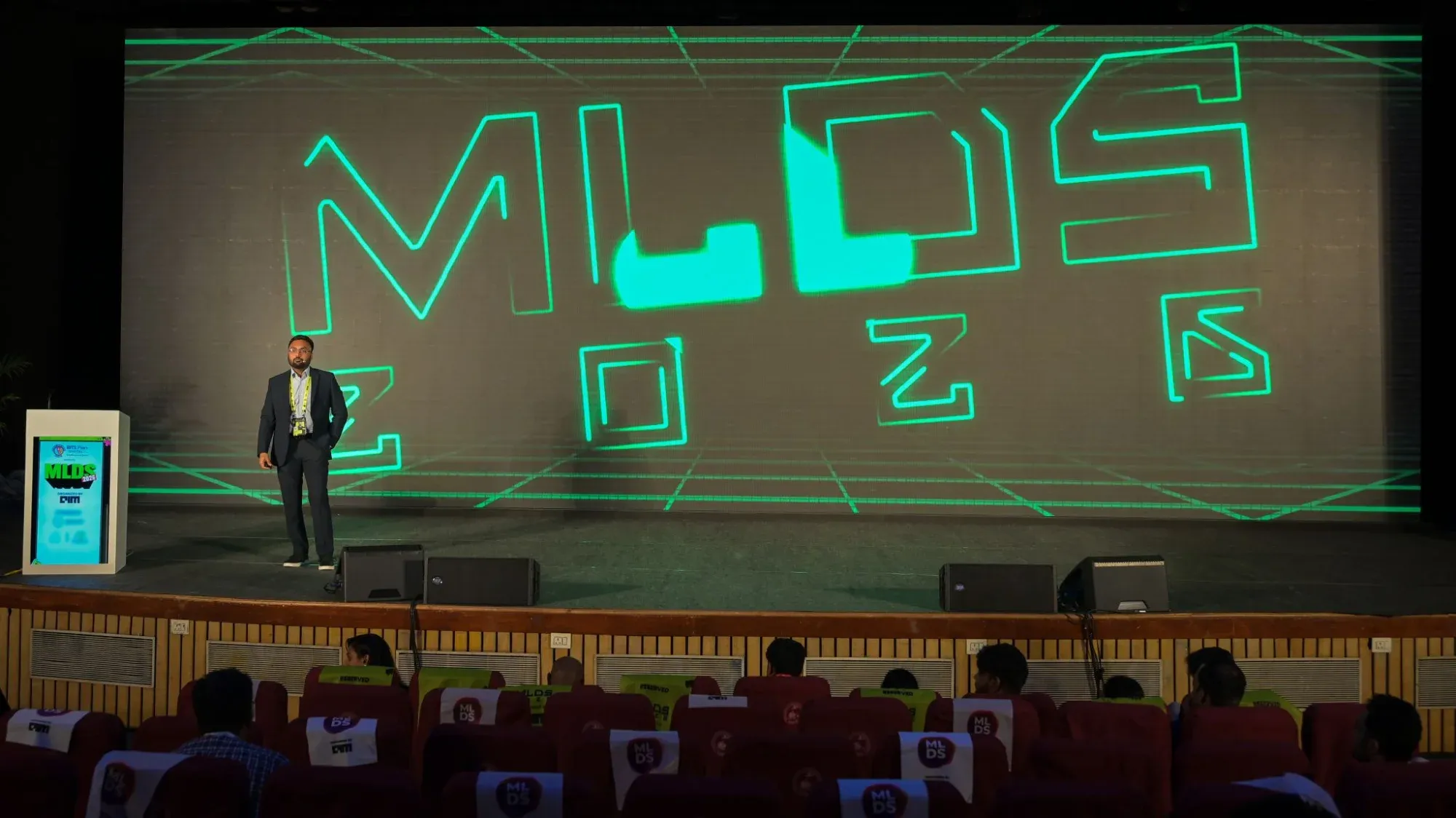
AI NewsConstraint Beats Cleverness in AI Systems, says Millennium AI Lead at MLDS 2026

Constraint Beats Cleverness in AI Systems, says Millennium AI Lead at MLDS 2026

1:47 PM IST · April 9, 2026

Constraint Beats Cleverness in AI Systems, says Millennium AI Lead at MLDS 2026

Drawing parallels to the shift from artisanal car manufacturing to assembly lines, Vaibhav Jain highlighted the importance of standardisation, observability, and user trust in creating reliable AI systems.

read more

Latest AI News

View All News →
Cerebras stock plunges after earnings as CEO says margin outlook was misunderstood

Cerebras stock plunges after earnings as CEO says margin outlook was misunderstood

Shares of Cerebras Systems dropped almost 20% on Wednesday, even after the company delivered better-than-expectedfirst-quarter earningson Tuesday. That’s because in its first earnings report since going public, the AI chipmaker forecast a narrower gross margin in its core business, guiding for a full-year margin of 38% to 41%, compared with the 47% reported in the first quarter. The stock hit a new low on Wednesday, almost hitting the company’s IPO price. Cerebras CEO Andrew Feldmantold CNBCthat investors had misunderstood the company’s margin guidance, noting that Cerebras will need to rent back some equipment from one of its largest customers. The company said during itsearnings callthat it decided to make more capacity available sooner by temporarily renting its own systems back from an existing customer while it builds out and deploys its own data center capacity. The company said this would cut into profit margins this year. According to the company’s earnings report, revenue for the quarter reached $193 million, up 94% year-over-year. Net loss narrowed to $14 million, down from $23.9 million a year earlier.

47 minutes ago

View

Former Infosys chief has a new startup that wants to challenge the IT services world

Former Infosys chief has a new startup that wants to challenge the IT services world

For decades, IT services firms made billions of dollars by allowing companies to outsource tech tasks like customizing, integrating, and maintaining enterprise software. Vishal Sikka, former CEO of Infosys, one of the largest such firms in India, is now betting that AI can do much of that work instead. His new startup,Hang Ten Systems, has raised a $32 million seed round led by Mayfield,it said Wednesday, with a strategic investment from Aramco Ventures and participation from angel investors. The startup, whose board includes Yahoo co-founder Jerry Yang, said it helps enterprises continuously build, modify, and operate software using AI-driven development and automation. Hang Ten enters a market where IT services firms, including Infosys, are racing to adapt to AI through partnerships with companies likeAnthropicandOpenAI. The startup’s launch comes amid a growing debate over whether AI will expand the industry’s addressable market or fundamentally alter how enterprise software is built, maintained, and delivered. Clearly, some enterprises are eager to try the AI-services idea, especially from someone as experienced as Sikka, who spent 12 years building enterprise software at SAP, and later as a board member for Oracle. Mayfield Managing Partner Navin Chaddha told TechCrunch that the company “just got started a month back” and already has customers. The startup said it is working with customers including Siemens Gamesa Renewable Energy and Fresenius on AI-native project delivery. In a separateblog postannouncing the venture, Sikka, 59, said Hang Ten was already helping large enterprises “hang ten on the biggest wave of our lifetimes.” Headquartered in the Bay Area, Hang Ten told TechCrunch that it is hiring across delivery, engineering, sales, and leadership and plans to expand across multiple locations globally to meet enterprise demand. The early crew at the startup includes executives who have worked with Sikka for years across SAP, Infosys and his previous enterprise AI startup,VianAI, according to their LinkedIn profiles. Among them are co-founders Navin Budhiraja, the startup’s CTO, Sanjay Rajagopalan, its chief design officer, and Tao Liu, its senior vice president of forward deployed engineering. After stepping down as Infosys’ chief executive in 2017, Sikka founded VianAI, which emerged from stealth in 2019 with$50 million in seed fundingandlater raised $140 millionin a 2021 round led by SoftBank Vision Fund 2. Chaddha told TechCrunch Hang Ten is distinct from VianAI, describing Sikka’s earlier venture as focused on a different market. VianAI focused on enterprise AI applications and analytics tools designed to help businesses use artificial intelligence in decision-making. Hang Ten, by contrast, describes itself as an enterprise AI services company built around agentic code generation, reusable AI skills, and domain expertise. Mayfield backed Hang Ten because of Sikka’s career experience, as well as its belief that the startup’s AI-native model can scale differently from traditional services firms. “Traditional services scale linearly with headcount,” Mayfield said. “Hang Ten is built so its leverage grows with every project.” Hang Ten emerges as investors debate how AI will affect the economics of the IT services industry. Analysts at Jefferiesarguedearlier this year that IT services may be among the first sectors to face meaningful AI disruption. Infosys chairman Nandan Nilekani, however, this weeksaidAI could expand the industry’s addressable market. Infosys itself has sought to position AI as an opportunity rather than a threat, telling investors this month that “AI-first services” couldrepresent a $300 billion-$400 billion marketby 2030. The debate comes as investors reassess the outlook for traditional IT services firms, with Infosys shares down over 35% this year.

47 minutes ago

View

Europe is pushing back on Washington’s chip war

Europe is pushing back on Washington’s chip war

Dutch Trade Minister Sjoerd Sjoerdsma visited Washington this week to meet with Commerce Secretary Howard Lutnick and members of Congress to oppose theMATCH Act, a bill that would bar Chinese chipmakers from accessing Western semiconductor equipment, and one that would hit ASML especially hard. ASML, based in the Netherlands, is Europe’s most valuable company and the only maker in the world of the sophisticated lithography machines that are used to make cutting-edge AI chips. “It’s exceptional that I’m coming here to broadly outline our concerns to Congress,” Sjoerdsmatold Bloombergafter the meetings. “The stakes for the Netherlands may be very high.” China accounts for 19% of ASML’s net system sales. The MATCH Act would go further than existing controls, extending curbs to ASML’s deep ultraviolet immersion machines on top of the long-standing ban on its most advanced extreme ultraviolet, or EUV, tools reaching China. As ASML CEO Christophe Fouquettold TechCrunchin May, what China can currently buy are older-generation deep ultraviolet tools — gear first shipped about a decade ago — the same machines the MATCH Act would now relegate off limits. The bill, introduced in April, hasn’t yet faced a full House or Senate vote; Bloomberg notes it would likely need to be folded into a larger package to pass.

47 minutes ago

View

Companies are scrambling to stop employees from maxing out AI budgets with small tasks

Companies are scrambling to stop employees from maxing out AI budgets with small tasks

The era oftokenmaxxingis over. After the AI industryencouraged companiesto max out their AI budgets earlier this year, and some companieseven built employee leaderboards to encourage internal AI usage— they are now realizing just how easy it is to spend huge sums of money on AI and get little in return. We now appear to be entering the era of token rationing. Recent news has been rife with stories aboutAI cutbacksand now 404 Mediareports thatconsulting firm Accenture has been attempting to stop its employees from depleting its token reserves by using AI to do basic tasks — like converting PDFs into presentation slides. The cutbacks take place not long after Accenture threatened that employees would “risk losing out on promotions” if they didn’t use AI, 404 writes. 404’s reporting is based on leaked audio from a recent internal meeting involving Accenture’s agentic AI strategy lead, Justice Kwak. “We’re hitting this inflection point where AI is becoming material to the cost structure,” Kwak says. “Spend is becoming very unpredictable; and leadership, especially at the CFO, COO, and CIO level, are still asking the question of whether they’re getting value from what we’re spending on in the context of AI.” The cost of tokens has thrown into doubt the AI business model — as evidenced by what’s being called the “AI selloff” which has battered some AI-dependent businesses the last few days, especially memory chip makers. The AI industry has reached the stage where it can’t just be exciting and new anymore. It has to prove its worth.

4 hours ago

View