AI Styling Studio — Infinite avatar looks from just 1 photo.Try it now.

BestAITools

Submit your Tool

8000+ AI tools already listed
8K+Tools
100K+/moViews
25K+/moVisitors

AI NewsConntour raises $7M from General Catalyst, YC to build an AI search engine for security video systems

Conntour raises $7M from General Catalyst, YC to build an AI search engine for security video systems

9:25 PM IST · March 26, 2026
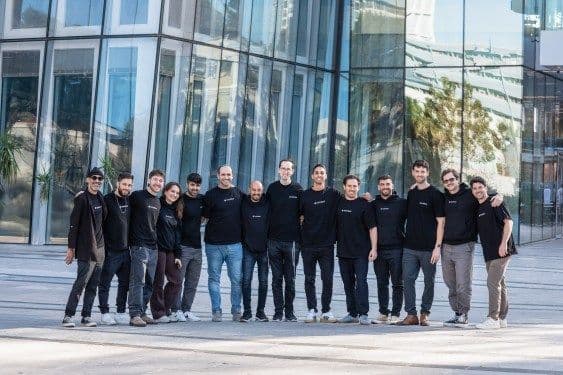
Conntour raises $7M from General Catalyst, YC to build an AI search engine for security video systems

The surveillance tech industry today is in the spotlight, but not for the best reasons. With controversy around the U.S. Immigration and Customs Enforcementtapping into Flock’s camera networkto surveil people, and home camera maker Ringdrawing criticismfor building new features that would enable law enforcement to ask homeowners for footage of their neighborhoods, there’s currently a broad debate around safety, privacy, and who gets to watch whom. But controversy doesn’t erase markets, and the continued improvement of vision-language models has only blown more wind in the sails of companies building new ways to help companies monitor what goes on in their premises. According to Matan Goldner, co-founder and CEO of video surveillance startupConntour, the ethics around this topic are important enough that he says his company is quite picky about which clients to sell to. That may not come off as sound business sense for a startup barely two years in, but Goldner says he can afford to do this because Conntour already has several large government and publicly-listed customers, one of which is Singapore’s Central Narcotics Bureau. “The fact that we have such big customers allows us to select them and to stay in control […] We’re really in control of who is using it, what is the use case, and we can select what we think is moral and, of course, legal. We use all our judgment, and we make decisions based on specific customers that we’re okay [to work with] because we know how they will use it,” Goldner told TechCrunch in an exclusive interview. That traction has helped Conntour with more than being selective. Investors have taken note: The startup recently raised a $7 million seed round from General Catalyst, Y Combinator, SV Angel, and Liquid 2 Ventures. Goldner said the round closed within 72 hours. “I think I scheduled around 90 meetings in like eight days, and just after three days — we started on Monday and by Wednesday afternoon, we were done,” he said. Regardless, Conntour may be right in being picky, especially given how powerful AI tools in this space have become. The company’s own video platform uses AI models to let security personnel query camera feeds using natural language to find any object, person, or situation in the footage, in real-time — a Google-like search engine made specifically for security video feeds. It can also monitor and detect threats on its own based on preset rules, and surface alerts automatically. Unlike legacy systems that depend on preset definitions or parameters to detect specific objects, motion patterns or behaviors, Conntour claims its system uses natural and vision language models, which lends it a high degree of flexibility and usability. A user may ask, “Find instances of someone in sneakers passing a bag in the lobby,” and Conntour’s system will quickly search all the recorded footage or live video feeds to return relevant results. And because the platform bakes in AI models, users can simply ask questions about the footage and get answers in text, accompanied by the relevant video feeds, as well as generate incident reports. The company’s selling point, however, is its scalability. Goldner explained that the platform mainly differs from other AI video search services because it is designed to efficiently scale to systems comprising thousands of camera feeds. In fact, he said, Conntour’s system can monitor up to 50 camera feeds off a single consumer GPU like Nvidia’s RTX 4090. The company does this by using multiple models and logic systems, and then identifying which models and systems the algorithm should use for each query to require the lowest amount of computing power to give users the best results. Conntour claims its system can be deployed fully on premises, completely on the cloud, or a mix of both. It can plug into most security systems already in use, or can serve as a full surveillance platform on its own. But there’s been a long-running problem in the video surveillance industry: The quality of surveillance is only as good as the footage captured. It’s hard to make out details from the footage of a poorly-lit parking lot that was recorded by a low-resolution camera with a dirty lens, for example. Goldner says Conntour hedges for this inevitability by providing a confidence score along with its search results. If the source of a camera feed isn’t good enough quality, the system will return results with low confidence levels. Going forwards, Goldner says the biggest technical problem to solve is bringing the full level of LLM capability to its system while maintaining its efficiency. “We have two things that we want to do at the same time, and they contradict each other. One one hand, we want to provide full natural language flexibility, LLM-style, to let you ask anything. And on the other hand there’s efficiency, so we want to make it use very few resources, because again, processing [thousands] of feeds is just insane. This contradiction is the biggest technical barrier and technical problem in our space, and what we’re working really, really hard to solve.”

read more


Latest AI News

View All News →
Gemini’s personalized AI image generation is now free for US users

Gemini’s personalized AI image generation is now free for US users

Googleannouncedon Monday that the Gemini app is now offering its personalized Nano Banana-powered image generation feature to a broader audience. Starting today, all eligible users in the U.S. can access the feature for free, a service that waspreviously only availableto Plus, Pro, and Ultra subscribers. Google initially announced that Gemini’s Personal Intelligence feature would get Nano Banana-powered image generation back in April, allowing users to create images that reflect their unique interests. This means that images can be generated based on Gemini’s understanding of your likes and preferences without you having to specify them in your prompt. Gemini utilizes data from your Google account connections — such as Gmail, Google Photos, YouTube, and Search — to achieve this. For example, instead of saying, “Create an illustration of me and my favorite things, such as coffee and baking,” you can simply request, “Create an illustration of me and my favorite things.” Gemini can also pull actual images of you from Google Photos, so you don’t need to manually upload photos. Google initially rolled out the Personal Intelligence feature earlier this year, making itwidely availableto all U.S. users in March. The company recentlyexpandedthis functionality to users in India and Japan. Personal Intelligence is an opt-in feature, allowing you to decide which apps Gemini can access. Once enabled, it is set as the default for every prompt, but you can disable it using a new toggle in the Tools menu. Additionally, last month, Googleannouncedseveral upcoming updates for the Gemini app, including a new “Daily Brief” feature, a revamped interface, access to AI video model Gemini Omni, and a personal AI agent named Gemini Spark. Notably, Google’s AI chatbot Gemini surpassed 750 million monthly active users (MAUs) earlier this year, reinforcing its position as a major player in the AI space.

1 hour ago

View

TIDAL cracks down on AI music by cutting off monetization

TIDAL cracks down on AI music by cutting off monetization

Music streaming serviceTIDALis the latest to take aim at AI-generated music with the introduction ofa new policythat will prevent fully AI-generated music from making money on its platform. In addition, TIDAL will use automated tools to remove AI-generated music that attempts to impersonate an artist or a group, the company said. “We are committed to protecting and rewarding organic creativity to avoid compromising an artist’s ability to connect with and build their fandom from TIDAL subscribers. Many have told us they do not want to be exposed to — or prompted to listen to — wholly AI-generated music,” wroteTonyGervino, TIDAL EVP and editor-in-chief, in anannouncement. He clarified that TIDAL’s new policy was not meant to “bash technological advancement,” but rather focuses on protecting and rewarding “organic creativity” from artists. With the changes, fully AI-generated music on TIDAL will be identified and tagged as such, allowing listeners to see an “AI” badge next to any tracks deemed to be 100% AI. These tunes will not be able to be monetized or collect royalties, and will not be eligible for direct-to-fan sales, the company noted. TIDAL’s policy joins others in the streaming music space, where services like Spotify, Apple Music, Deezer, andQobuzhave developed their own policies to address the growing number of AI-generated tracks filling their services. Spotify last yearrevamped its policies to label AI musicand better filter spam, while still acknowledging that AI tools would be used in the music-creation process to varying degrees. Apple Music alsotook the tagging approach. Deezer, which said that44% of all new musicuploaded to its platform daily is AI-generated, has taken a tougher position. It actively removes AI tracks from recommendations and excludes them from editorial playlists. It alsooffers its AI-detection technology to rivalsandprovides a consumer-facing toolthat lets you see if AI music has slipped into your playlists on competing services. TIDAL’s policy could be an interesting test to see if demonetization could be the thing to slow the deluge of AI music, which many listeners aren’t interested in. “Regardless of what you are reading elsewhere, AI’s takeover of the music industry (and your recommendations) isn’t inevitable if we take even greater steps now to monitor and control it,” noted Gervino. The company said the new policy is a “living document,” meaning it’s open to changes as the space evolves. It goes into effect on July 15, 2026.

5 hours ago

View

Cursor now has a mobile app for guiding your coding agent on the go

Cursor now has a mobile app for guiding your coding agent on the go

Cursor isn’t lettingthe $60 billion SpaceX acquisitionslow it down. On Monday, the companyannounceda new mobile appfor iOSdevices designed for users who want to prompt coding agents directly from their phone. The app ties into the Cursor 2.0 changesunveiled in October, which shifted the service towards independent coding agents. With the mobile app, users can spin up new coding agents or interact with agents that were initiated from the desktop client. Cursor’s move to mobile follows similar apps from Anthropic and OpenAI, both of which offer ways to interact with their coding tools on mobile. It’s part of a broader shift in AI-based coding tools, which are increasingly abstracting away from written code and towards oversight of code-writing agents. With no need to access large code bases, many developers are switching away from multi-monitor desktop setups in favor of phones, which allow continuous conversations with remote agents. In a recent talk, Anthropic’s head of Claude Code, Boris Cherny, said he had almost entirely switched to mobile AI coding as a result. “Most of my coding now is on my phone,” Cherny said in the talk. “I would have said ‘you’re crazy’ if you told me that six months ago, but yeah, here we are.”

5 hours ago

View

Arena, the AI leaderboard everyone uses, is now a $100M business

Arena, the AI leaderboard everyone uses, is now a $100M business

Just eight months after launching its commercial service, AI leaderboard providerArena, which originated as a research project at UC Berkeley in 2023, has reached $100 million in annualized run-rate revenue. Arena is best known for its popular crowdsourced AI model performance leaderboard, generated from over 10 million user evaluations. Its consumer website lets a user type a prompt it sends to two models; afterwards, the user chooses which model did a better job. While Arena’s popular AI model leaderboard is free for public use, the company began generating revenue from its platform in September when it introducedAI Evaluations, a service that provides model labs and enterprises with deep-dive performance analytics gathered from its community. Arena’s rapid revenue growth shows that its commercial offerings are as popular with customers as they are with its community of evaluators, who are frequently drawn to the platform for early access to the latest, often unreleased, AI models. “A lot of people don’t even understand that our business is making any money at all; people still see us as like an open-source project,” Anastasios Angelopoulos, Arena’s co-founder and CEO, told TechCrunch. While Arena calls its revenue milestone ARR, a term that traditionally stood forannualized recurring revenue, Angelopoulos clarified that the company charges customers for “consumption,” which means that its revenue is not recurring. While Arena doesn’t have direct competitors – Yupp, another crowdsourced AI model-picking startup,shut downin March— Angelopoulos said the company competes “for the same dollar” with human labeling startups like Mercor, Surge, and Scale AI, all of which assist model makers in refining their AI during post-training. As AI providers strive to maximize model performance, their appetite for post-training refinement services continues to surge. When Arena announced in January that it raised a $150 million Series A at a post-money valuation of $1.7 billion, its annualized revenue was$30 million. Elsewhere, Handshake’s gross annualized revenue from AI training has nearly doubled since January, climbing from $550 million to nearly $1 billion, The Informationreportedin April. Mercor’s annualized revenue also topped $1 billion earlier this year, up from $500 million last September,accordingto The Information. Arena ranks models on a variety of tasks such as text, coding, vision, and image generation, as well as complex, long-running workflows through its recently introduced Agent Mode. Along with Angelopoulos (pictured left), Arena was co-founded by fellow UC Berkeley postdoctoral student Wei-Lin Chiang (pictured center), who serves as the startup’s CTO. The startup was also co-founded by Ion Stoica (pictured right), the renowned UC Berkeley professor and Databricks co-founder who advised the project before it incorporated as a company in April 2025. Arena has raised a total of $250 million from investors including Felicis, Andreessen Horowitz, The House Fund, LDVP, Kleiner Perkins, Lightspeed Venture Partners, Laude Ventures, and UC Investments.

5 hours ago

View