AI Styling Studio — Infinite avatar looks from just 1 photo.Try it now.

BestAITools

Submit your Tool

8000+ AI tools already listed
8K+Tools
100K+/moViews
25K+/moVisitors

AI NewsCity Detect, which uses AI to help cities stay safe and clean, raises $13M Series A

City Detect, which uses AI to help cities stay safe and clean, raises $13M Series A

12:50 AM IST · March 7, 2026
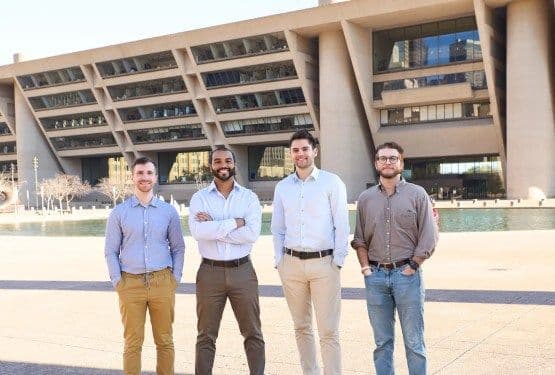
City Detect, which uses AI to help cities stay safe and clean, raises $13M Series A

City Detect, a company that uses vision AI to help local governments monitor the health of buildings and neighborhoods, announced on Friday a $13 million Series A round led by Prudence Venture Capital. The startup launched in 2021, and Gavin Baum-Blake, the remaining co-founder, serves as CEO. He said the company was founded in part because cities were struggling to deal with “urban blight and decay.” The idea was to use advanced computer vision and AI technology to help cities track and fix such problems. City Detect mounts cameras on public vehicles like garbage trucks and street sweepers, captures photos of surrounding buildings as those vehicles pass, then uses computer vision to analyze the images. It’s essentially a Google Maps Street View, but focused on ensuring buildings are up to code. “The problems could be graffiti, illegal dumping, litter that’s on the side of the road,” Baum-Blake told TechCrunch. Then, City Detect works with local governments to fix the issues, a process that usually involves local officials sending a crew out to clean everything up. Right now, tracking dilapidated buildings is very manual, so Baum-Blake considers his competition to be the “status quo.” “They’re able to do 50 per week,” he said of humans tasked with keeping track of decaying buildings, “whereas we’re able to do thousands per week.” The product, which Baum-Blake has patented, has some fun and essential features. The latter is that faces and license plates are always blurred for privacy reasons; the former is that City Detect’s technology can distinguish between street art and vandalism. It also helps governments track whether landlords are not properly maintaining their buildings. “We’re able to see if there’s structural roof issues or we’re able to identify if there’s been storm damage,” Baum-Blake continued. City Detect is in at least 17 cities and works with local governments in places like Dallas and Miami. The company has raised $15 million in funding to date and is a member of the GovAI Coalition (an AI governance collective), is SOC 2 Type II compliant (meaning it’s independently certified for privacy), and follows its own responsible AI policy. “We published our Responsible AI policy in response to a consortium of local governments that stated they were looking for clarity on what vendors were actually willing to commit to,” Baum-Blake said. “We committed to this policy so that our local government partners could know what to expect from us.” Baum-Blake said the new funding will be used to hire more engineers and advance some of the storm-detection damage technology. It also wants to expand throughout the U.S. “We are seeing huge efficiency gains across the departments that we work with, we’re seeing more instances of blight being solved without anyone receiving a citation, we’re seeing tires and litter, and illegal dumping being abated quicker and detected quicker,” he said. “It’s exciting to see technology-forward municipalities lean into predictive AI like City Detect’s models.” Zeal Capital Partners, Knoll Ventures, and Las Olas Venture Capital also participated in the round.

read more


Latest AI News

View All News →

Cloudflare’s new policy pushes AI companies to pay for publishers’ content

Cloudflare has just issued the AI industry a new deadline to separate the web crawlers used for traditional search purposes, like Google Search, from those used for AI agents and training. Starting on September 15, 2026, Cloudflare’s default settings will block “mixed-use” crawlers from any pages that host ads, the company announced on Wednesday. That means that the crawlers that blend search, agent use, and training will be blocked from crawling these sites by default, unless the site owner adjusts the settings otherwise. These changes to the defaults will apply to new Cloudflare customers, new sites set up by existing customers, and all existing free customers, the company says. The move could impact how AI model providers are able to access web content for training purposes and to help power their agentic services. Cloudflare points out that most website owners want their content to be discoverable via search and often through AI services as well, but they want protections against having their intellectual property given away for free. Cloudflare specifically calls out the “world’s largest search engine” (clearly a Google reference!) as having access to about “2x more information” than other AI companies because the search giant makes it difficult for customers to remain discoverable without being used for AI. Google has pushed back against this generalization in the past, noting that it provides a bot calledGoogle Extendedthat lets site owners opt out of having their content used for training and AI products and services like Gemini Apps and Vertex API. Its use doesn’t impact a site’s inclusion in Google Search. However, the tech giant’s flagship Googlebot crawls for Search, including AI features like AI Overviews and AI Mode. “Now that the majority of traffic on the Internet is non-human, we must go further and act faster so that a sustainable ecosystem can emerge,” said Cloudflare co-founder and CEO Matthew Prince in his announcement of the news, referring to the recent milestonewhere bots surpassed human traffic onlinefor the first time. That shift was not expected to occur until next year. “Cloudflare’s new tools and partnerships give website owners increased visibility and commercial opportunities and benefit AI companies that have bots with clear and transparent intent. We hope that our proposed default changes encourage mixed-use crawlers to separate out search from agent use and training,” Prince said. While Cloudflare offers a number of products to help userslaunch their own AI systems, the company has also released a range of tools to give publishers more control over their content in the AI era. In recent years, Cloudflarelaunched tools to combat AI bots, including amarketplace that lets websites charge AI bots for scraping, dubbed Pay Per Crawl. The latter is now also evolving into “Pay Per Use,” the company said, which will allow publishers to charge AI companies when their content creates value, not just when it’s fetched. The change could also help conserve publishers’ bandwidth and compute resources for AI model providers, as Cloudflare’s data suggested that over 50% of crawl traffic from AI crawlers is spent re-fetching unchanged pages. To put this into action, Cloudflare is initially working with two partners, Ceramic.ai and You.com. When a publisher opts in, they’re paid when their content appears in Ceramic’s AI search results or when You.com accesses a piece of their premium content. Other AI companies can customize this model for how they work, Cloudflare says.

3 hours ago

View

Ashton Kutcher leaving Sound Ventures to launch new VC firm with Morgan Beller

Ashton Kutcher is stepping away from Sound Ventures — the firm he co-founded with Guy Oseary 11 years ago — to start a separate VC fund, the Wall Street Journalreported. TechCrunch had separately heard that Kutcher was preparing to leave; the WSJ’s report confirms it and adds new detail on his plans with Beller. The actor and investor’s new firm is being co-founded with Morgan Beller — its name hasn’t been made public yet — who until recently was a general partner at seed-focused VC outfit NFX and previously co-led cryptocurrency project Libra at Meta. Beller also spent nearly three years as a partner at Andreessen Horowitz. Kutcher’s exit doesn’t appear to be a sign of trouble at Sound Ventures — investors more often leave firms that are underperforming, and that’s not the case here. The firm, which has backed companies like Brex and Gusto, was also an early investor in OpenAI, Anthropic, and Fei-Fei Li’s World Labs. The split is also notable for what it signals about where AI money is heading next: Sound built its reputation on concentrated, high-conviction bets in category-leading AI labs, while Kutcher’s new fund appears to be chasing the layer underneath those companies — the infrastructure and energy that power them. “He and his fund consistently make it onto [my] rankings of top unicorn investors. An interesting case!” Stanford finance professor Ilya Strebulaev, who tracks top-performing VCs,wrote on X. The actor hasknown OpenAI’s Sam Altmansince Altman founded Loopt — years before the launch of the ChatGPT maker. Kutcher’s departure was partly due to different views on which startup stages to target for investments, with Sound leaning toward backing companies that are already more established, rather than betting on very early-stage startups, according to WSJ. Kutcher and Beller are focused on making early-stage investments in AI infrastructure, energy, and deep tech startups — startups built around hard science and engineering breakthroughs rather than software alone. Despite leaving Sound Ventures, Kutcher will continue to serve as an advisor to the firm. Meanwhile, Oseary and Sound general partner Effie Epstein will advise Kutcher and Beller’s new firm.

3 hours ago

View

Anthropic Introduces Claude Sonnet 5 With Enhanced Agentic Capabilities; Confirms Return of Claude Mythos 5, Fable 5

Anthropic Introduces Claude Sonnet 5 With Enhanced Agentic Capabilities; Confirms Return of Claude Mythos 5, Fable 5

Anthropic has released its latest Claude Sonnet 5 AI model. The new AI model is claimed to bring enhanced agentic capabilities compared to the Claude Sonnet 4.6 model. Moreover, the new AI model is claimed to offer agentic search capabilities at par with the Opus 4.8 model. Along with improved performance, the AI model focuses on cost efficiency. It is claimed to offer similar performance as more capable AI models at lower costs. Separately, the AI giant has announced that the US government has lifted export restrictions on its Claude Mythos 5 and Mythos-class Fable 5 AI models. This comes weeks after the company was asked to restrict the availability of the two AI models for foreign nationals.

7 hours ago

View

Google Expands Gemini Spark to macOS for AI Desktop Automation Across Files, Apps

Google Expands Gemini Spark to macOS for AI Desktop Automation Across Files, Apps

Google on Tuesday announced the rollout of Gemini Spark to the Gemini app on macOS in beta. First unveiled at Google I/O 2026 in May, the personal AI agent can automate multi-step tasks across apps and services. The Mountain View-based tech giant says users can interact with desktop files and apps on Mac computers to eliminate repetitive workflows, including organising documents, creating spreadsheets, and managing schedules. Alongside, Google also introduced new connected app integrations, support for custom Model Context Protocol (MCP), and proactive monitoring capabilities for Gemini Spark.

7 hours ago

View