AI Styling Studio — Infinite avatar looks from just 1 photo.Try it now.

BestAITools

Submit your Tool

8000+ AI tools already listed
8K+Tools
100K+/moViews
25K+/moVisitors

AI NewsAs more Americans adopt AI tools, fewer say they can trust the results

As more Americans adopt AI tools, fewer say they can trust the results

5:32 AM IST · March 31, 2026

As more Americans adopt AI tools, fewer say they can trust the results

Americans are increasingly turning to artificial intelligence to help with things like research, writing, school or work projects, and analyzing data — but they’re not exactly happy about it. Even as AI use and adoption rises, Americans continue to lack trust in the new tool, according to aQuinnipiac University pollpublished Monday. Of the nearly 1,400 Americans surveyed, more than three-quarters said they don’t trust AI — 76% say they trust it rarely or only sometimes, compared to just 21% who trust it most or almost all of the time. That comes even as an increasing number of Americans adopt AI in their daily lives; only 27% said they’ve never used AI tools, down from 33% in April 2025. “The contradiction between use and trust of AI is striking,” said Chetan Jaiswal, a computer science professor at Quinnipiac. “Fifty-one percent say they use AI for research, and many also use it for writing, work, and data analysis. But only 21 percent trust AI-generated information most or almost all of the time. Americans are clearly adopting AI, but they are doing so with deep hesitation, not deep trust.” Part of that lack of trust might come from a feeling of dread about the future AI will bring. The poll found only a paltry 6% were “very excited” about AI while 62% were either not so excited or not at all excited. Those numbers are basically flipped when we talk about concern: 80% are either very concerned or somewhat concerned about AI, with millennials and baby boomers taking the mantle of most worried, and Gen Z following not far behind. A solid half (55%) say AI will do more harm than good in their day-to-day lives, while only a third say AI will do more good than harm, according to the poll. More people have negative views about AI compared to last year’s survey, according to the researchers — which may not be surprising after a year of Big Tech layoffs, life-endingAI psychosis cases, and energy-grid-straining data centers. Americans across the board oppose building AI data centers in their communities, with 65% saying they wouldn’t want one built, primarily citing high electricity costs and water use. A majority (70%) think AI advancements will cut the number of job opportunities, whereas only 7% think AI will lead to more job opportunities. That’s a shift from the 56% of Americans who last year thought advancements in AI would lead to a decrease in jobs and the 13% who thought AI would increase job opportunities. Members of Gen Z, born between 1997 and 2008, are the most pessimistic, with 81% foreseeing a decrease in jobs. They’re not exactly imagining it, either. Entry-level job postings in the U.S. havesunk 35% since 2023,and AI leaders like Anthropic CEO Dario Amodei havewarnedthat the tech will wipe out jobs. “Younger Americans report the highest familiarity with AI tools, but they are also the least optimistic about the labor market,” Tamilla Triantoro, a professor of business analytics and information systems at Quinnipiac, said in a statement. “AI fluency and optimism here are moving in opposite directions.” Interestingly, even though most Americans are worried about AI’s effect on the labor market as a whole, most don’t think it’s coming for their jobs specifically. Among employed Americans, 30% are concerned AI will make their jobs obsolete. Still, that’s up from 21% last year. “Americans are more worried about what AI may do to the labor market than about what it may do to their own jobs,” Triantoro said. “People seem more willing to predict a tougher market than to picture themselves on the losing end of that disruption — a pattern worth watching as the technology moves deeper into the workplace,” Perhaps a big reason Americans have trust issues with AI is because they don’t believe the companies behind the technology are telling the truth. Two-thirds of respondents said businesses aren’t doing enough to be transparent about their AI use. That same percentage also says the government isn’t doing enough to regulate AI. The sentiment comes as states push to maintain their authority over AI rules, even as federal officials — including under Trump’s latest, largelylight-touch AI framework— and industry leaders advocate for limiting state-level regulation. “Americans are not rejecting AI outright, but they are sending a warning,” Triantoro said. “Too much uncertainty, too little trust, too little regulation, and too much fear about jobs.”

read more
Latest AI News

View All News →
Omen AI’s plan to optimize data centers is all wet

Omen AI’s plan to optimize data centers is all wet

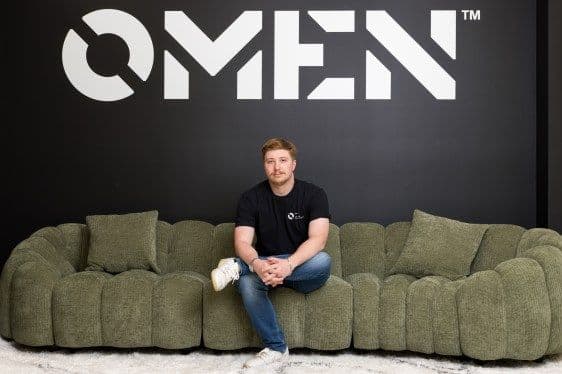
The AI-driven demand for compute power has data centers looking to squeeze more from every rack of GPUs. One consequence? Bacterial outbreaks. The liquid for liquid-cooled chips is a mixture of water and a substance that inhibits bacteria growth. To run the chips hotter, data center managers can change the mix to include more water, which absorbs heat better, but leads to nasty contamination that clogs the flow. To solve that, they flush the system, which can mean shutting down a rack for five or six hours at a potential cost of millions of dollars. Omen AIhas a solution: A tiny spectrometer that can monitor that fluid health in real time, spotting bacterial growth before it becomes a massive problem. “You’re not risking huge amounts of downtime because you have no insight into what’s going on chemically,” explains CEO and founder Zach Laberge. Today, Omen AI said it raised a $31 million Series A round, led by Nava Ventures and including participation from CRV, Vanderbilt University, Mann+Hummel, Starhill Holdings, and Hard Launch Capital, as well as personal investments from executives at Bridgestone, GM, Johnson Controls, and TensorWave. Laberge founded his first company in 2020 when he was 14, raising $3 million to install sensors on construction equipment and ultimately dropping out of high school. (His father and mother, a former Minister of Education for Ontario, were supportive of his plan to carve his own path.) After that startup shut down, Laberge started Omen in 2024, with the idea of focusing on fluid systems as the key to enabling construction machinery to be smart enough to know when it needed to be fixed. The idea was to replace the time-consuming process of extracting samples and sending them to a lab with real-time awareness. Besides bacterial growth, the device can spot pumps and pumps wearing out if it sees copper or chromium, or seals if it sees silicon. Caterpillar dealerships were a key early customer for Omen’s heavy vehicles business, but Cat is also a major supplier of gas-powered turbines and generators to provide on-premises power for data centers. It didn’t take long for Omen to see where the wind was blowing. “That was kind of the transition,” Laberge told TechCrunch. About six months ago, “a lot of the dealerships were saying, ‘Hey, we’re starting to put sensors on our turbines, can you guys do anything on the building side of things?’” Omen discovered that those buildings are full of fluid, from their HVAC systems to their chip cooling. Spotting a new, fast-growing group of potential customers, Omen began to focus on data centers. “It’s rare to see such a young founder who has the respect of established, large corporations in a space that moves a bit more slowly,” said Cory Rellas, a partner at Nava Ventures who sits on Omen’s board. “For Omen in particular, much of our diligence came through our introductions with large customers which quickly validated their approach.” Omen, which has raised $40 million since its founding in 2024, is working with a dozen data center customers as they build out their offering, including TensorWave, a company building an AI compute cloud on AMD chips. “The fluid running through these massive systems is a critical variable that most of the industry is flying blind on,” Piotr Tomasik, TensorWave’s president, said in a statement. “Omen [sees] the future of infrastructure exactly the way we do, better monitoring to optimally support compute customers.” While many organizations rely on mailing fluid samples to labs for insight, Omen isn’t alone in developing on-premises analytics — Pyxis, an established water-monitoring firm, rolled out its data center coolantmonitoring productearlier this month. The key tech advances that unlocked this approach are recent improvements in both optical technologies and signal processing software. “Hardware is just cheap enough that it makes sense to play at scale, and then signal processing lets us make more sense out of the noise,” Laberge said.

2 hours ago

View

Robot hand company settles Tesla trade secret suit and announces $11M raise

Robot hand company settles Tesla trade secret suit and announces $11M raise

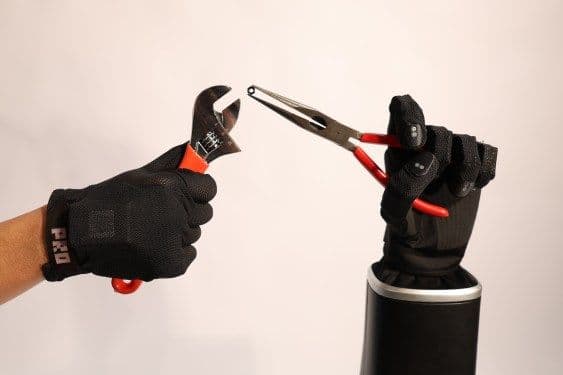
Jay Li doesn’t recommend getting sued by Tesla if you’re trying to get a startup off the ground. But he does think his company, Proception, might be better off for having endured the experience. “I think it’s kind of like a resilience test, or pressure test,” he told TechCrunch in an exclusive interview. “People say that what doesn’t kill you makes you stronger, right?” Li, who was a technical lead on Tesla’s Optimus humanoid robot program, wasaccused by his former employer last yearof absconding with trade secrets to start Proception. But after months oftradinglegal blows, he finally reached a settlement with Tesla, which dismissed the lawsuit earlier this month. (Tesla did not respond to a request for comment.) Now Li is free to tackle what he thinks is an even harder problem: making robot hands work like a human’s. To help do that, Proception announced Monday that it has raised an $11 million seed round led by First Round Capital, with contributions from Y Combinator and early stage fund BoxGroup. Proception also announced Monday that it is shipping the first batch of its “high-dexterity robotic hand” to “researchers and robotics companies,” while opening up to wider orders. The goal, Li said, is to become the top hand supplier to other companies that don’t want to spend the time or resources developing what’s known in the industry as “dextrous manipulation.” While there’s been an avalanche of money and attention rushing into the world of robotics, Li believes not enough of that has gone to making robotic hands truly mimic a human’s hands. One of the loudest voices talking about this challenge has actually been his old boss, Tesla CEO Elon Musk, who has said robot hands are one of the biggest engineering problems yet to be solved. While Musk has maintained that Optimus robots could start working in factories in a matter of years, the consensus view is that making robotic hands equivalent to a human’s is still many years away. Kevin Lynch, the director of Northwestern University’s Center for Robotics and Biosystems, told the Wall Sreet Journal last year that his team believes it will be a decade until they are “functional and useful and able to do some of the things that humans do.” Li thinks Proception can do it much faster, in large part because of how they’re collecting data. Most companies training humanoid robots right now are using teleoperators to train their systems. A human wearing a virtual reality headset is able to see what a robot sees and manipulate what’s in front of that robot, then the robot can learn from the commands given by the human. A big drawback to this approach, according to Li, is that the teleoperator is not receiving feedback from the objects the robot is touching. This approach is also limited to the number of robots a company has available at any given moment, Li said. Proception’s solution is a glove laden with sensors. With human testers wearing the gloves (and a headset), Proception and its customers can capture “human hand interaction data without requiring a robot in the loop,” according to Proception’s press release. This same glove also goes on the hand Proception is developing, acting as its sensor-packed “skin.” The hand has 22 degrees of freedom and multiple joints per finger to enable a “wide range of dexterous motions,” according to Proception. Li said this approach will also let Proception and its customers gather finer, more task-specific data that can allow its robotic hands to more accurately resemble a human’s. He also thinks it is better suited to scale up. “You need both hardware and data, and those need to come hand-in-hand to get [dextrous manipulation] to work. A lot of companies solely focus on hardware, or like hardware plus non-scalable data [collection],” he said. “We’re working on this highly dexterous hardware plus highly scalable data. We believe that’s a key combination to solve this problem.” First Round partner Bill Trenchard, who led the investment in Proception, said this was a big reason why he backed Li. “We think they will have the best hand in the market, maybe the most sophisticated hand today, and the underlying data and models to support that,” he told TechCrunch. “Dexterous manipulation is a very, very, very important part of the whole humanoid story going forward, and as many people have said, it’s sort of the last mile of getting these robots to be truly performant.” Trenchard also praised Li’s ability to keep a cool head while being sued by his former employer. “He was very upfront with us when this came out, and I think the team did an amazing job of keeping their heads down,” Trenchard said. “Jay’s a very strong leader.” Li is also confident. After facing down Tesla’s “hardcore litigation department,” he told TechCrunch that he wouldn’t be surprised if the company comes calling for help as Proception grows. “I think it will happen,” he said.

2 hours ago

View

Mphasis Joins Microsoft Security Partner Ecosystem Amid Rising Cyber Threats

Mphasis Joins Microsoft Security Partner Ecosystem Amid Rising Cyber Threats

Mphasis said the membership builds on its existing collaboration with Microsoft across managed security services, cyber fusion centres and advisory offerings, as enterprises step up investments in AI-driven cyber defence.

2 hours ago

View

Capgemini to Lead Bentley Motors' Digital Transformation With AI, Intelligent Manufacturing

Capgemini to Lead Bentley Motors' Digital Transformation With AI, Intelligent Manufacturing

The facility is being developed as a hub for hyper-personalised, digital, and sustainable luxury vehicle production.

2 hours ago

View