AI Styling Studio — Infinite avatar looks from just 1 photo.Try it now.

BestAITools

Submit your Tool

8000+ AI tools already listed
8K+Tools
100K+/moViews
25K+/moVisitors

AI NewsAnthropic vs. the Pentagon: What’s actually at stake?

Anthropic vs. the Pentagon: What’s actually at stake?

4:35 AM IST · February 28, 2026

Anthropic vs. the Pentagon: What’s actually at stake?

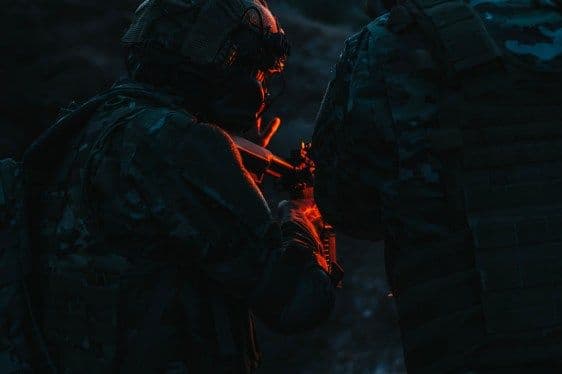
The past two weeks have been defined by aclashbetween Anthropic CEO Dario Amodei and Defense Secretary Pete Hegseth as the two battle over the military’s use of AI. Anthropic refuses to allow its AI models to be used for mass surveillance of Americans or for fully autonomous weapons that conduct strikes without human input. At the same time, Secretary Hegseth has argued the Department of Defense shouldn’t be limited by the rules of a vendor, arguing any “lawful use” of the technology should be permitted. On Thursday,Amodei publicly signaledthat Anthropic isn’t backing down — despite threats that his company could be designated as a supply chain risk as a result. But with the news cycle moving fast, it’s worth revisiting exactly what’s at stake in the fight. At its core, this fight is about who controls powerful AI systems — the companies that build them, or the government that wants to deploy them. As we said above, Anthropic doesn’t want its AI models to be used for mass surveillance of Americans or for autonomous weapons with no humans in the loop for targeting and firing decisions. Traditional defense contractors typically have little say in how their products will be used, but Anthropic has argued from its inception that AI technology poses unique risks and therefore requires unique safeguards. From the company’s perspective, the question is how to maintain those safeguards when the technology is being used by the military. The U.S. military already relies on highly automated systems, some of which are lethal. The decision to use lethal force has historically been left to humans, but there are few legal restrictions on military use of autonomous weapons. The DoD doesn’t categorically ban fully autonomous weapons systems. According to a2023 DOD directive, AI systems can select and engage targets without human intervention, as long as they meet certain standards and pass review by senior defense officials. That’s precisely what makes Anthropic nervous. Military technology is secretive by nature, so if the U.S. military were taking steps to automate lethal decision-making, we might not know about it until it was operational. And if it used Anthropic’s models, it could count as “lawful use.” Anthropic’s position isn’t that such uses should be permanently off the table. It’s that its models aren’t capable enough to support them safely yet. Imagine an autonomous system misidentifying a target, escalating a conflict without human authorization, or making a split-second lethal decision that no one can reverse. Put a less-capable AI in charge of weapons, and you get a very fast, very confident machine that’s bad at making high-stakes calls. AI also has the power to supercharge lawful surveillance of American citizens to a concerning degree. Under current U.S. laws, surveillance of American citizens is already possible, whether through collection of texts, emails, and other communication. AI changes the equation by enabling automated large-scale pattern detection, entity resolution across datasets, predictive risk scoring, and continuous behavioral analysis. The Pentagon’s argument is that it should be able to deploy Anthropic’s technology for any lawful use it deems necessary, rather than be limited by Anthropic’s internal policies on things like autonomous weapons or surveillance. More specifically, Secretary Hegseth has argued the Department of Defense shouldn’t be limited by the rules of a vendor and that it would engage in “lawful use” of the technology. Sean Parnell, the Pentagon’s chief spokesperson, said in aThursday X postthat the department has no interest in conducting mass domestic surveillance or deploying autonomous weapons. “Here’s what we’re asking: Allow the Pentagon to use Anthropic’s model for all lawful purposes,” Parnell said. “This is a simple, common-sense request that will prevent Anthropic from jeopardizing critical military operations and potentially putting our warfighters at risk. We will not let ANY company dictate the terms regarding how we make operational decisions.” He added that Anthropic has until 5:01 p.m. ET on Friday to decide. “Otherwise, we will terminate our partnership with Anthropic and deem them a supply chain risk for DOW,” he said. Despite the DoD’s stance that it simply doesn’t believe it should be limited by a corporation’s usage policies, Secretary Hegseth’s concerns about Anthropic have at times seemed connected to cultural grievance. Ina speech at SpaceX and xAI offices in January, Hegseth railed against “woke AI” in a speech that some saw as a preview of his feud with Anthropic. “Department of War AI will not be woke,” Hegseth said. “We’re building war-ready weapons and systems, not chatbots for an Ivy League faculty lounge.” The Pentagon has threatened to either declare Anthropic a “supply chain risk” — which effectively blacklists Anthropic from doing business with the government — or invoke the Defense Production Act (DPA) to force the company to tailor its model to the military’s needs. Hegseth has given Anthropic until 5:01 p.m. on Friday to respond. But with the deadline approaching, it’s anyone’s guess whether the Pentagon will make good on its threat. This is not a fight either party can easily walk away from. Sachin Seth, a VC at Trousdale Ventures who focuses on defense tech, says a supply chain risk label for Anthropic could mean “lights out” for the company. However, he said, if Anthropic is dropped from the DoD, it could be a national security issue. “[The Department] would have to wait six to 12 months for either OpenAI or xAI to catch up,” Seth told TechCrunch. “That leaves a window of up to a year where they might be working from not the best model, but the second or third best.” xAI is gearing up to become classified-ready and replace Anthropic, and it’s fair to say given ownerElon Musk’s rhetoricon the matter that the company would have no problem giving the DoD total control over its technology. Recentreportsindicate that OpenAI may stick to the same red lines as Anthropic.

read more

Latest AI News

View All News →
Yep, we’re using OpenClaw to date now

Yep, we’re using OpenClaw to date now

Ben Guez has “a bunch of potential international wives in [his] DMs,” thanks to an automated script he set up using OpenClaw, Claude code, and Instagram trial reels. “I think it’s crazy, like the potential is insane right now,”Guez, a content creator and startup founder, told TechCrunch. “I’m not sure if everyone’s gonna think it’s good, but I mean, it’s working.” How is Guez is wooing so many women? First, he uses the open source AI agentOpenClawto track World Cup match results. After each game, OpenClaw triggers Claude to create and post a nearly identical Instagram “trial reel” with the same template. In the video, Guez stares out a train car window looking dejected, with the caption: “I can’t believe {COUNTRY} lost… If any {COUNTRY} girls need emotional support… my DMs are open.” Guez has made the same post, save for the country name, more than a dozen times. But you can’t tell when you look at his profile, since trial reels don’t show up on a creator’s public page. Since he launched this automation, Guez has gotten over one million views and 200 DMs in a few days. That volume is even more impressive considering that Guez says in his profile that he will only answer DMs sent viaCanary, his AI language learning app, which means that these women have to download his app. You have to hand it to him: Guez is really taking “work smarter, not harder” to another level. But once these women realize he doesn’t actually care about Tunisian soccer, wouldn’t they feel played? “They’re not feeling angry, they’re more impressed, like, ‘Oh, you’re thinking outside of the box, you’re a genuis,’” Guez said. “I think as long as you’re open [about] what you’re doing, I think it’s fine.” TechCrunch was not able to independently verify the actual reactions of these women, so we’ll just have to take Guez’s word for it. But we can tell you that Guez isn’t the only guy getting creative with theviral AI assistant. While Guez’s methods are a bit more outrageous, other people see OpenClaw as a way to streamline the process of setting up dates. Jeff Weisbein, founder of a tech PR firm, uses OpenClaw to help him figure out where to take dates across different neighborhoods in South Florida. “I’m meeting women who are in various parts of South Florida, so I don’t know all of the restaurants or things to do,” Weisbein told TechCrunch. “I have my bot just kind of do all the research and make a document with links to why it’s a choice for whatever type of date it is.” When I fill him in on Guez’s OpenClaw scheme, he bursts out laughing. “I guess I’m not leveraging OpenClaw to the fullest,” he said. “But definitely in the realm of using OpenClaw to facilitate a task that I would manually have to do otherwise.” Like Guez, Weisbein doesn’t hide the fact that he’s using AI tools to help plan dates (it backfired, though, when one woman told him, “I hate AI agents”). In a way, asking OpenClaw where to go for happy hour in Fort Lauderdale isn’t that different from Googling the coolest neighborhood bars, but Weisbein says he would draw the line at using AI to mediate his actual conversations with women. “I have seen people create bots and ways to swipe using OpenClaw, and I wouldn’t do that. They say it’s a numbers game, but if that’s what it takes… that seems like a pretty terrible way to do it,” he said. “I feel like you shouldn’t delegate your communication when you’re in a relationship with someone to AI.” People seem hesitant to let AI meddle once there’s an actual connection, but a tech worker named Cailey said that once she’s decided to end a flirtation, she doesn’t mind using Claude to break things off. “I started using Claude and created an automation that crafts ‘I no longer wish to see you’ messages based on a few key terms I would enter about the date. It’d then automatically send them for me at random times so that I wouldn’t feel the anxiety of when to send,” she told TechCrunch. “It worked really well, until I mentioned it to someone I was on a date with, who I then had to send an automated message to, and he asked if he was talking to Claude or Cailey.” What’s worse: getting ghosted, or getting broken up with by an AI? Wish you could have a team of experts at your beck and call?NanoClaw is the first personal AI assistant to support agent swarms.We've got you covered – no matter the need.pic.twitter.com/X5vcf4Cmve OpenClaw rocked the tech world with its potential when it went viral this spring, but security advocates have continuouslywarned usersabout the dangers of giving an AI assistant unilateral control over all of your accounts. For Lazer Cohen, the co-founder of the security-focused OpenClaw alternativeNanoClaw, there are steep privacy implications of outsourcing personal relationships to AI, even if his company advertises date planning as a potential use case on X. “Whenever you’re giving an agent access to personal information and accounts, you need human-in-the-loop approval,” Cohen told TechCrunch. “We’ve all heard the stories of OpenClaw creating dating profiles for people without their knowledge or consent, or OpenClaw dating coaches spilling to other groups that they’re being used as a dating coach too.” NanoClaw has found its way into Cohen’s love life, though he uses it in a way that’s a bit more wholesome than mass-producing reels that ask heartbroken soccer fans to slide into his DMs. “My wife and I personally use our NanoClaw assistant, Rosie, to manage the schedules of our five children,” he said. “But ‘claws’ are widely used to help couples get to the child-rearing phase.”

40 minutes ago

View

Microsoft launches its own AI deployment company with $2.5 billion commitment

Microsoft launches its own AI deployment company with $2.5 billion commitment

On Thursday, Microsoft announced a new operating business called Microsoft Frontier company, focused on delivering successful enterprise AI deployments with Microsoft’s existing AI tools. The project will be backed by a $2.5 billion investment from Microsoft, as well as 6,000 industry and engineering experts. In a statement announcing the venture, Microsoft’s Commercial Business CEO Judson Althoff resisted the Forward Deployed Engineer (FDE) label that is often applied to these ventures. “This goes beyond what has been labeled as Forward-Deployed Engineering,” Althoff wrote, “and will be the largest, most capable, outcome-driven engineering organization in the industry.” Nonetheless, the venture bears a striking similarity to a number of FDE-based AI ventures announced in recent months. Justtwo days earlier, Amazon Web Services announced an internal commitment of $1 billlion for its own AI deployment venture, explicitly embracing the FDE model.Both OpenAI and Anthropichave launched joint ventures along similar lines, although those efforts also involve outside capital from private equity firms. Microsoft’s existing client base will give the new effort a significant head start, as the company has already deployed engineers to much of the Fortune 500. The announcement cites an early partnership with the London Stock Exchange Group, as well as Unilever, Land O’Lakes, and Accenture.

40 minutes ago

View

How to Escape OpenAI, Anthropic, and Their Expensive APIs

How to Escape OpenAI, Anthropic, and Their Expensive APIs

Enterprises are grappling with the ever increasing token costs. So, how to put an end to this?

40 minutes ago

View

Skyroot Sets Date for Vikram-1 Orbital Test Flight from Sriharikota

Skyroot Sets Date for Vikram-1 Orbital Test Flight from Sriharikota

Skyroot Aerospace’s Mission Aagaman will test India’s first privately developed orbital rocket and gather flight data for future launches.

40 minutes ago

View