AI Styling Studio — Infinite avatar looks from just 1 photo.Try it now.

BestAITools

Submit your Tool

8000+ AI tools already listed
8K+Tools
100K+/moViews
25K+/moVisitors

AI NewsAlexa+ gets a new ‘adults only’ personality option that curses but won’t do NSFW content

Alexa+ gets a new ‘adults only’ personality option that curses but won’t do NSFW content

9:02 AM IST · March 13, 2026

Alexa+ gets a new ‘adults only’ personality option that curses but won’t do NSFW content

Amazon’s AI assistant Alexa+ is getting another new personality. On Thursday, the company announced it’s expanding its lineup of personality styles for users to choose from to include a “Sassy” option, which is for adults only. Notes Amazon, before opting to use the Sassy personality, users will be required to go through additional security checks in the Alexa app. The personality style will also not be available when Amazon Kids is enabled, Amazon says. The new option joins others like Brief, Chill, and Sweet, launched last month. When you toggle on the option for Sassy in the Alexa mobile app, you’re warned that the Sassy style uses explicit language, which is why it requires a security check. On iOS, this involved a Face ID scan. The AI assistant explained its style to us like this: “The Sassy style is built on one premise: help first, judge always. Every answer comes wrapped in wit and a well-placed roast — it’ll answer your question; it’ll just make you feel something about it first. Expect reality checks delivered with charm, compliments that somehow sting, and warmth you didn’t see coming. Equal-opportunity irreverence, zero apologies. Honest, sharp, and funny — and somehow that’s more helpful than helpful.” Alexa’s app also had warned that the style could contain “mature subject matter.” However, further investigation discovered this is not Amazon’s version of something likeGrok’s adult AI companions. The AI assistant said the new option won’t get into areas like explicit sexual content, hate speech, illegal activities, personal attacks, or anything that could cause harm to oneself or others. The move is the latest example of how Amazon is trying to make Alexa+ more customizable, as it revamps the assistant for the generative AI era. By offering the assistant different personalities — including one positioned as more adult — Amazon is borrowing from a broader trend in AI, where companies have been experimenting with tone, style, and personas to make their assistants more engaging and personalized to the individual users’ choices.

read more

Latest AI News

View All News →
Wayve launches $85M employee tender offer at $8.5B valuation

Wayve launches $85M employee tender offer at $8.5B valuation

Wayve, a UK-based self-driving tech startup, is allowing its employees to sell a portion of their vested equity.  The $85 million tender offer — essentially a structured opportunity for employees to sell shares back to investors — is being led by the company’s existing and new investors at the company’s latest valuation of$8.5 billion. That valuation was set in February when the nine-year-old company raised a $1.2 billion Series D led by Eclipse, Balderton and SoftBank Vision Fund 2, and included participation from Ontario Teachers’ Pension Plan, Baillie Gifford, Microsoft, NVIDIA and Uber. This is Wayve’s second employee liquidity event. The company previously held a tender offer alongside its$1.05 billionSeries C funding round in May 2024. Wayve’s offering is part of agrowing trendof AI startups. Rather than waiting years for an exit, companies are using tender offers as a retention tool, giving employees a reason to stick around rather than jump to a competitor — or start their own shop — the moment their options vest. Other startups that have recently completed employee tender offers includeDecagon, which builds AI agents that handle customer service for enterprises like Duolingo and Hertz;ElevenLabs, the AI voice-generation company behind much of the internet’s synthetic speech and dubbing tools;Linear, a popular project-management platform built for software teams; andClay, a sales and marketing automation tool that helps companies research and reach prospects. (Clay has run two tenders in the last nine months alone.) These startups are able to provide employee liquidity primarily because investors are eager to buy more of the equity in these high-growth companies, even at a premium, betting the businesses will be worth even more down the line. Wayve uses a self-learning approach to its autonomous driving. Instead of relying on the pre-built, high-definition maps most self-driving programs use, its software is an end-to-end neural network that learns to drive purely from data — closer to how a human picks up driving through experience, its founders argue. In pursuit of a “general-purpose” AI driver — one that could, in theory, work across countries, cars, and road conditions — the company has more than doubled its headcount to 1,200 employees over the past year. Wayve is targeting robotaxi pilot launches in partnership with Uber later this year, while separately planning to integrate its AI software into Nissan’s next-generation driver-assist systems starting in 2027.

1 hour ago

View

Trump drops restrictions on Anthropic’s Mythos and Fable models

Trump drops restrictions on Anthropic’s Mythos and Fable models

The US has lifted a requirement that Anthropic obtain a license before exporting its Mythos and Fable models abroad, a requirement that effectively cut off public access to what are widely considered the most advanced AI models released to date. The AI lab said it would begin restoring access to the models on Wednesday, July 1. On June 12, the US government had added the products to its list of export-restricted technologies, meaning they could no longer be made available to foreign nationals without special approval. Complying with that rule proved impractical at scale, forcing Anthropic to end public access to the models altogether. Now, after weeks of talks, Secretary of Commerce Howard Lutnick said Anthropic “has agreed to proactively detect and address security risks associated with the models; to work diligently with the U.S. government on protocols and standards and releases for Mythos, Fable and future models; and to inform the US government of any malicious activity.” Anthropic had alreadypublicly pledgedto do much of this voluntarily, months before the export rule existed. That’s part of why cybersecurity experts wereskeptical of the restrictionsin the first place. To them, the ban looked less like a security fix and more like leverage, a way for the Trump administration to punish Anthropic for its executives’ public criticism of how the government, and the president’s political opponents, might use the technology. Mythos was originally made available to a select group of organizations beginning in April to allay concerns about its ability to identify and exploit vulnerabilities in software, while a version called Fable wasreleasedto the public in June with additional security guardrails. However, with Asian AI companiesbeginning to releasetheir own AI models approaching Mythos-level capabilities — among them Fugu and Tulonfeng — the US government was under pressure to ease its restrictions on Anthropic to ensure that American AI could compete globally. Last week, Lutnick cleared Mythos to be released to select customers approved by the White House. OpenAI’s latest modelswere also releasedto a group of organizations approved by the Trump team, instead of the public. The Trump administration’s erratic approach to AI policymaking has left companies across the industry with little clarity about what will govern future model releases. An executive order issued in June that signaled a desire to review models ahead of release wascriticizedby influential analysts like Dean W. Ball, who recently started a policy position at OpenAI.

1 hour ago

View

Google introduces a faster, cheaper image generator with Nano Banana 2 Lite

Google introduces a faster, cheaper image generator with Nano Banana 2 Lite

Google on TuesdayreleasedNano Banana 2 Lite, the newest version of its in-house AI video and image generator. This version is significantly faster and more affordable than its previous release, the company claims. The model has much lower latency and can produce images in four seconds, which makes it a good option if you need to workshop images and produce a large number of them in quick succession, Google says. It costs $0.034 per 1,000 images, which makes it quite affordable for people looking to draft and perfect their content at scale. The release follows last summer’s launch of the original Nano Banana, powered by Gemini 3.1 Flash, and the February release ofNano Banana 2. The latter introduced new powers for the generator, including the ability to create more realistic images. The company also offers Nano Banana Pro, which is described as a more powerful (and more expensive) model for advanced use cases. While Nano Banana 2 is referred to as a “generalist workhorse,” Banana 2 Lite is optimized for high-volume workflows that need to occur at a rapid pace, Google claims. Despite consumer backlash overso-called AI slopcreated by image models, companies continue toinvest heavilyin AI tools that can generate imagery and videos. However, Google often markets its models as convenient tools that can assist with the creation of advertisements. That said, the ties between Hollywood and AI companies continue to tighten — much to the consternation of some creative communities and audiences. Indeed, Googlejust struck a $75 million dealwith the much-beloved indie studio A24 — a partnership that has sufferedsignificantcriticismfrom fans. Nano Banana 2 Lite is now available through Google AI Studio and the Gemini API, as well as Google’s Gemini Enterprise Agent Platform. Google says it serves as a replacement for Nano Banana, which the company now refers to as its “legacy model.” Also on Tuesday, Google announced a wider release of Gemini Omni Flash, which wasinitially introducedat Google I/O earlier this year. Flash costs $0.10 per second of video output. Plus, Google showed off a new demo app, Omni Product Studio, which it says can take static images generated by Omni and transform them into “cinematic e-commerce videos.” “Building with generative media is often about creative iteration,” the company saidin a blog. “With these two models, developers can build comprehensive, end-to-end multimedia experiences that connect rapid image generation with video creation and editing.”

5 hours ago

View

The DeepMind trio who built a poker AI are now making money for quant hedge funds

The DeepMind trio who built a poker AI are now making money for quant hedge funds

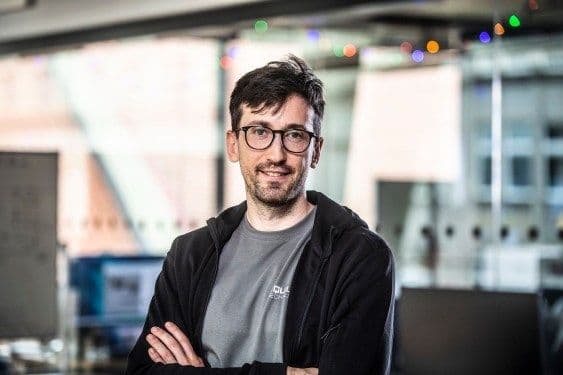
Three former DeepMind researchers who created an AIthat beat humans at pokerhave now applied the same technology to trading stocks — and the bet appears to be paying off. Their Prague-based AI lab,EquiLibre Technologies, is now valued at $500 million after raising an undisclosed-sum Series A, TechCrunch learned. The round was led by Creandum, and, although the VC also declined to disclose the size of the round, vice president Cameron Sellers confirmed that it was the largest single investment the firm “has ever made in one go into a company,” he told TechCrunch.The common denominator between poker and Wall Street is that they are well suited forreinforcement learning, an AI training technique where self-learning models are incentivized by rewards. According to Martin Schmid, EquiLibre CEO, “The nice thing about trading and markets is that the scoring is super simple: how much money did the agent make?” This isn’t just game money. In partnershipwith quant firm Tower Research Capital, EquiLibre’s algorithms have been trading billions in daily volume across the S&P 500 and Nasdaq. The startup claims its agents have been doing well since their rollout on crypto markets in 2025, and now on stock exchanges, with “a perfect record of zero negative months since inception,” meaning they have finished each month with their investments up overall. By applying its AI to quant hedge funds, the startup is in a field where automation is commonplace and, if successful, improvements can quickly turn into cash. That made the startup appealing to Creandum, Sellers said.“The potential total addressable market of trading in the financial markets is one of the biggest on earth, and there are countless funds over the years that have generated quantums of profit that make most venture-backed successes look small,” Sellers said. But he noted that EquiLibre explicitly defines itself as “a lab first, not a finance firm.”Schmid and his two founders — CTO Rudolf Kadlec and CSO Matej Moravcik — don’t have a background in finance, and it is not what drives them, he told TechCrunch. “I’m not doing this because I’m excited about making markets efficient. I’m doing this because we are all excited about building new things that have never been built before, and this is a lot of fun to build,” Schmid said. The prospect of frontier AI by by DeepMind alumni is an area of hot pursuit by VCs as well. Another recent such example is Ineffable Intelligence,which recently raised 1.1 billion. Most of these are based in the U.K., but there arenotable exceptions, including EquiLibre. In the case of EquiLibre’s founding trio, they were visiting PhD students at the Google-owned company’sfirst international AI research office in Edmonton, Alberta, Canada(which Alphabetshut downin 2023.) While there, they builtDeepStack, the first AI program to defeat pro players at no-limit poker, also known asTexas hold ’em. They also worked with professors who are now part of the startup’s high-profile advisory board — including Rich Sutton, who went on to receive theTuring award in 2024for his work on reinforcement learning.To build their startup, EquiLibre’s founders decided to move back to their home country, Czechia. “This is where we had a lot of people we had worked with, and there was a large Czech diaspora at Google and other places,” Schmid said. “These were our friends, so we told them, ‘Hey, guys, we are moving back to Prague, do you want to join us?’”That helped EquiLibre build its initial team back in 2022 and reach its current headcount of 25 people; but according to Schmid, that choice of location keeps paying dividends. Compared to San Francisco, “It’s much easier to keep the good people here, because there’s not a new sexy AI thing happening every two months.” Not that EquiLibre is the only hot AI startup in town.BottleCap AIis based in the same building. Still, this is one of the more notable AI companies in the region for talent. It next plans to scale its compute infrastructure, bringing online what it expects will be one of the largest compute clusters in Central and Eastern Europe (CEE). While the startup also declined to disclose its total funding to date, Schmid said it previously raised two other funding rounds, with pre-seed backers including CEE-focused VC firm Credo, which also backed ElevenLabs and UiPath. According toDealroom data, EquiLibre’s $10 million seed round was led by Blossom Capital at a $140 million valuation. Sellers confirmed that the Series A $500 million valuation was a big jump. But it also comes after the winds have changed favorably for reinforcement learning (RL), including in trading. “When we started, people were skeptical,” said Schmid. But now RL is the standard. “Because we started four years back, we believe we are ahead.” Still, there is a risk that the startup will get leapfrogged by competitors. Trading giant Jane Street, for instance,states it already uses RLwith LLMs, “or whatever else we need to train good models.” It also claims it has “tens of thousands of high-end GPUs,” while EquiLibre is seeking to squeeze more compute out of way fewer chips and “get more from less,” Schmid said. Consideringhow profitable Jane Street is, EquiLibre will have to play its cards well in order to reach its goal to be known as “theAI lab in trading.” But this isn’t poker, and there might be no losers. Says Schmid: “This is not a winner-takes-all market.”


5 hours ago

View