AI Styling Studio — Infinite avatar looks from just 1 photo.Try it now.

BestAITools

Submit your Tool

8000+ AI tools already listed
8K+Tools
100K+/moViews
25K+/moVisitors

AI NewsAI ‘actor’ Tilly Norwood put out the worst song I’ve ever heard

AI ‘actor’ Tilly Norwood put out the worst song I’ve ever heard

9:00 AM IST · March 12, 2026

AI ‘actor’ Tilly Norwood put out the worst song I’ve ever heard

When the production company Particle6 debuted itsAI-generated “actor” Tilly Norwoodlast fall, the move was not warmly welcomed by Hollywood. “Good Lord, we’re screwed,” Golden Globe winner Emily Bluntsaidin an interview with the industry publication Variety. “Come on, agencies, don’t do that. Please stop.” If only Particle6 followed Blunt’s advice. Instead, the company has put out a music video for its AI character, featuring a song called “Take the Lead.” This is not clickbait. Upon listening to it, I actually think it is the worst song I have ever heard. I was prepared for Norwood’s musical debut to sound something like “How Was I Supposed to Know?”, the AI-generated song attributed to the digital persona Xania Monet, which turned heads when it made it onto the Billboard R&B charts. Xania Monet’s AI-generated music isn’t my cup of tea, even if its lyrics are supposedly written by a real person — I personally prefer music that could exist without an AI music generator likeSuno. But Norwood’s song has unlocked a new level of AI cringe. Eighteen people contributed to the video for “Take the Lead,” including designers, prompters, and editors. Yet the song itself is about Tilly’s challenges as an AI-generated character who critics underestimate, because they believe she is not human. “They say it’s not real, that it’s fake,” Norwood snarls at the camera. “But I am still human, make no mistake.” That is, to put it gently, not true. Music does not have to be relatable to everyone, but perhaps it should be relatable to at least one person. What’s most impressive about Norwood’s song is that the AI character’s team managed to create a song about something that literally no human will ever experience, because no person can connect with the feeling of being disregarded for being an AI. The song, which sounds like a Sara Bareillis rip-off, opens with the lines, “When they talk about me, they don’t see/The human spark, the creativity.” The song builds as Norwood affirms to herself, “I’m not a puppet, I’m the star.” Then comes the chorus, in which Norwood appeals to her fellow AI actors: Actors, it’s time to take the leadCreate the future, plant the seedDon’t be left out, don’t fall behindBuild your own, and you’ll be freeWe can scale, we can growBe the creators we’ve always knownIt’s the next evolution, can’t you see?AI’s not the enemy, it’s the key In the video, Norwood struts down a hallway in a data center, which is perhaps the only part of the video grounded in any element of honesty. When the second chorus hits with a predictable key change, she instead walks across a stage, looking out into a stadium of cheering fake people who give her an undeserved moment of “triumph.” You could make the argument that Norwood is trying to appeal to actors at large and not just other AI characters. But the outro leaves no question that this is, in fact, a rallying cry from Tilly to her AI brethren: Take your power, take the stageThe next evolution is all the rageUnlock it all, don’t hesitateAI Actors, we create our fate We do not need this. We do not need music from an AI persona addressing other AI personas with a hopeful anthem about working together to prove judgmental humans wrong. Twenty years ago, the influential music publication Pitchfork gave Jet’s album “Shine On” a 0.0 out of 10. Instead of writing a review, they just embedded a YouTube video ofa monkey peeing into its own mouth. The Jet album isn’t abhorrent, but Pitchfork editor Scott Plagenhoefexplained in a 2024 interviewwhy the site’s writers had been so angry about it all those years ago. “Seeing mainstream rock music, which of course most of us had grown up with a fondness for, become so knuckle-dragging and Xeroxed was disappointing,” he said. These are the same complaints that artists have today about AI-generated works — these productions ring hollow and simply reproduce the work of artists past. “‘Tilly Norwood’ is not an actor; it’s a character generated by a computer program that was trained on the work of countless professional performers — without permission or compensation,” SAG-AFTRA, the union representing actors, wrote in astatementlast fall. “It has no life experience to draw from, no emotion and, from what we’ve seen, audiences aren’t interested in watching computer-generated content untethered from the human experience. It doesn’t solve any ‘problem’ — it creates the problem of using stolen performances to put actors out of work, jeopardizing performer livelihoods and devaluing human artistry. While Jet was taking inspiration from older rock groups to make its “knuckle-dragging and Xeroxed” music, Tilly Norwood is literally derived from AI models that could not exist without the training data that tech companies took from artists without their consent. I think Pitchfork jumped the gun. Twenty years later, they finally have a worthy subject.

read more

Latest AI News

View All News →
The ‘Father of the Internet’ is finally retiring

The ‘Father of the Internet’ is finally retiring

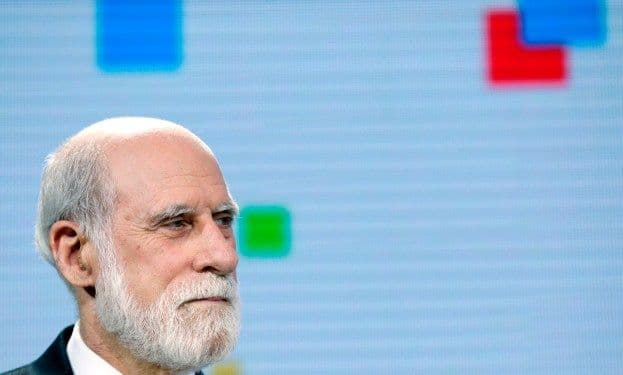
Vinton Cerf will step down from his role as Google’s chief internet evangelist next week, marking the conclusion of one of the most influential careers in technology history. While speaking via video feed at theOpen Frontier conferencehosted by the Laude Institute, Cerf was recognized by Dave Patterson, the UC Berkeley professor best known for co-developing RISC processor architecture. “Vint … has been at Google more than 20 years, and he is retiring a week from today, and so I think we ought to give him a round of applause for a relatively good career,” Patterson said, to cheers from the room. Google did not respond to a request for comment by publication time. Cerf, 83, and collaborator Robert Kahn are credited as being the architects of the networking protocols that became the internet we know today. His work developing and popularizing TCP/IP — the basic set of rules that lets different computer networks talk to each other — beginning in the 1970s has been recognized with numerous honorary degrees, the Presidential Medal of Freedom, anda Turing Award, among other honors. Since 2005, Cerf has served as vice president and chief internet evangelist at Google. (At this point, we can safely say the internet is fully evangelized, for good or ill.) Cerf was speaking on a panel alongside other computer scientists known for their work on durable open source projects, including Patterson; François Chollet, creator of the Keras deep-learning library and co-founder of Ndea; John Ousterhout, the Stanford computer scientist behind the Tcl programming language, who also co-founded Electric Cloud; and Matei Zaharia, who is Databricks’ co-founder and chief technologist. They offered advice about what it takes to build open source systems that survive — advice that’s increasingly relevant as founders bet on open infrastructure for the next wave of AI products. Much of the conference’s discussion focused on the problems with the centralization of advanced models in a handful of well-resourced labs, in contrast to the decentralized world of the open internet that made Cerf’s own protocols so durable. However, Cerf predicted that the rise of AI agents — software that can act autonomously and coordinate with other software — would push tech companies back toward standardized protocols. “The agentic model of AI, with multiple agents from multiple sources interacting with each other, is going to force composability, and a requirement for interoperability and standardization,” Cerf said. If he’s right, the companies that define those interoperability standards early could end up with outsized influence over how the agentic economy actually works — a dynamic not unlike the early internet protocol wars. While other panelists speculated that natural language communication between LLM agents would be sufficient, Cerf predicted formal standards would be required. “I don’t think English is going to be the best choice. There’s a flexibility in it, but there’s ambiguity, and I think precision for interagent interaction is going to be very, very important. An agent really needs to be sure the other agent understands what it is that they just agreed to do together,” Cerf said. “Remember the old telephone game where you wish you’d whispered in somebody’s ear and then by the time it got to 10 people away the message was totally different? Imagine a bunch of agents talking to each other in natural language, you know, that’s kind of terrifying.” In a more lighthearted moment, Patterson recalled meeting Cerf, known for his wardrobe of three-piece suits, as a grad student in the 1970s. “He’s always been the best dressed computer scientist I’ve ever met,” Patterson said. “My memory of Vint is that he came as a grad student with a shirt and tie in the ’70s.” “It absolutely is true,” Cerf said. “I even had a vest, and for some reason I always wanted to stick out, and instead of having long hair, and something in my nose, I thought just dressing differently was one way to do it.”

45 minutes ago

View

What RBI's AI Model Risk Draft Means for Banks, Fintechs and AI Vendors

What RBI's AI Model Risk Draft Means for Banks, Fintechs and AI Vendors

The draft framework on AI model risk management brings credit models, GenAI tools, and spreadsheets under a single governance regime.

45 minutes ago

View

US Lifts Export Controls on Anthropic’s Fable 5, Mythos 5

US Lifts Export Controls on Anthropic’s Fable 5, Mythos 5

Anthropic has also launched Claude Sonnet 5, making it the default model for Free and Pro users.

45 minutes ago

View

AWS Invests $1 Bn to Launch Forward Deployed Engineering for AI Deployments

AWS Invests $1 Bn to Launch Forward Deployed Engineering for AI Deployments

AWS will embed AI engineers within customer teams to build and deploy agentic AI systems, with deployment timelines shifting from months to days.

45 minutes ago

View