AI NewsA married founder duo’s company, 14.ai, is replacing customer support teams at startups
A married founder duo’s company, 14.ai, is replacing customer support teams at startups
6:08 AM IST · March 3, 2026
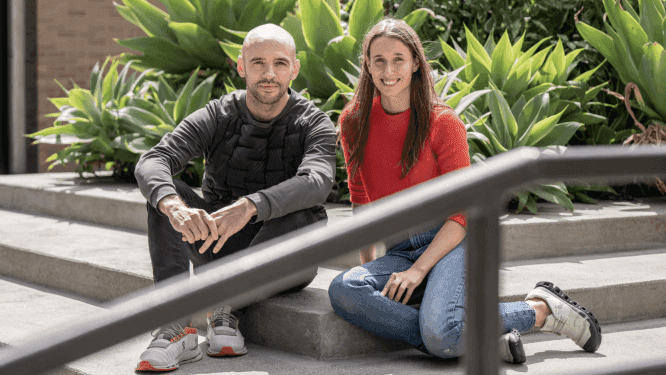
The customer service industry is in a bit of flux, thanks to AI.Investorsandcorporate leadershave rung alarm bells for the BPO (Business Process Outsourcing) industry. On the other hand, AI-powered customer support startups such as Decagon, Parloa, and Sierra have picked up millions of dollars in funding from venture capitalists. 14.ai, a Y Combinator-backed startup, is taking an approach of building an AI-native agency that has replaced legacy customer support teams at many startups it has worked with. The company has raised $3 million in seed funding led by Y Combinator, with participation from General Catalyst, Base Case Capital, SV Angel, and the founders of Dropbox, Slack, Replit, and Vercel. The startup was founded by a married duo, Marie Schneegans and Michael Fester. The two met in Paris more than a decade ago and went on to build separate companies. Schneegans was a co-founder atcorporate intranet company Workwell. Fester previously founded Snips, a company that worked on local first assistants for smart devices, whichwas acquired by Sonos in 2019. After this, they wanted to build a company together, so they moved to the U.S. The duo picked up customer service as the problem to tackle, but didn’t want to build a pure-play SaaS company. They founded 14.ai to operate as an AI-native customer support agency of sorts. “We’re not building software for customers. 14.ai is an AI-native customer service agency. We combine software and services in one package. For customers, operating software is hard, especially for customer service. We take over their entire operation, and we use our own purpose-built stack for customer service,” Fester said. The company said it can integrate with a support system within a day and start clearing the support ticket backlog very quickly. It can monitor tickets across various channels, including email, calls, chat, TikTok, Facebook, Telegram, and WhatsApp. “We started working with a men’s health supplement company called Sperm Worms by a former YC founder, who had a lot of backlog of tickets. His team of customer service agents was in the Philippines, and they were not being able clear tickets efficiently. We took over on Thursday morning, and by Thursday afternoon, we had cleared tickets from all channels like social media, SMS, email, chat, and voice,” Schneegans said. The company currently has six people working, and they all take turns to be available around the clock for the clients they work with. The startup said that with the new funding, it aims to increase the headcount in the next six months. 14.ai is only working with AI engineers and plans to hire more AI engineers. The startup learns workflows of customer support and other functions, such as sales and revenue growth, and tries to automate tasks through its software so humans have to spend less time on particular issues. “We are not just a support agency, but also a revenue growth engine because we capture all kinds of conversations early on for a client and get insights from them,” Fester said. The company wants to take off three key items from a startup’s balance sheet, including ticketing systems, AI software add-ons, and human labor costs. The startup caters to many clients in different sectors such as luxury skin care brandYon-KA, smart glasses makerBrilliant Labs, andlighting company Creative Lighting. The startup also wants to improve its own product by experimenting and letting AI handle most tasks. For that, it runsGloGlo, a glucose gummies brand for Type 1 diabetics, and tries to operate autonomously with AI. Tom Blomfield, a partner at Y Combinator, thinks that 14.ai strikes the right balance between using AI and humans for customer service. He said that with the right integration, AI can solve 60% of the task automatically, and the remaining 40% could be handled by humans. “As the AI takes over more and more of the work, the balance between AI and humans will change over time. With the existing platforms, the customer is left to handle round after round of painful headcount reductions,” he told TechCrunch over email. “In contrast, 14.ai becomes the customer service department, both AI and human. They can reassign customer support agents between customers who are at different stages of the AI adoption journey, and carry out that load balancing much more effectively,” he added. Notably, AI-powered agencies are one of the things Y Combinator mentioned in itsrequests for startups in 2026.
read more